We are all travelers in life, learning from our experiences and hopefully making a positive impact on those around us. As we reach maturity and beyond, it is time to reflect – on what we have accomplished and what we have yet to do before our time in this world fades away. This is the beginning of a new road, a Camino, the Way….
This blog started about five years ago when we decided to walk a portion of the Camino de Santiago Compostela. For many, it is a spiritual journey. Certainly for me it was a time to reflect and detach from the pressures of everyday life. In the interim, there gave been several trips abroad (Italy, eastern and Central Europe, Portugal), a COVID pandemic, and retirement after 40 years in the medical field. Following two trips to Italy post-Covid, it’s time perhaps to revive this blog that has been dormant for several years with a new adventure- India! We will be spending six days in London prior to departure for the Indian subcontinent. I’ve been advised (warned?) that this trip to the world’s second most populous country will be an assault to the senses and that it will take some time to process the experience after our return home.
However, the next several days we will be enjoying first world pleasures – touring historic sites, eating and drinking familiar foods and feeling comfortable in our surroundings.
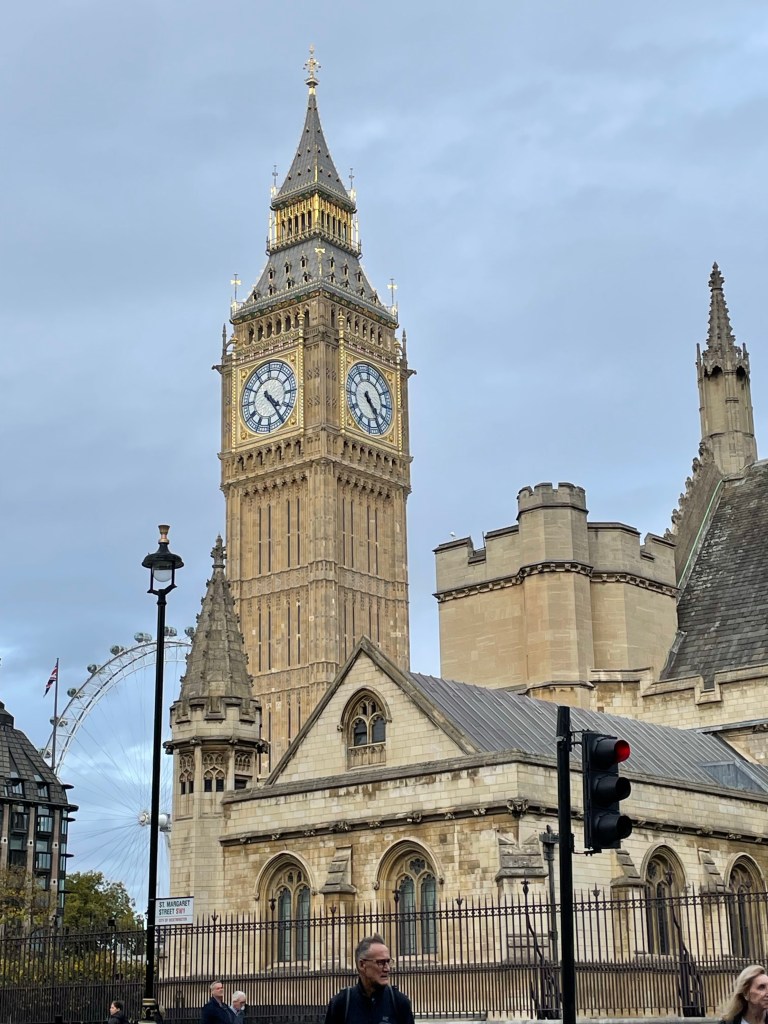
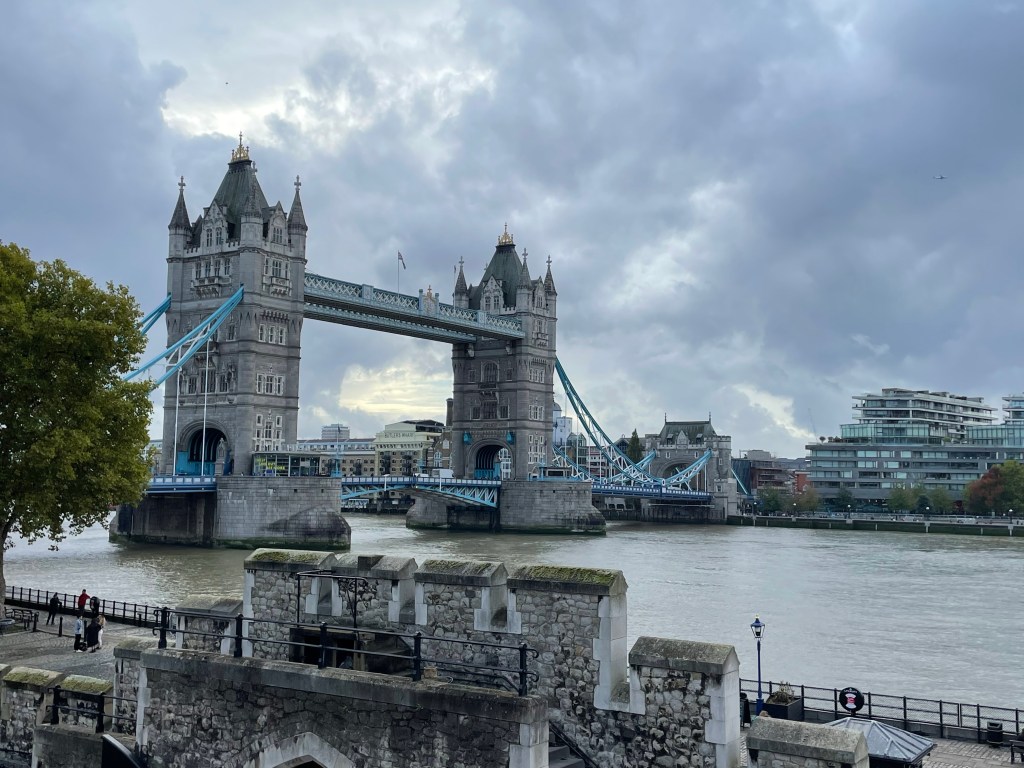
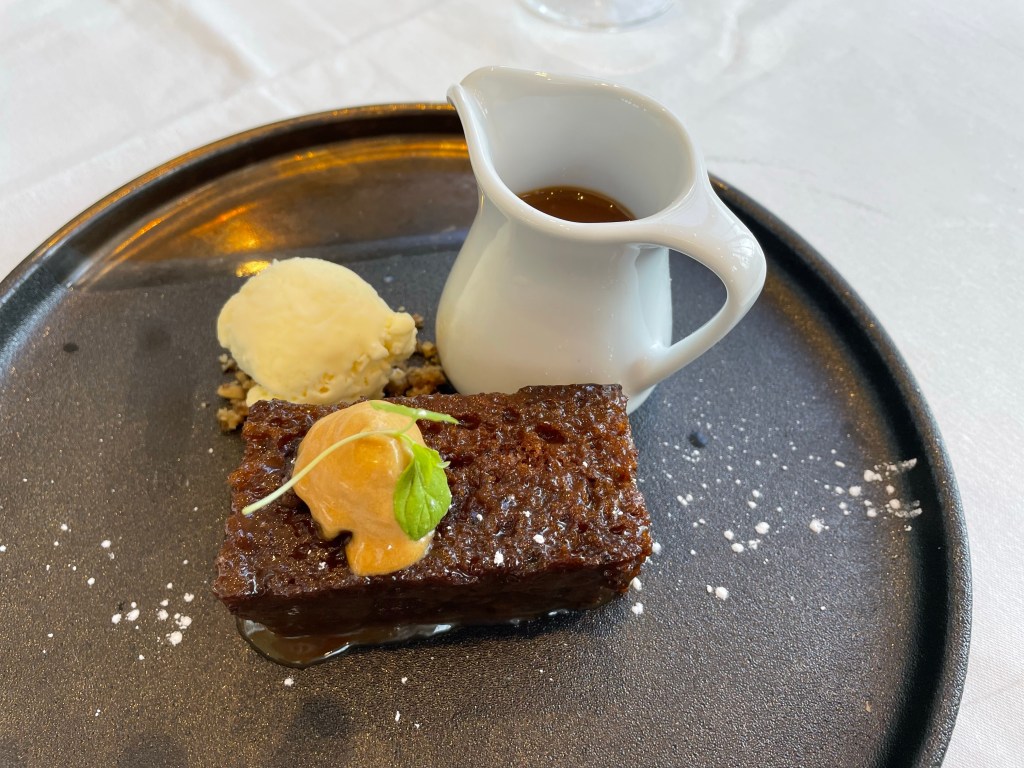
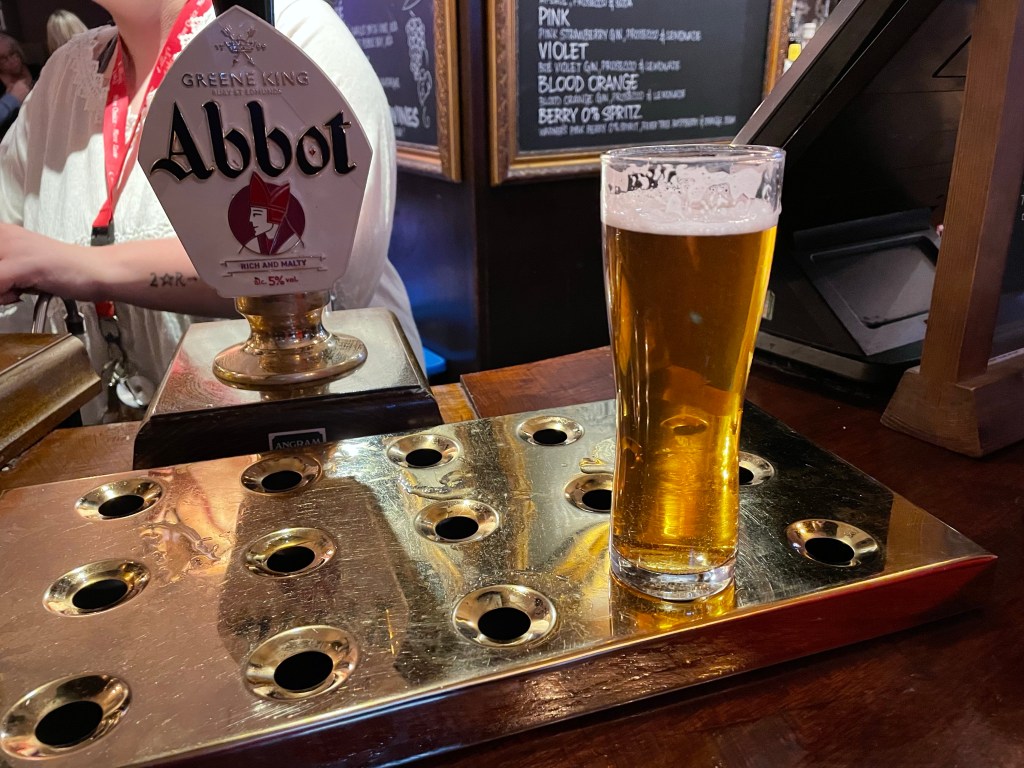
Big BenTower BridgeSticky toffee pudding
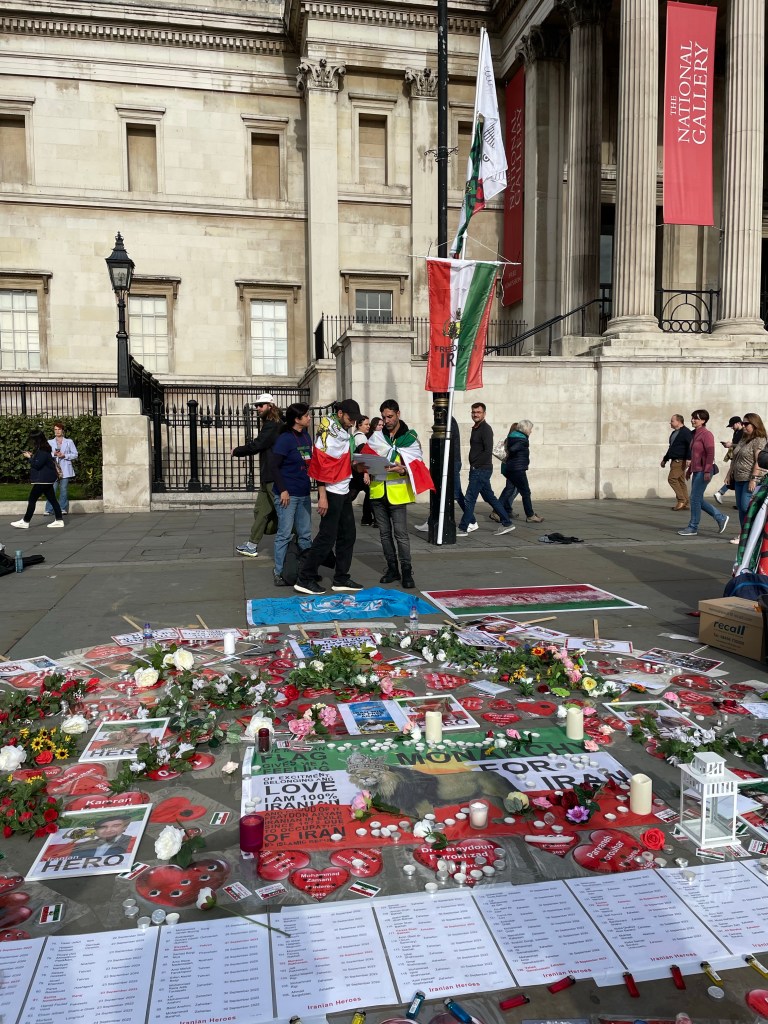
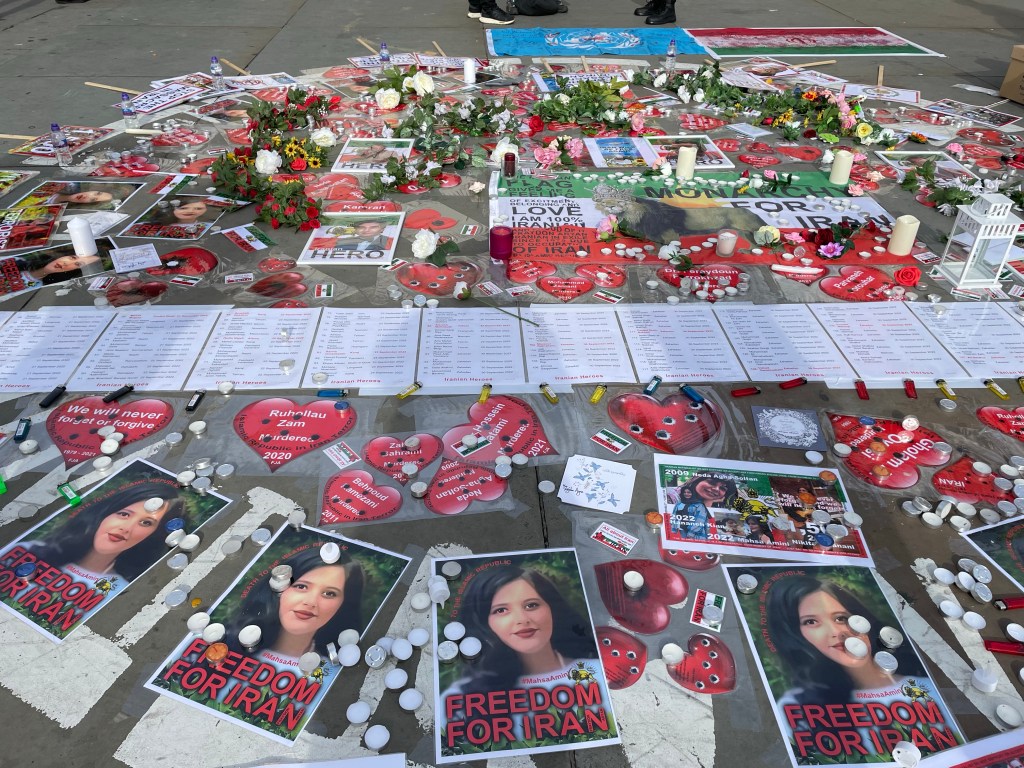
The weather has been the only unpredictable aspect thus far – it’s been mostly overcast with intermittent rain and wind although today was lovely – cool and sunny. London is a vibrant and clean city with lovely manicured green spaces where one can stroll and enjoy nature in a “civilized “ manner – most people appear relatively affluent and the cacophony of accents and languages is more like a symphony of humanity. Particularly striking was the demonstration against the Iranian regime’s atrocities of human rights.
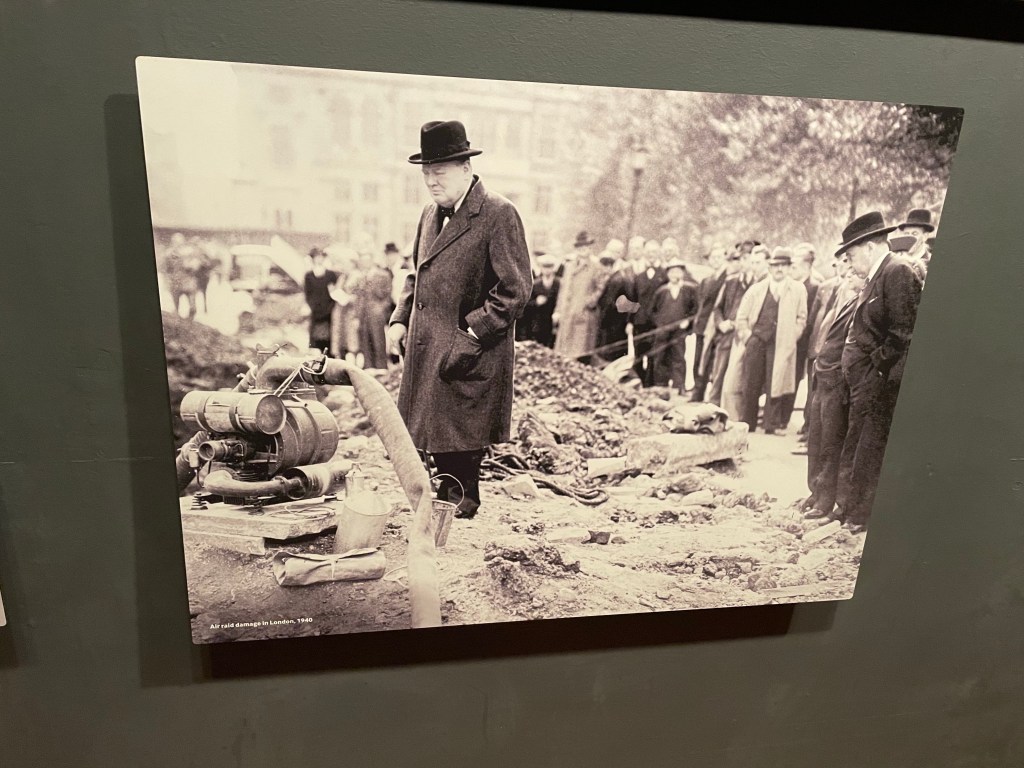
Governments and regimes have been oppressing vulnerable communities for millennia. A visit today to the Churchill War Rooms, the command center of Great Britain’s response to the atrocities of Nazi Germany, was especially moving. We Americans have not experienced the horrors of war on our land for over 150 years and unfortunately I feel that many of our citizens have cavalier attitudes towards the great political and ideological divisions in our country. And oppression of vulnerable communities continues and the threat of losing more liberties that we’ve enjoyed these past decades is looming.
Bombing of London during the blitz (WW2)
Travel is a way of opening our minds and hearts to the rest of the world. To paraphrase St. Augustine, a person who has never traveled has only read one page of the book. Living in a bubble makes one vulnerable to “leaders” who control by invoking unfounded fears.
Travel promotes understanding and compassion, even if it is an uncomfortable experience. Walking the Camino de Santiago five years ago was a physically challenging and uncomfortable experience but one of spiritual growth. Let’s see how this new Camino goes!
It’s ONLY been about six months since my last blog post – and I sort of pooped out last time, too tired to post the last 10 days of the trip in Umbria and Rome. I’m not going to go back and try to remember what we did six months ago, as I sometimes can’t remember what I did six minutes ago! So I start anew, without a reprise of blogs lost a half year past! (So no remembrances of Spello, Bevagna, Spoleto, Assisi, Perugia, and Orvieto. However, I will comment on our private guide, Maura Baldoni, in Umbria- what a character! She’s a ball of energy, impeccably dressed and can devour a huge banana split in 5 minutes!
The theme of this trip is food. I’ll be doing two culinary themed tours- in Umbria and in Calabria. Before venturing to Todi, the site of the Umbrian Tour with Elizabeth Minchilli (renowned food writer, blogger and book author), I spent three days in Rome – taking a slower pace and seeing some less touristy spots.
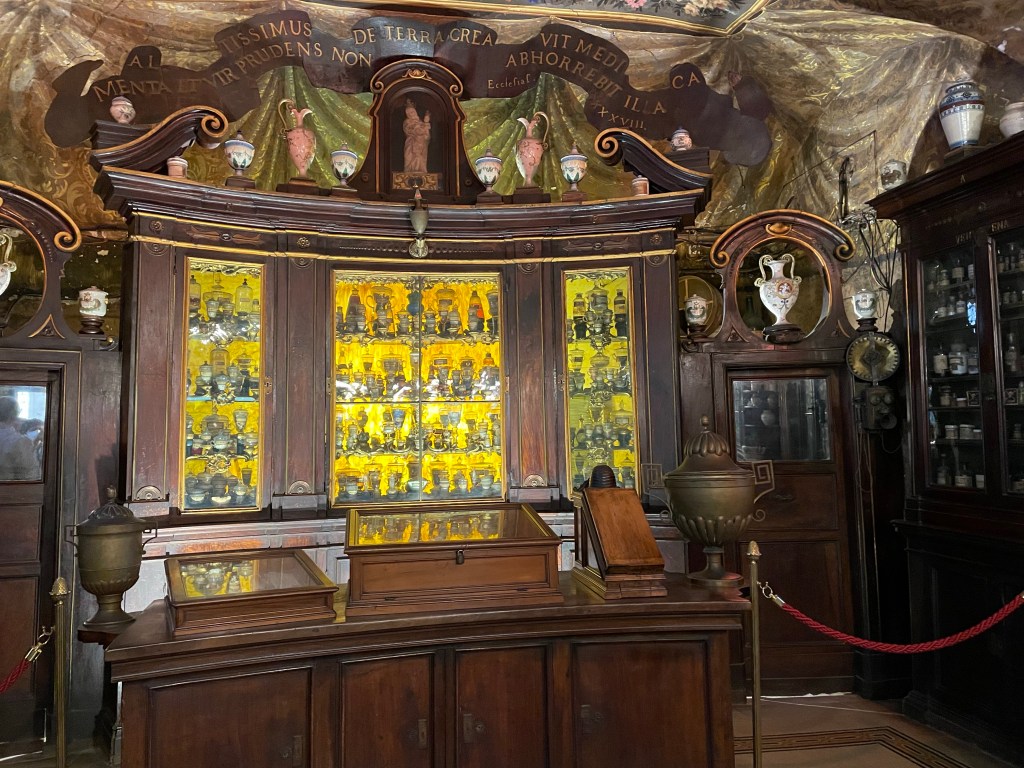
The first Rome day started early as the plane landed at 7:30 am. The hotel room (Smeraldo Hotel) was ready yet but I was invited to partake of their lovely breakfast offerings. Then it was off to a one hour stroll around the historic center before returning to my single bed room with a small balcony. The shower and change of clothes helped a bit but the jet lag gets worse as one gets older! I had a gelato at Malve’ in Campo dei Fiori and then walked to Trastevere to visit the Museo di Roma (Trastevere)- the recent exhibition had been dismantled so there wasn’t much to look at besides some dioramas of Roman life in the Middle Ages and a photo exhibition of Mosul, Iraq. Then I took a tour of the Antica Farmacia Santa Maria della Scala, frozen in time when it closed in 1954. It was started in the 16th century by the Carmelite order, providing herbs, potions, and”medicinal” concoctions to popes and nobility for centuries. The tour is only given sporadically in English and no more than once a day overall, by reservation only, requiring a phone call or email to the rector. A donation of 5 euro is suggested, and definitely worth the price as the tour includes not only the pharmacy but the manufacturing areas in the monastery. Dinner was at Salumeria Roscioli where I was seated at the counter next to a woman who works for the State Department, who was based in Jerusalem. I had a mortadella sandwich as antipasto, pasta all’arrabbiata and broccoli (which was way too much food!) and a glass of a local white wine.
Antica Farmacia
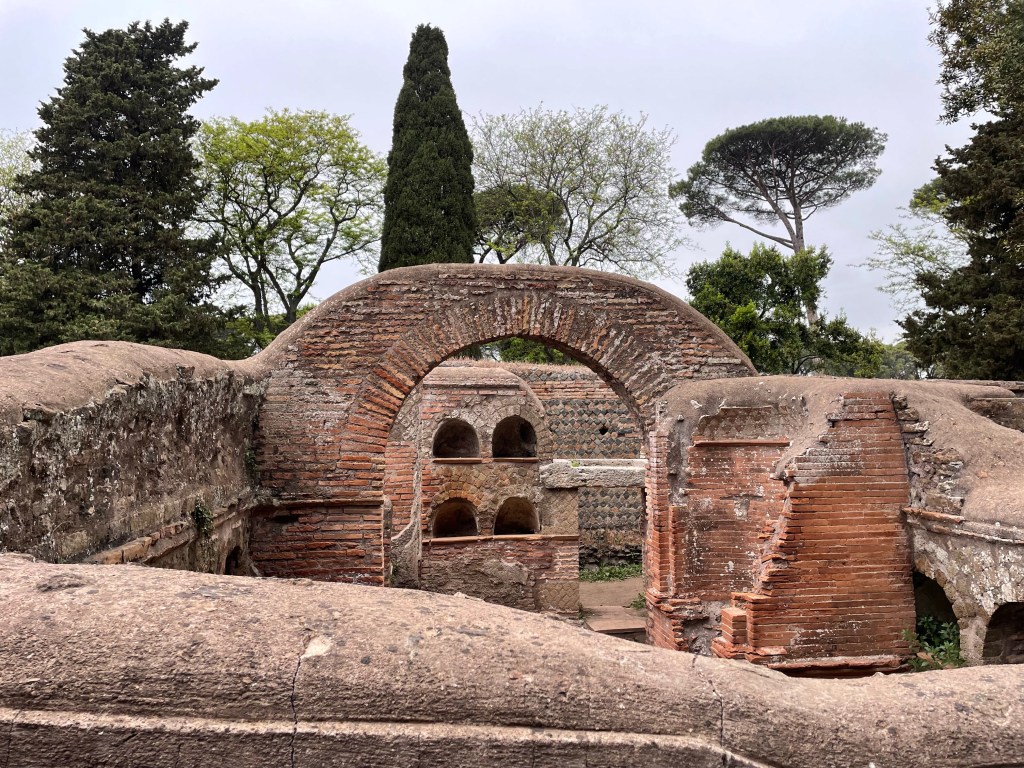
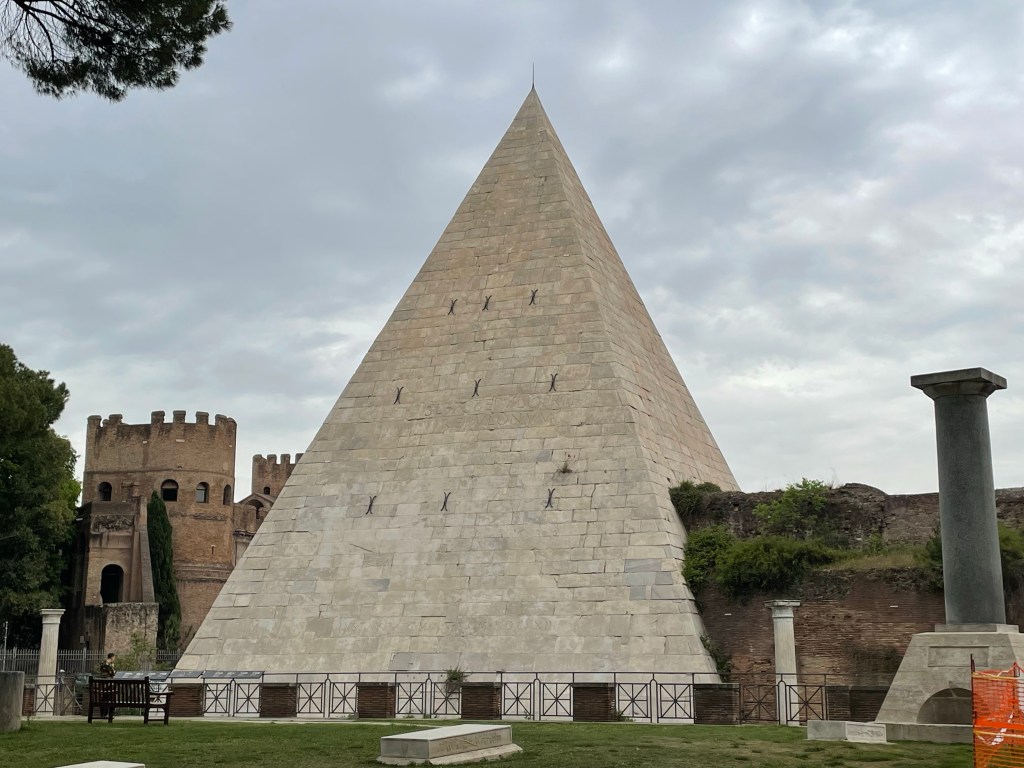
The next day I was up bright and early on this overcast day and walked 45 minutes to Porta S. Paolo Stazione to meet with friend and local guide, Francesca Caruso, for a tour of Ostia Antica, the site of ancient Roman city at the mouth of the Tiber River. It’s a huge place, majority of it not yet excavated, similar to Pompeii but surrounded by trees and devoid of tourists. After returning to Rome by the local train, we bid farewell and I walked to the nearby Testaccio mercato to have a pizza lunch at Casa Manco – pizza with melanzane, tomatoes, mozzarella and basil (eggplant parmigiana pizza!) and pizza with zucchini flowers , anchovies, and stracciatella with a Sardinian beer. The nearby Protestant Cemetery is a peaceful green refuge that had few visitors and several resident cats. The perimeter is marked by the iconic Piramide di Caio Cestio (tomb of Caius Cestio) . It was a 40 minute walk back to the Jewish ghetto and a visit to the free exhibit of Italian victims of the Holocaust. Dinner was at Nonna Betta, in the Ghetto- for a so-so meal if carciofo alla giudia, tonnarelli cacio e pepe con cicoria and a ricotta chocolate tart.
Ostia Antica Il Piramide
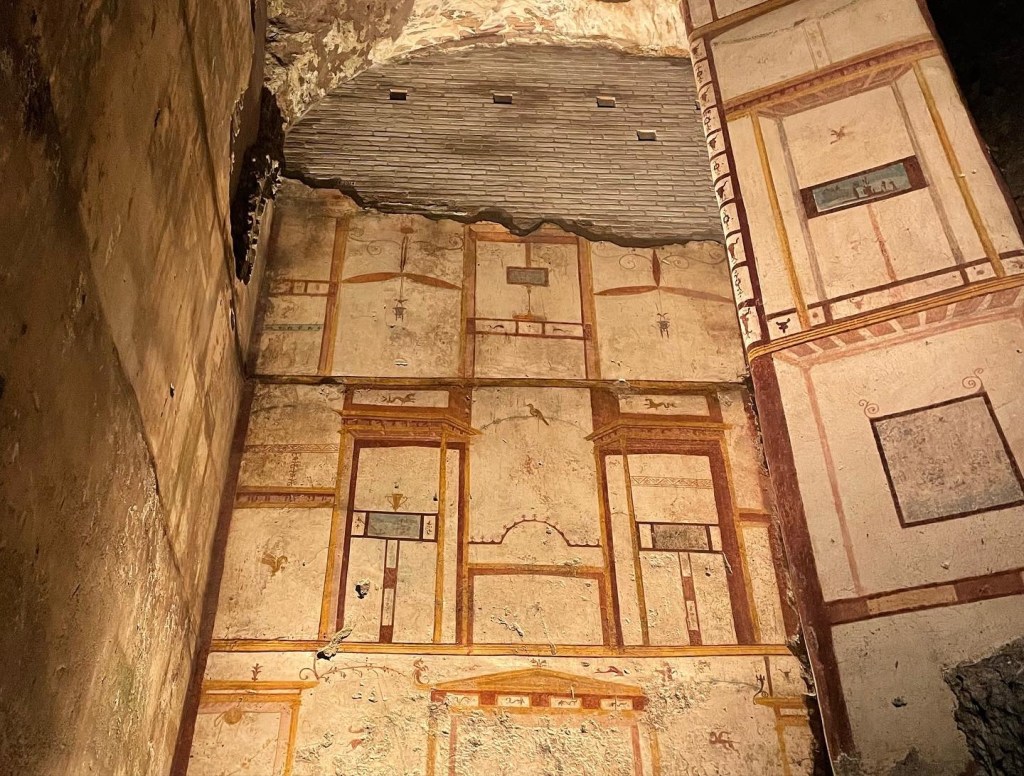
The third Rome day was overcast and humid and the lack of a decent night’s sleep for three days was getting to me. I took sn Uber to the Domus Aurea, escavated remains of Nero’s massive residence. It can only be visited by organized tour and tickets must be purchased online. The site was just reopened after a prolonged closure following the dismantling of an exhibition. It is very impressive but the combination of humidity, masks, and eyeglasses resulted in fogged up lenses the entire time! There is also a virtual reality portion where you put a headpiece that give a (nauseating) 3-D impression of what it looked like in Nero’s time. I walked back to the hotel and just crashed for the afternoon. I was supposed to meet my cousin for dinner but she canceled because of the terrible weather. So I dined on pizza at the nearby Emma pizzeria (very good Neapolitan style pizza). The next day I left for Todi by hired private car.
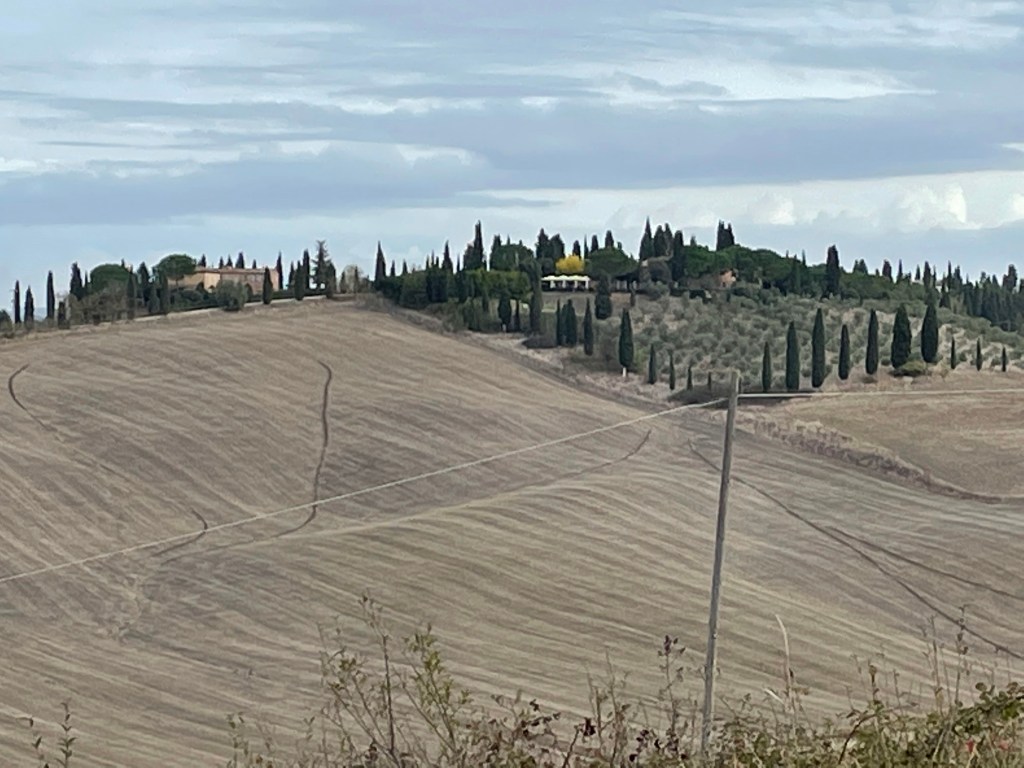
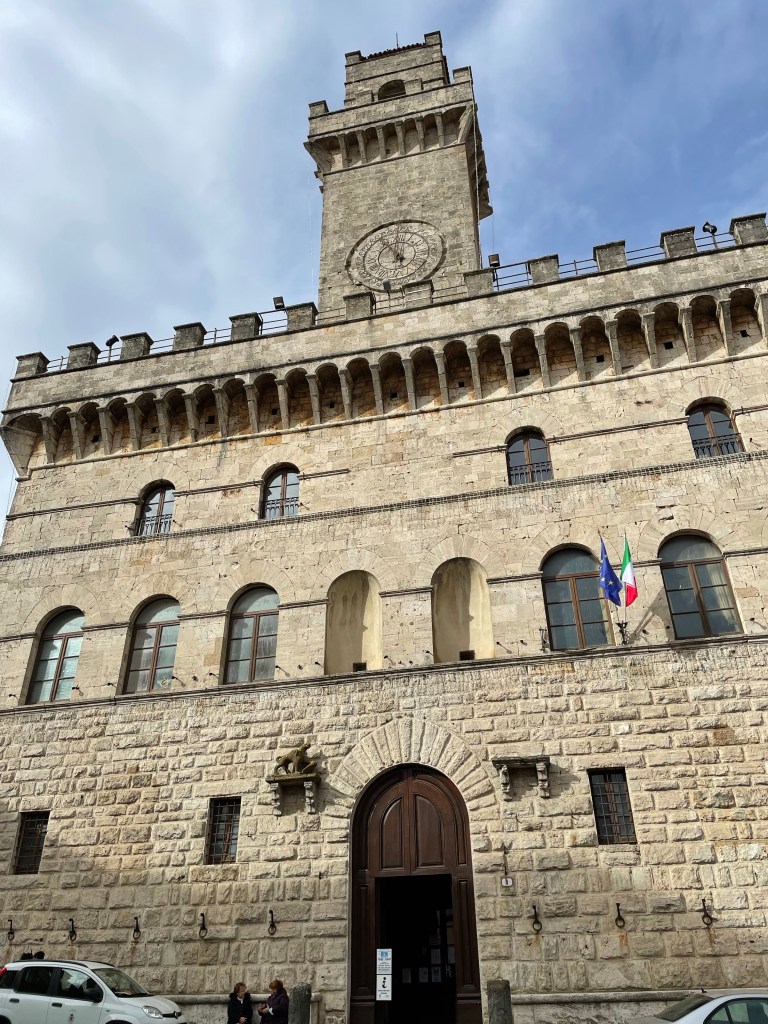
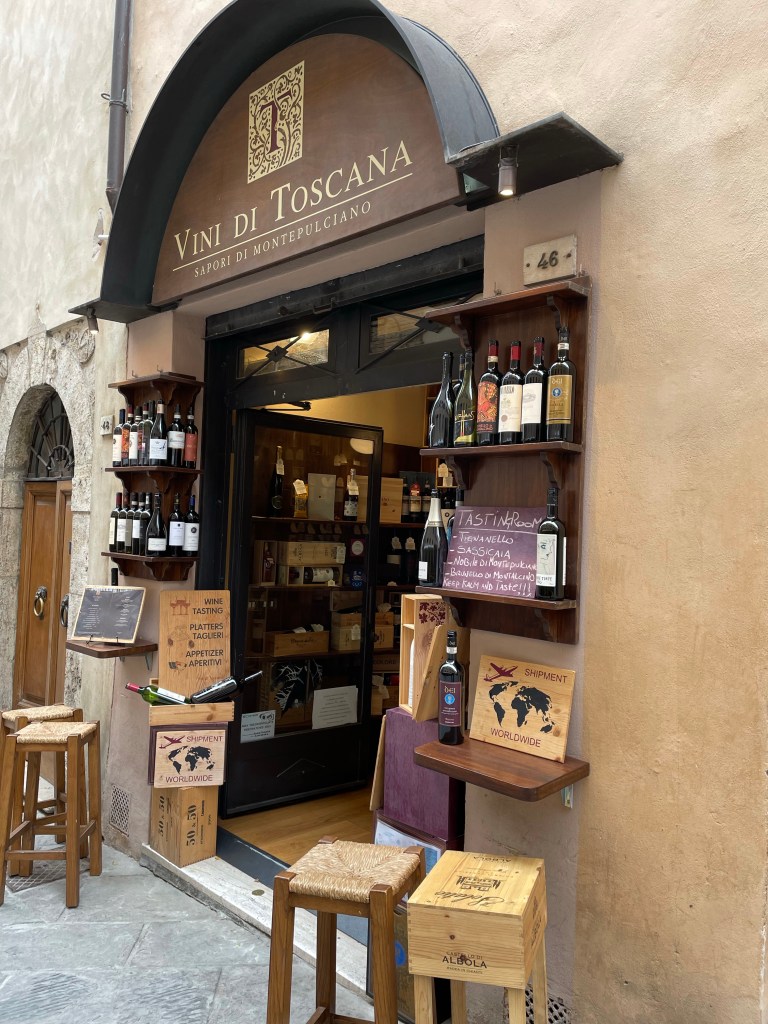
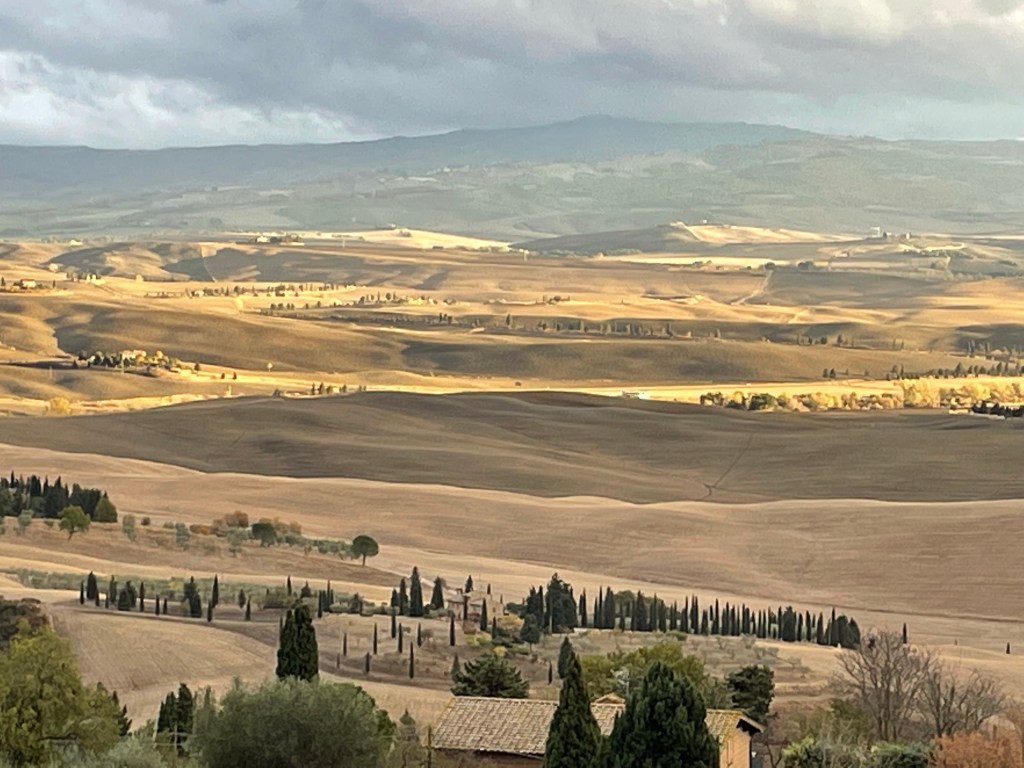
For the past 18 months of the COVID era, one could travel vicariously via Zoom or Facebook livestream. Tour guides needed to be creative to find sources of income, and livestream virtual tours fed the craving for travel and became substitutes for cancelled trips. Ambra is a tour guide in Siena who partnered with Anna Piperato to take advantage of these modes of vicarious travel. She’s energetic, enthusiastic and really fun, at least it appeared that way online. When we had the opportunity to visit Siena in person, meeting Ambra was a must! As such, we spent a day with her visiting Montepulciano and Pienza, in the Val d’Orcia south of Siena. She picked us up at the appointed hour in her boyfriend’s black VW Polo, as her car is very small and very old! We then headed off through the Tuscan countryside of the Val d’Orcia to Montepulciano, a hilltop town that allied itself with Firenze early in the time of the Renaissance. At the top of the town, there is the town hall that resembled the Palazzo Vecchio in Firenze. The area is renowned for its vino nobile, a hearty red wine. Tourism is a major source of income and the Main Street winds down the hill, lined with shops many of which specializing in wine.
Tuscan countryside Town hall
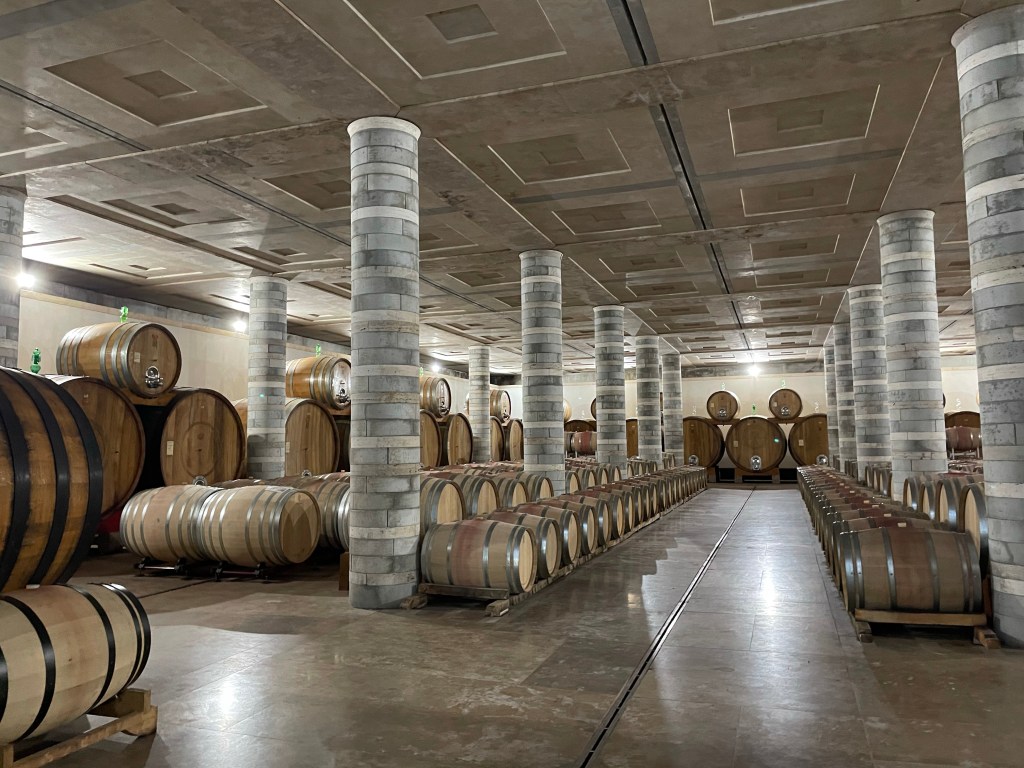
Around noon, we went to the Dei Winery, owned by a family that owns a marble business. The winery is run by Caterina Dei, also a professional singer, and is promoted as a spiritual place to enjoy the wine. The quality of the wine is of a high level (95 score by Wine Spectator). It is a high volume production, exporting over 100,000 bottles, especially to Japan! I have to admit that it was a bit too pretentious for me – I prefer small family operations- but the wine was excellent and I ended up ordering a case to be delivered.
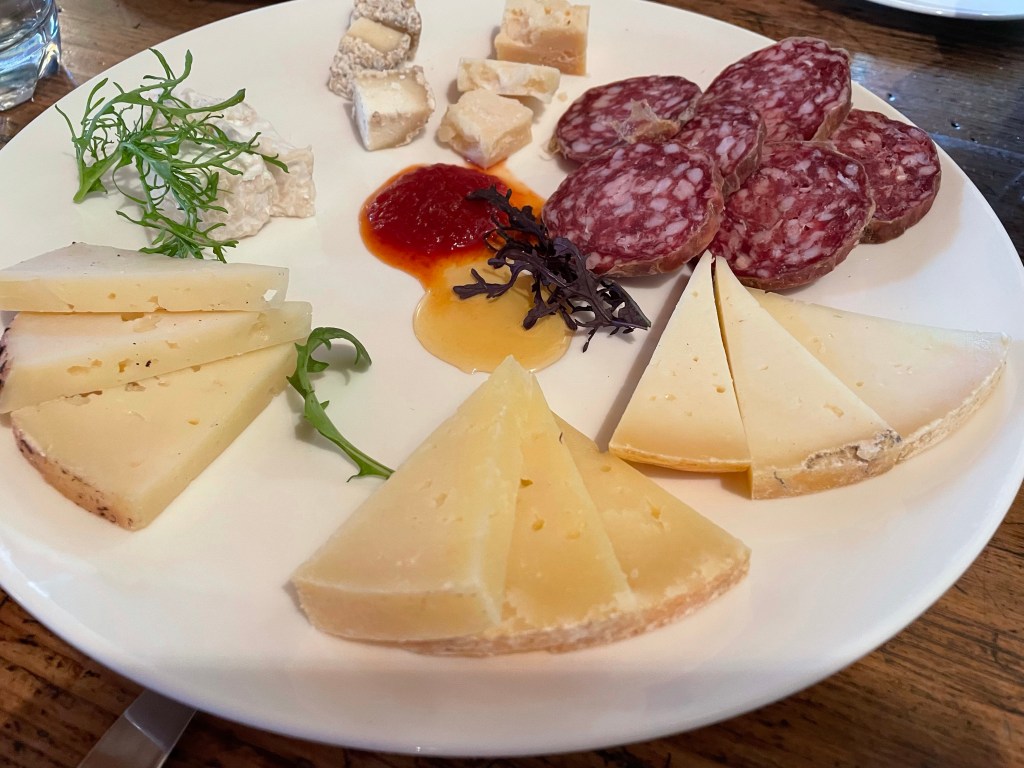
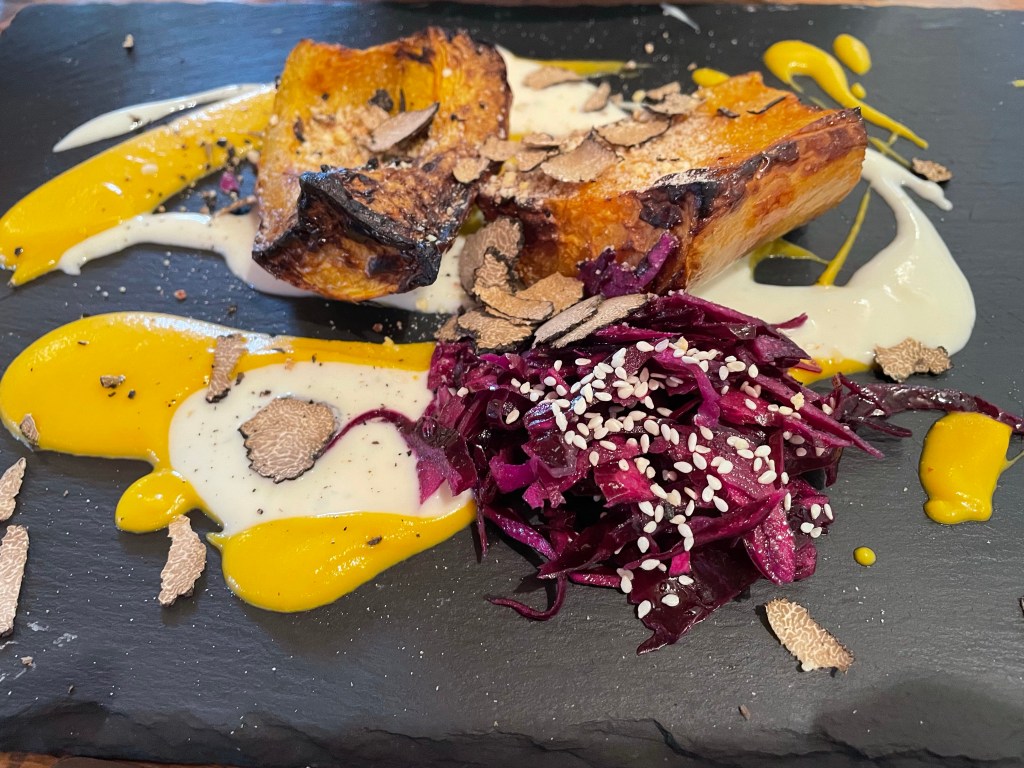
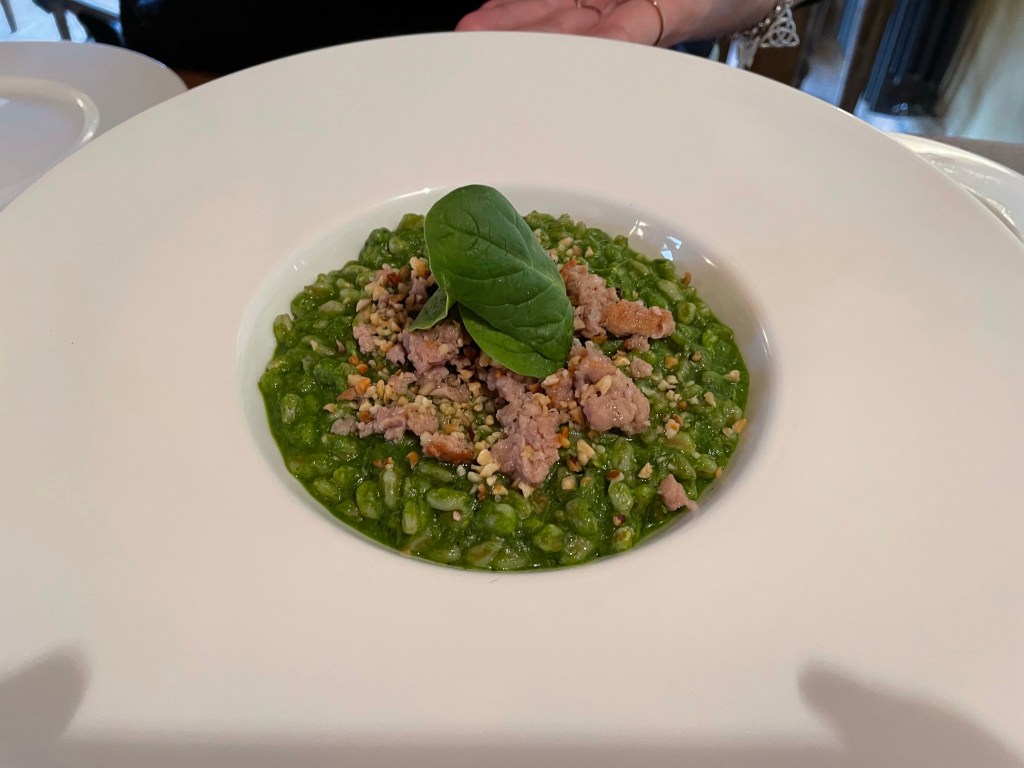
Lunch was at a unique restaurant in the countryside that produces everything it serves. We had a nice selection of organic and vegetarian foods.
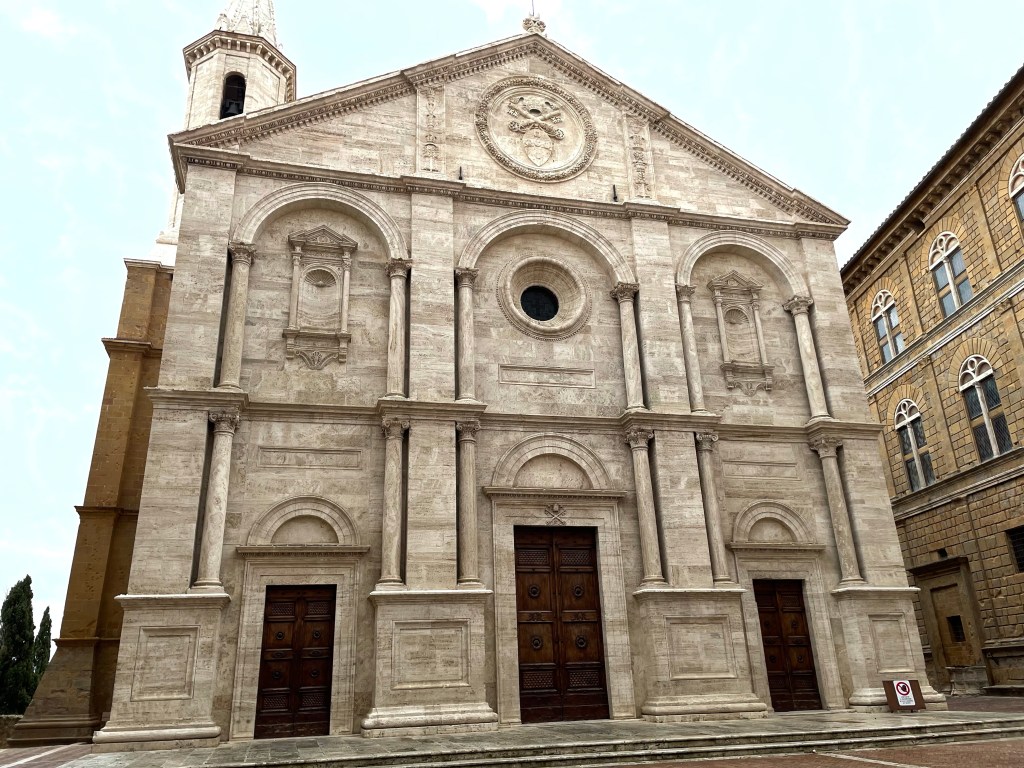
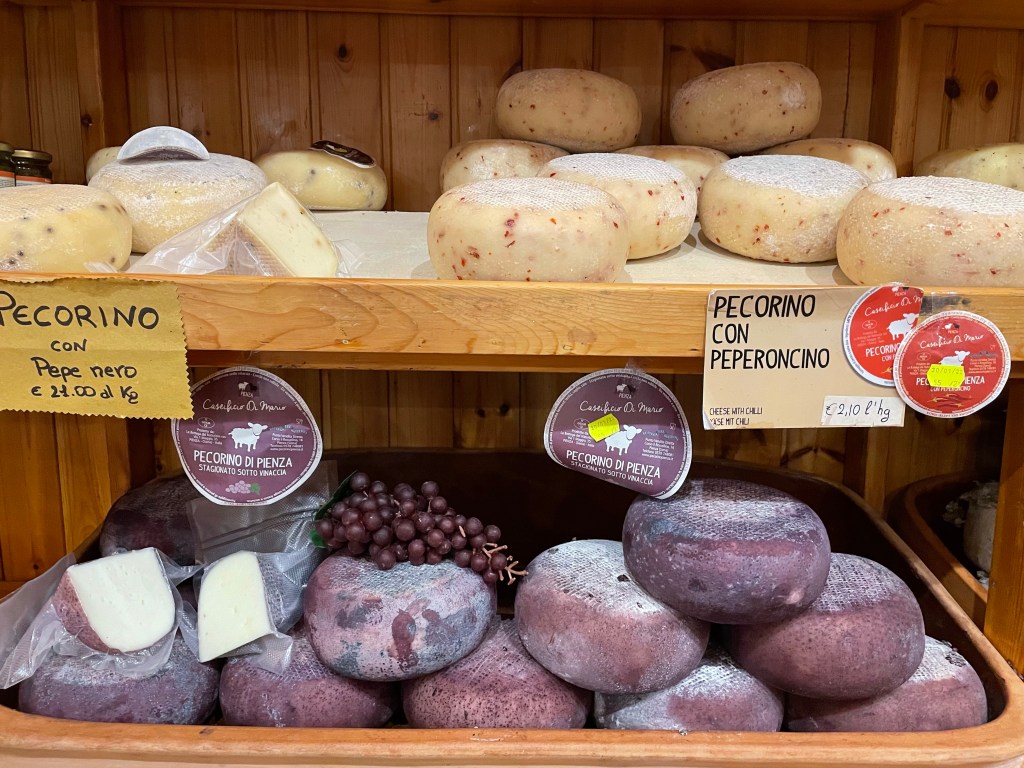
The last stop was the city designed by the Piccolomini family Pope Pius II, Pienza. He had the town redesigned as the perfect Renaissance town, utilizing humanist urban planning concepts. The main sites are the Palazzo and the Duomo (closed for repair with its cracked foundation!). Pienza is also known for its pecorino cheese, the aroma of which permeates this small hamlet.
Perfect symmetry
Views of the Tuscan landscape at sunset were stunning as we completed our day. After we returned to Siena, still full from lunch, we chose to forego dinner, opting for a gelato!
This morning I finally got to meet Anna Piperato in person. I’ve been following her livestreams on Facebook and subscribed to many of her online Zoom art lectures and livestream walking tours of Siena and some of the surrounding Tuscan towns. When I decided to add a few days in Tuscany to our itinerary, I emailed her to see if she was available for a private tour. So, we will spend an entire day in Siena with her today and a day in Firenze on Thursday.
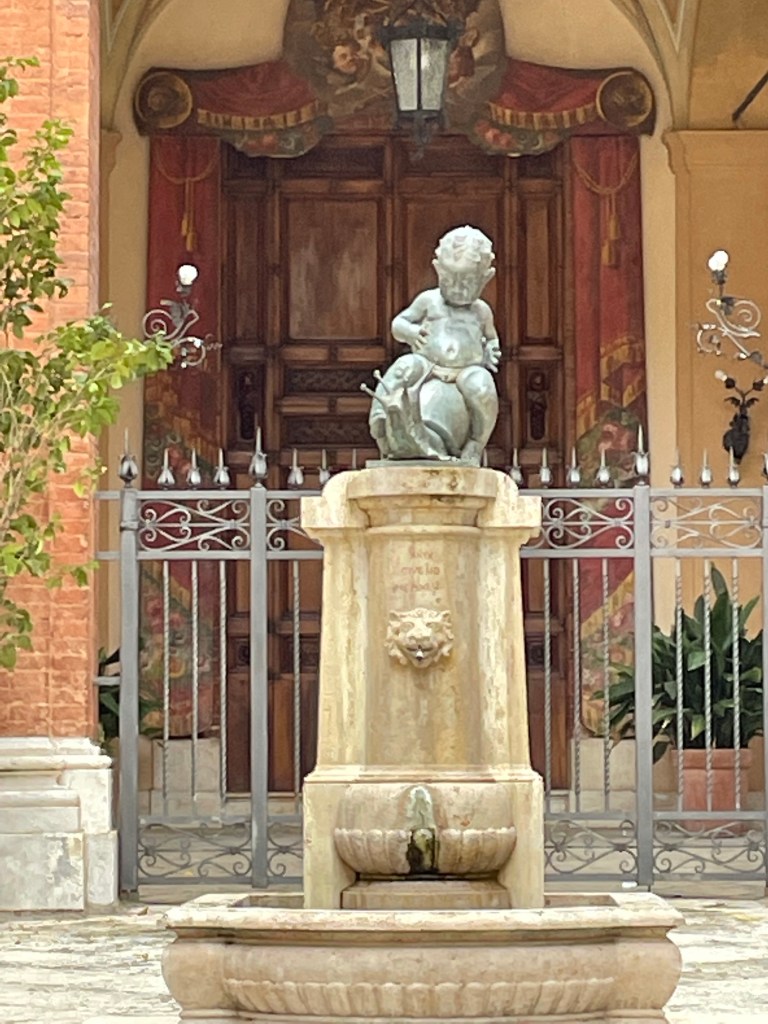
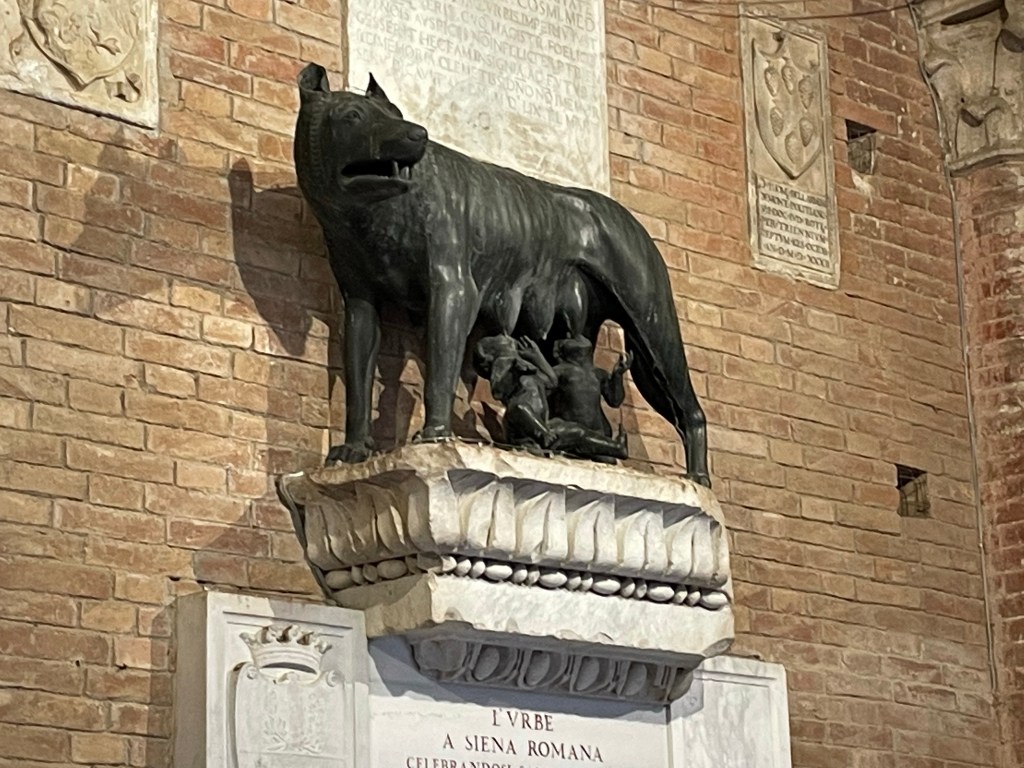
We started with a tour of the Chiocciola (snail) contrada, located near our hotel. Siena is divided into 17 contrada, each with a mascot (e.g. she-wolf/lupa, wave and dolphin/l’onda, pantera/panther), a chapel, museum, social hall and meeting rooms. Each contrada sponsors a horse in the biannual Palio (July 2 and August 16), the longest continually running race (over 500 years except for WW2 and COVID-19). For each date 10 contrade are chosen for the first date and on the second date, the 7 contrade not chosen for the first one are chosen to participate in the second race in addition to three randomly chosen contrade. The Palio (derived from premio or prize) is a unique silk banner designed by a different artist each year. There is a great traditional rivalry between some of the contrade.
Snail contrada
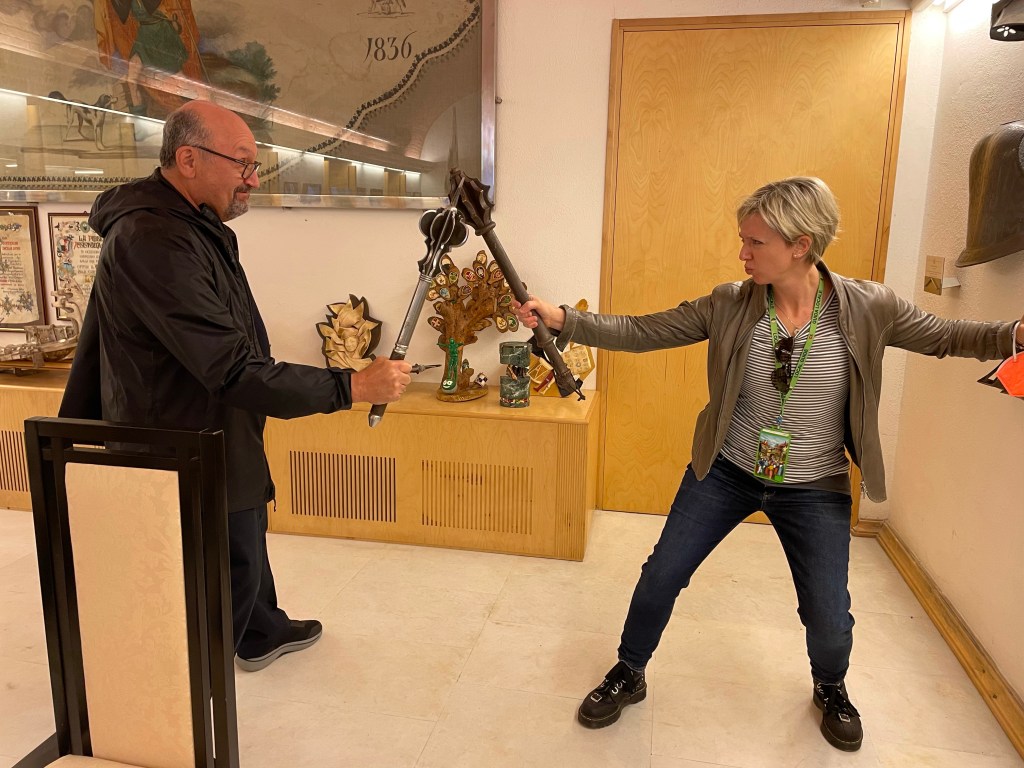
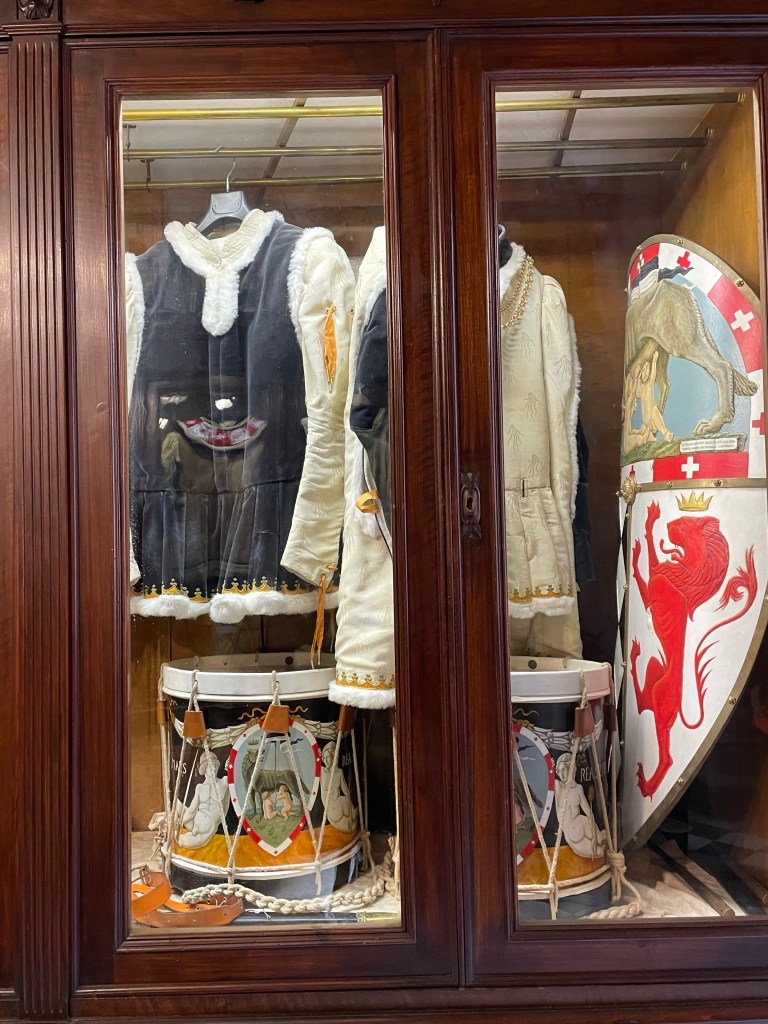
We were extremely lucky to have the opportunity to visit Anna’s contrada, the Lupa. It has an elaborately decorated consecrated chapel, a museum filled with costumes and banners, a formal meeting room, a room filled with Palio banners won over the centuries (it recently won back-to-back races in 2016 (a capotto) and a race in 2018).
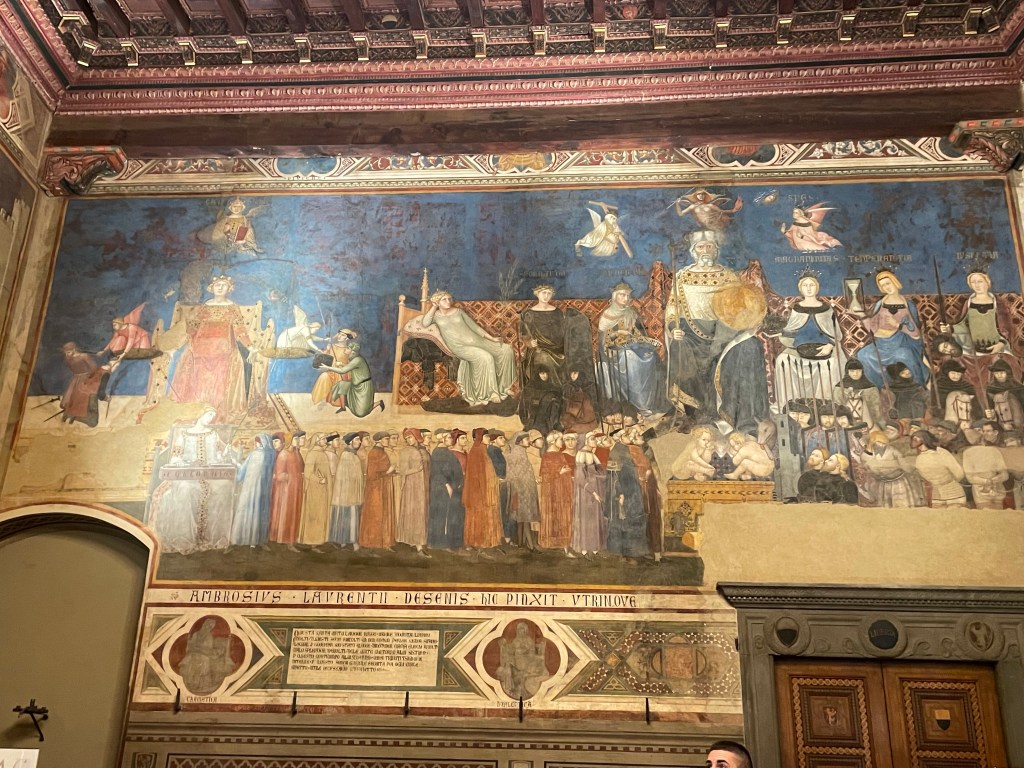
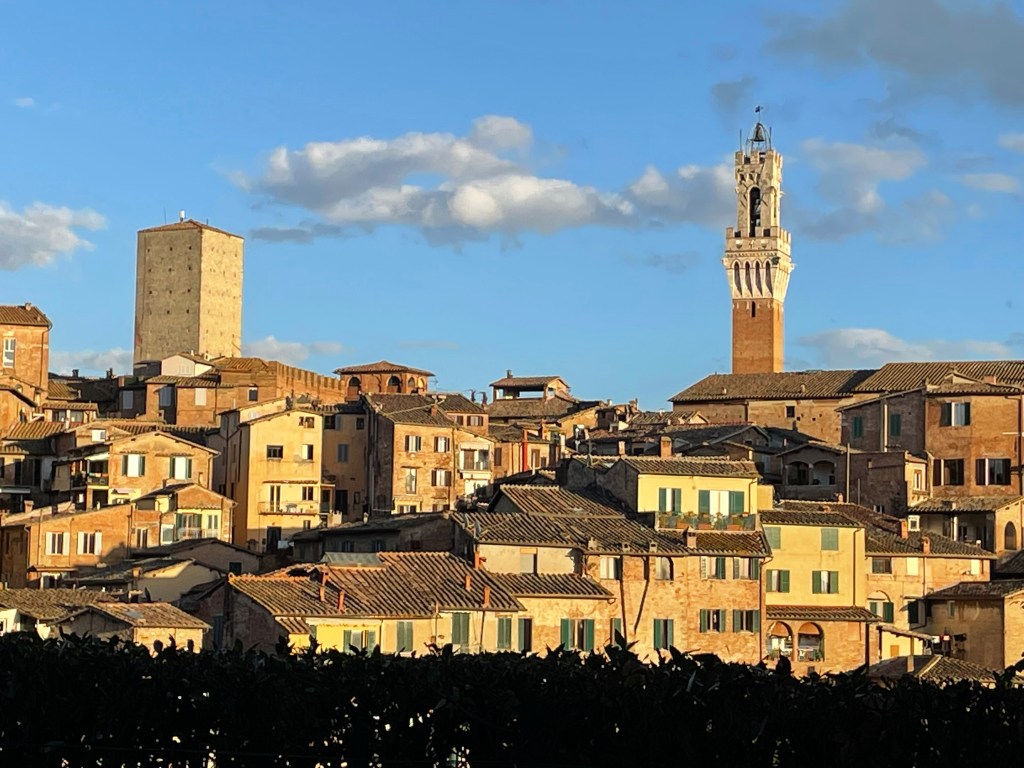
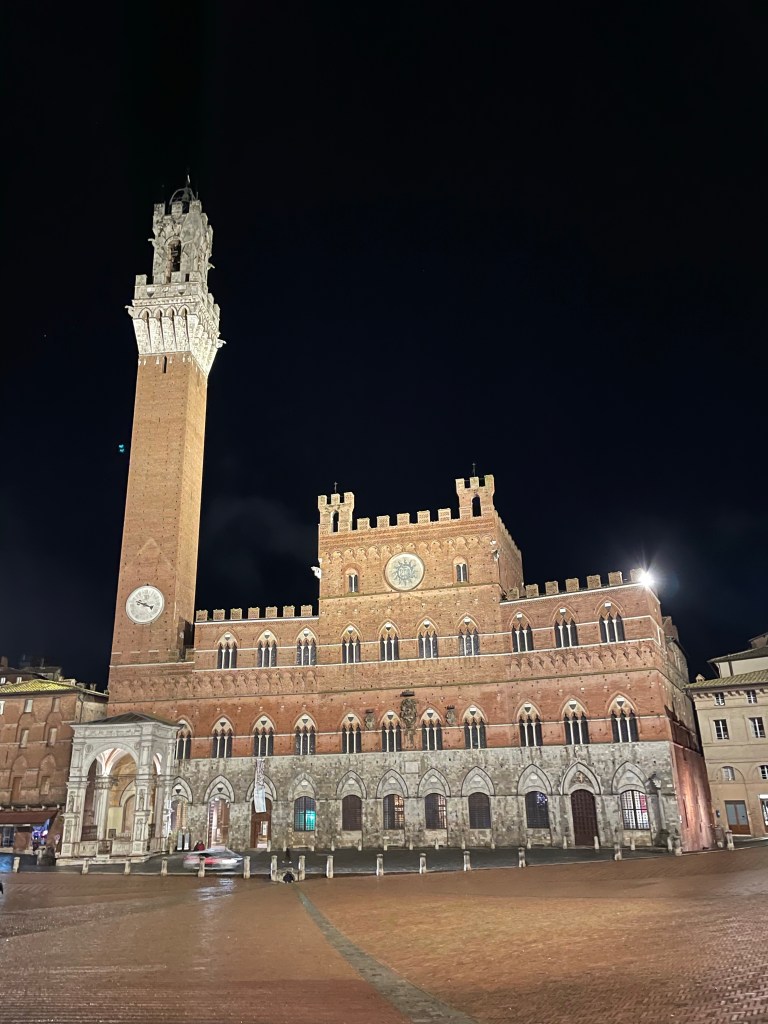
The Palazzo Pubblico, on the main piazza of Il Campo – not a town square but rather a pentagon- is the center of government, built in 1297, and it contains works by Simone Martini (Maestà) and the frescoes depicting good and bad government by Ambrogio Lorenzetti.
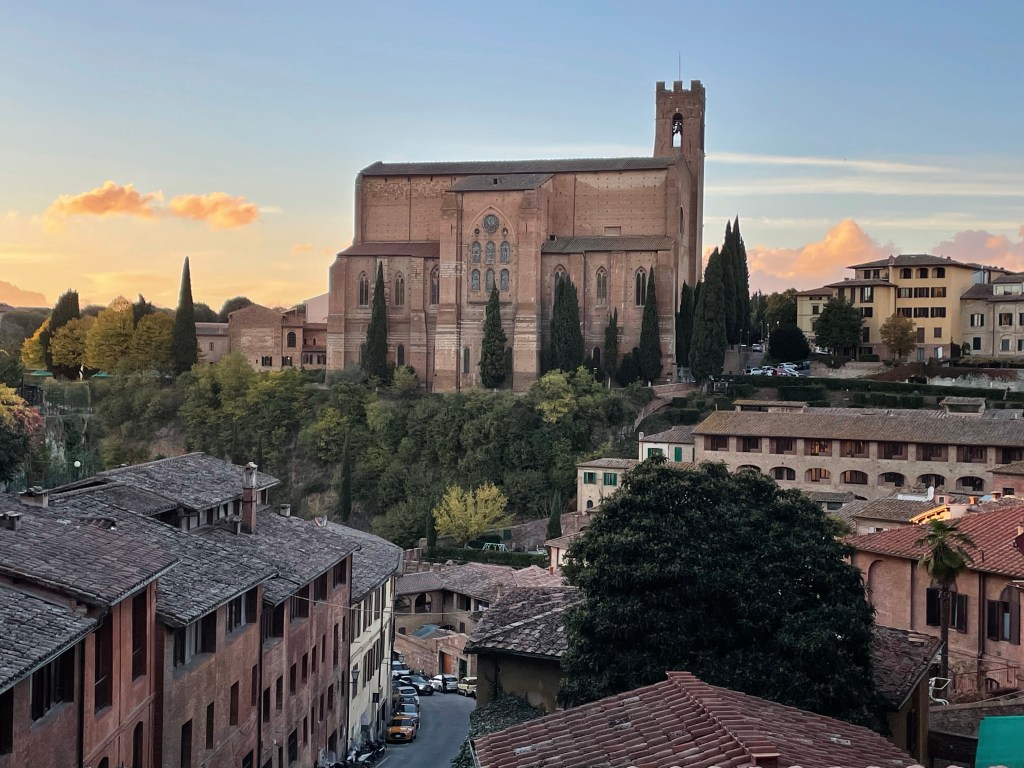
We also visited the church of San Domenico, an imposing structure, built in the first half of the 13th century by the mendicant Dominican order, with its modernist stained glass windows, vast empty interior and famous relics (right thumb and head) of St. Catherine of Siena, patron saint of Italy (but not Siena) and “doctor” of the church.
The house of St. Catherine is nearby but is a reconstructed building and a church completed centuries after her death.
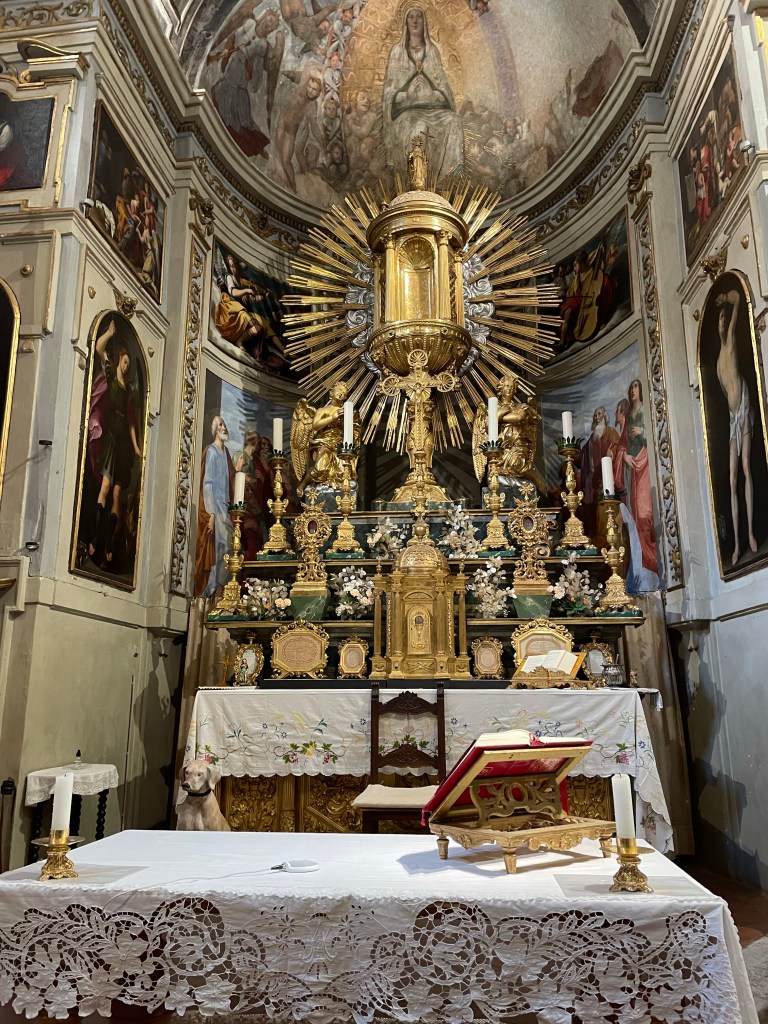
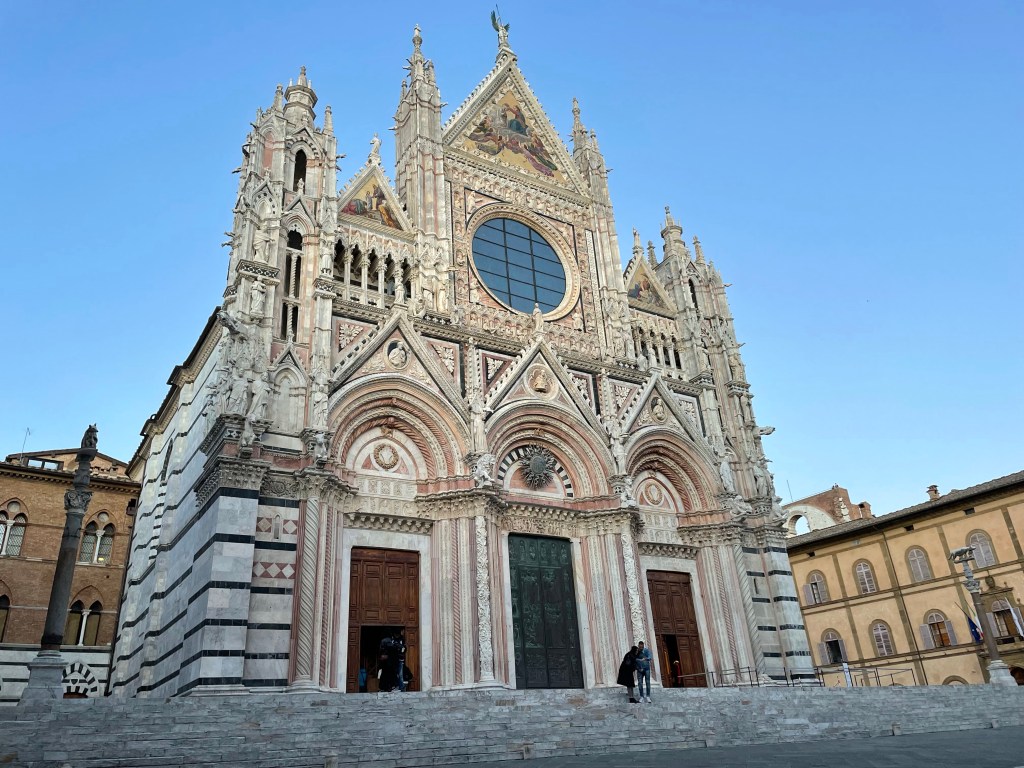
We finished the tour with a visit to the Duomo, which unfortunately was closing its doors for the day. We just got a quick glance inside before we were shooed off.
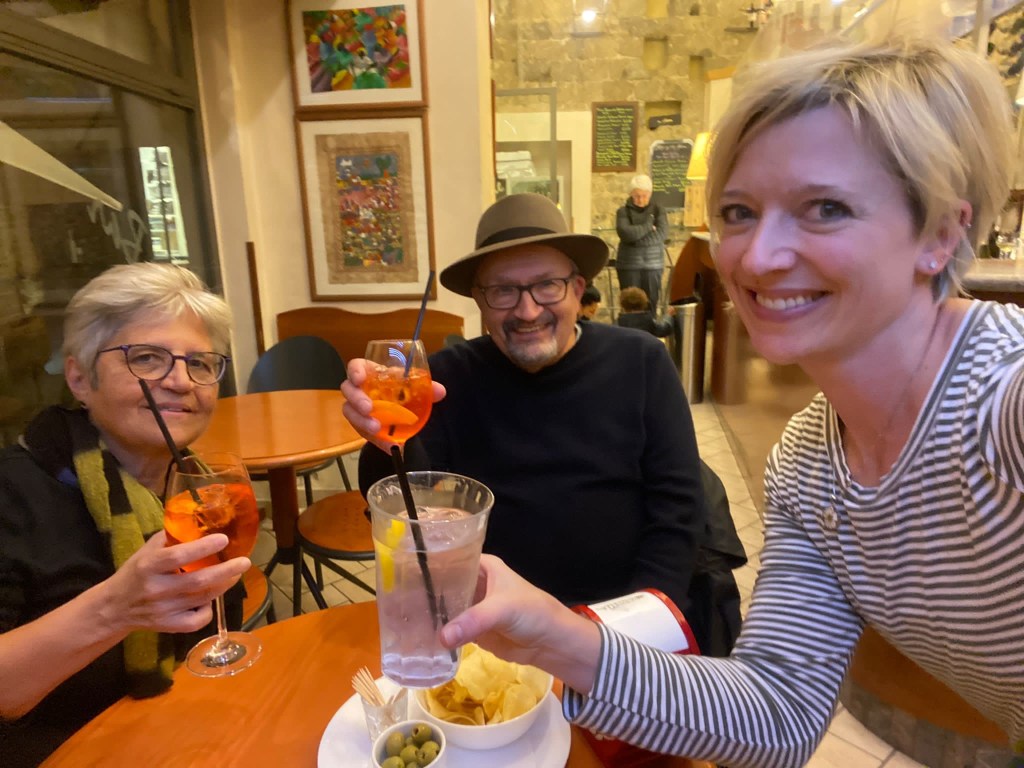
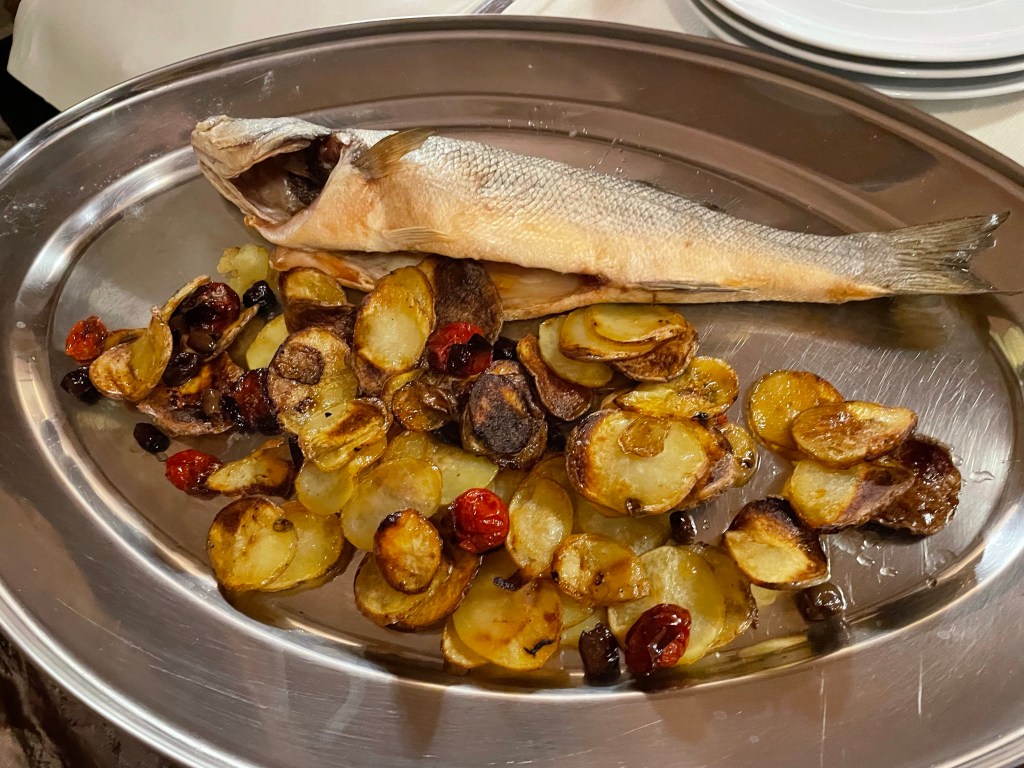
In between we stopped for a lunch of pici pasta (like a thick spaghetti) with wild boar (cinghiale) sauce, wine and grappa as a digestivo at Osteria Bionda. Spritz o’clock preceded dinner at the recently opened Ristorante Casa Tua for a seafood feast of gamberi rossi from Sicily, grilled cuttlefish with pea purée , and grilled sea bass with potatoes and olives and cherry tomatoes.
It was quite a long but fulfilling day and we were ready to get back for a well deserved rest.
The next region we are visiting is Tuscany. We are spending four nights in Siena. Why Siena instead of Florence (Firenze)? Well, I’ve been to Firenze and stayed there several times before whereas I’ve not overnighted in Siena. Also, it’s smaller, easier to deal with when you have a car, and we are going to tour with a private guide who is based here. Anna Piperato is an expat and Ph.D art historian who has lived here I think since 2014. With COVID, guides have had to use their wits to support themselves when there were no tourists. Anna relied on her knowledge of art history and live for her adopted home by offering Zoom lectures and walking tours. I have gotten to know her from these almost weekly vicarious forays in Tuscany from my kitchen table and now we will actually get to meet in person!
To get to Siena, we rented a car fir pickup from the Bologna airport. After nightmarish experiences in Rome and Catania the past several years, I was not looking forward to this, but we were pleasantly surprised. Maybe because it was early (10 am) and a Monday, there was no one waiting to pick up car rentals! We were out the door with the key to an Opel Corso sedan. Google maps got us to the Siena exit and the hotel’s instructions got us to their door without incident.
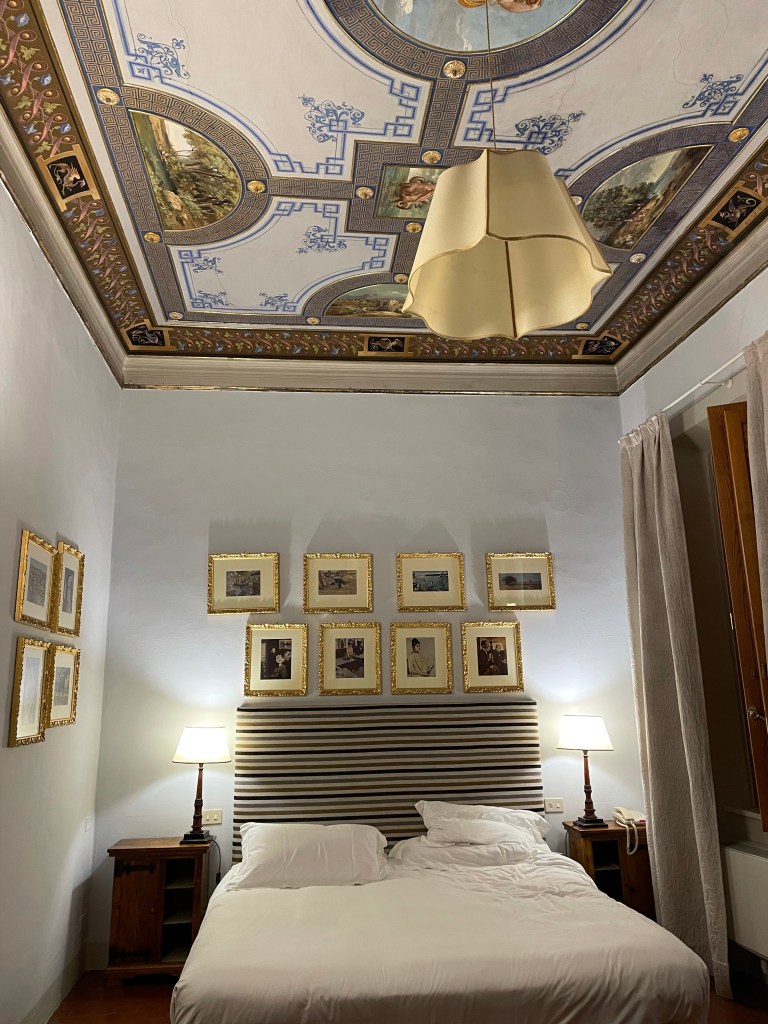
We are staying in Palazzo Ravizza, located just within the city wall, only a 20 minute walk to the center of the city. The one huge perk is the private parking lot behind the hotel. It is a former palace and some of the grandeur remains. We gave a huge room with a decorated high ceiling and view of the garden.
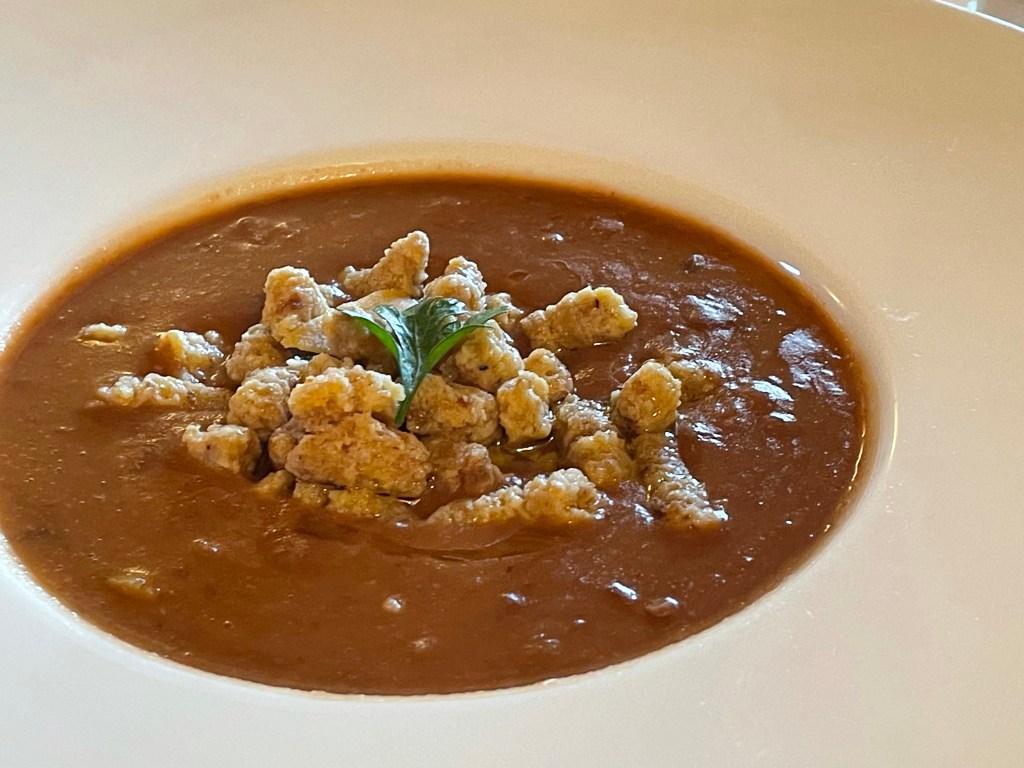
The weather is miserable – cold and rainy- and we ventured out to find a laundromat and someplace to eat lunch. We ducked in out of the rain to an osteria that looked small from the outside but was massive inside. I had papà al pomodoro, a comfort food of bread and tomatoes, that tasted great on this cold miserable day.
Then we gathered up dirty laundry for the trip yo the self service laundromat. It was a dreary and rundown place, justifying its poor Google reviews, but after almost two hours, and a crummy dryer, we walked out with relatively dry, albeit wrinkled, clothes.
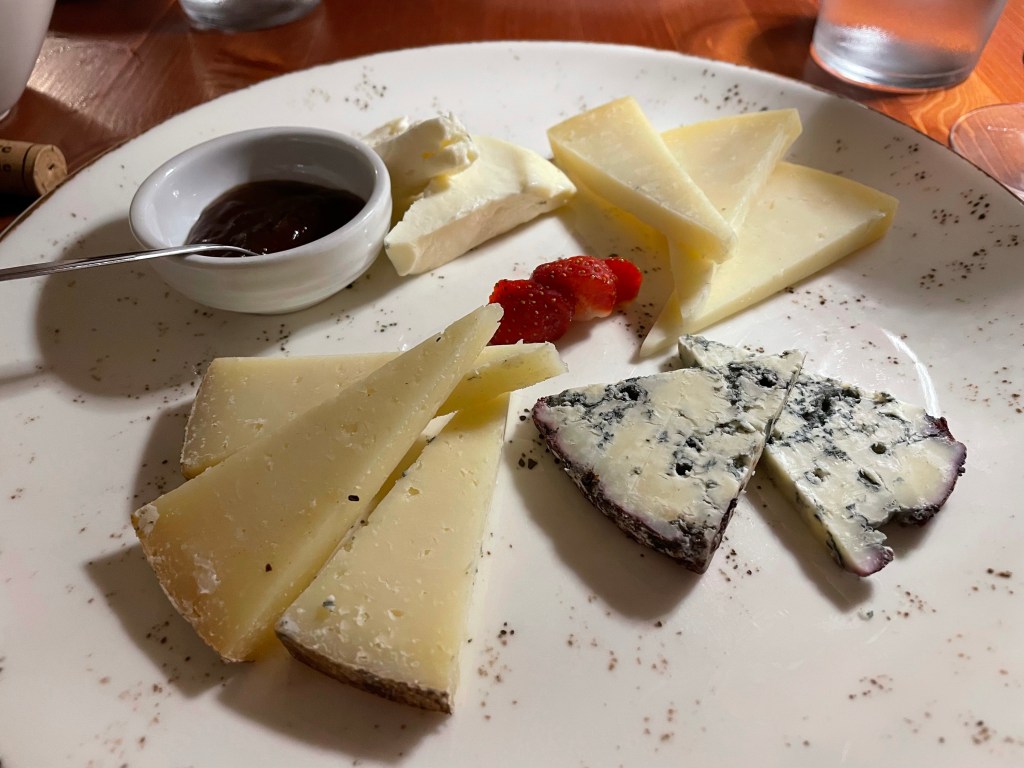
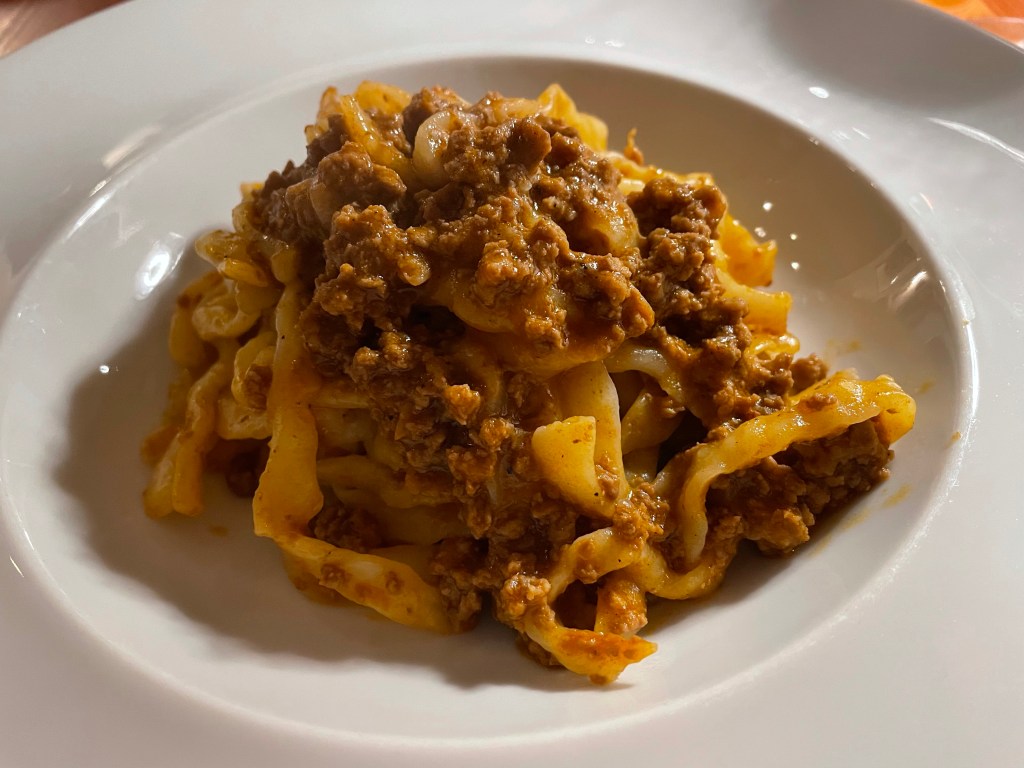
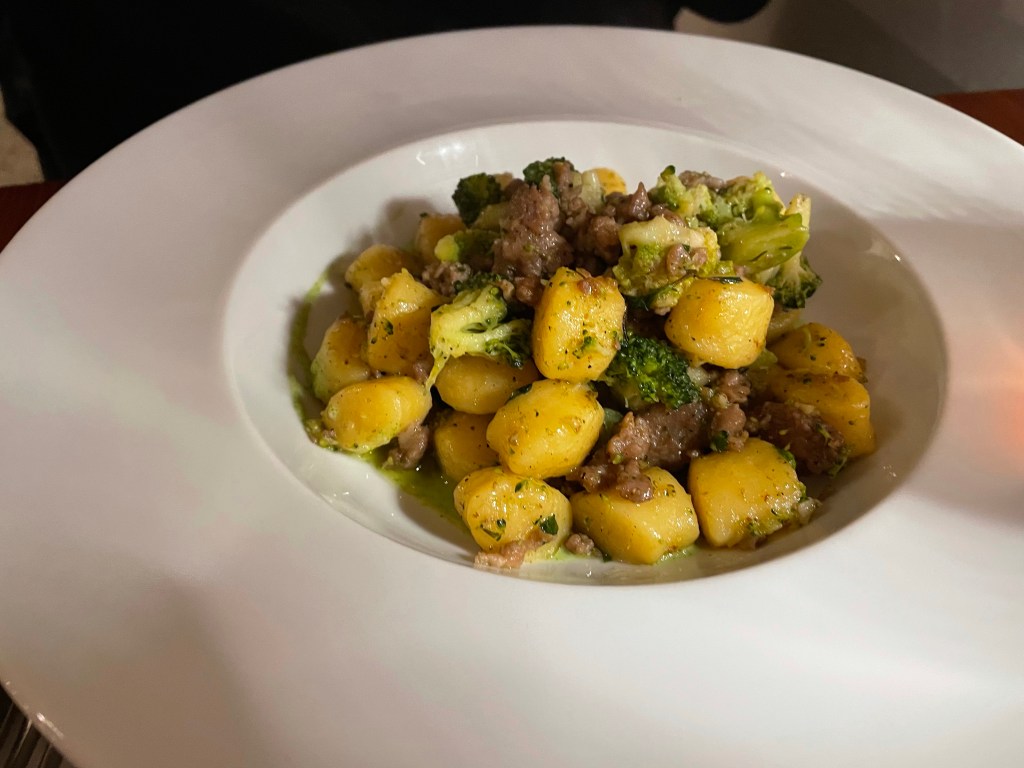
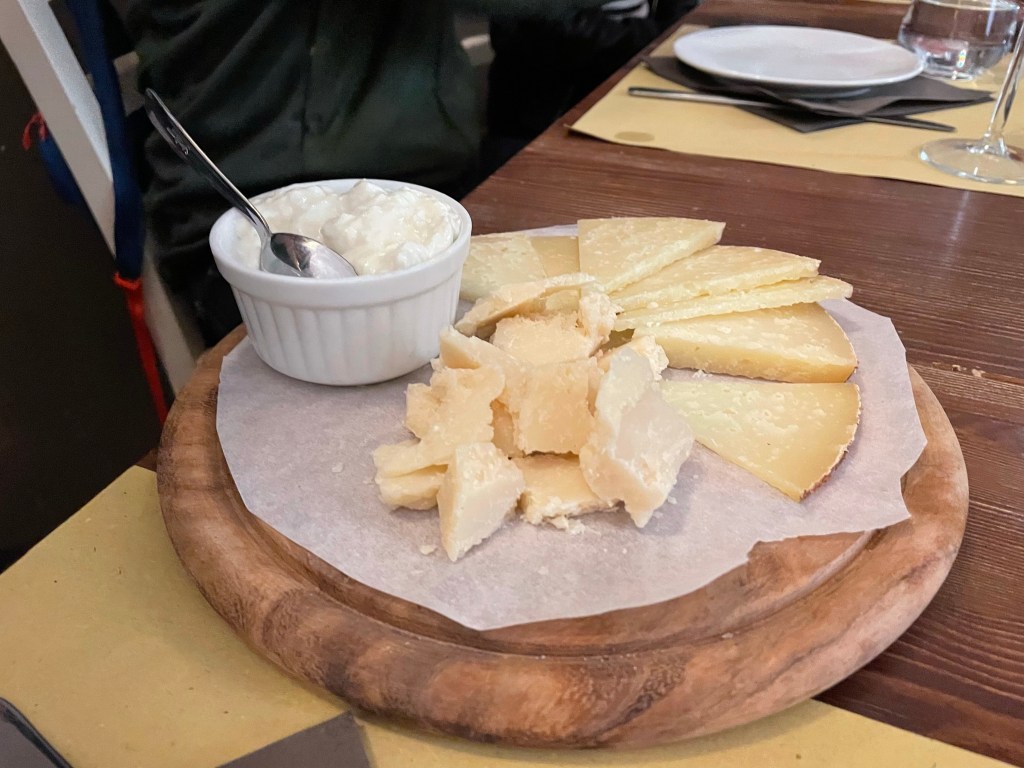
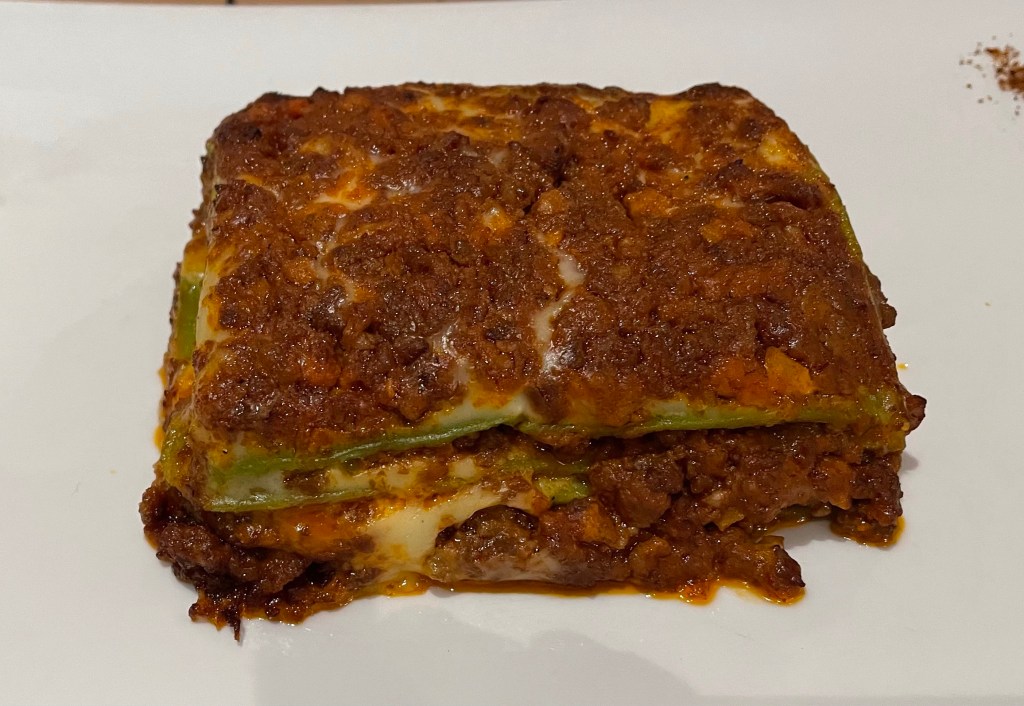
Dinner was at the Osteria Quattro Venti, ironically right next door to the laundromat. The food was good, the service was attentive and it wasn’t far from the hotel. We shared a cheese plate, and the two primi were a pici pasta with meat ragù and gnocchi with sausage and broccoli.
Since it finally stopped raining, after dinner we went to Il Campo, deserted and lovely by night.
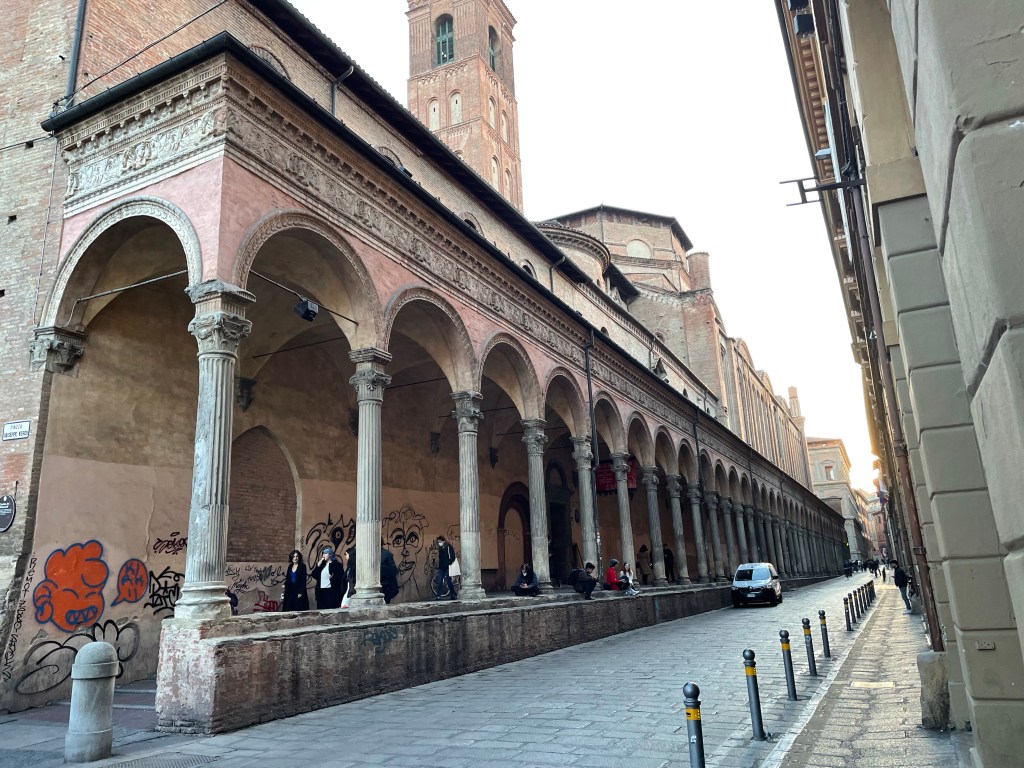
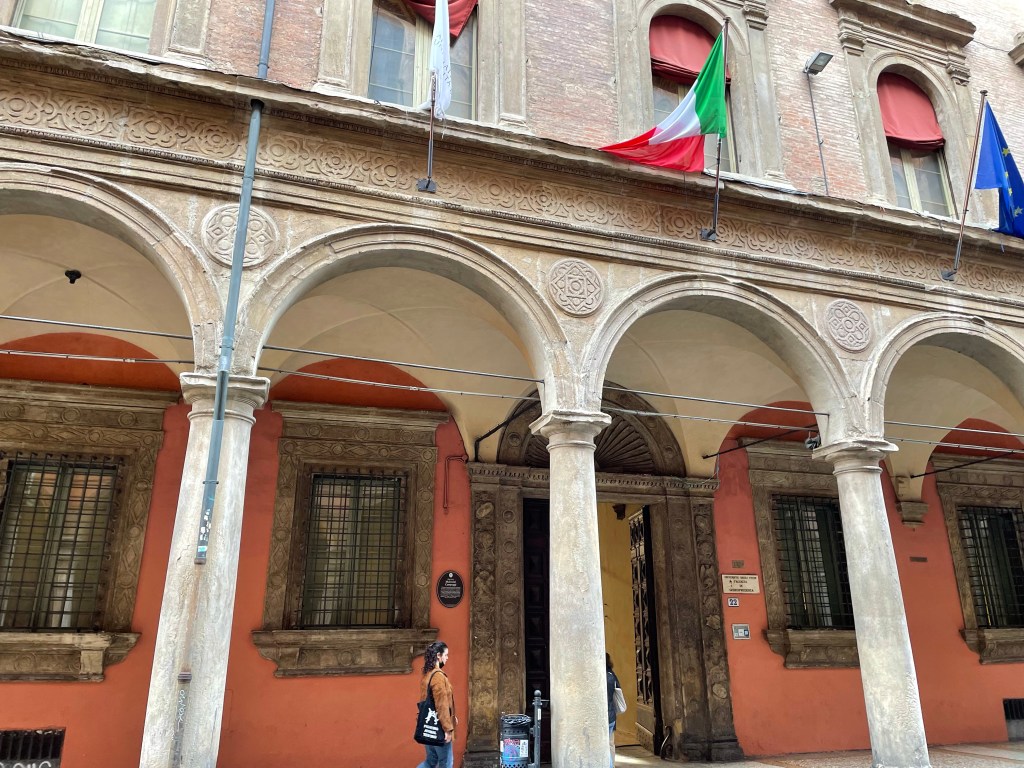
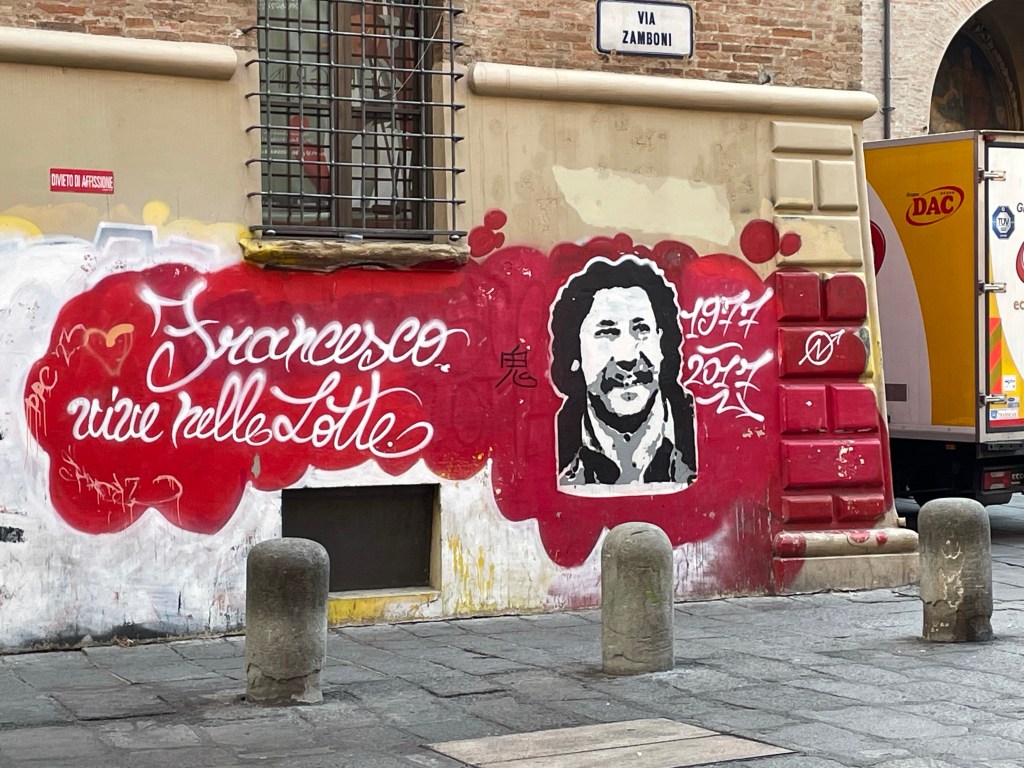
The largest city in the northern region of Emilia-Romagna, Bologna is a city rich in many aspects. Usually overlooked by American tourists, this vibrant city is known for its university ( founded in the 11th century, it is the world’s oldest), its red/pink buildings, world class cuisine. It also is famous for its 50 km of porticos, its left leaning politics and walls of graffiti.
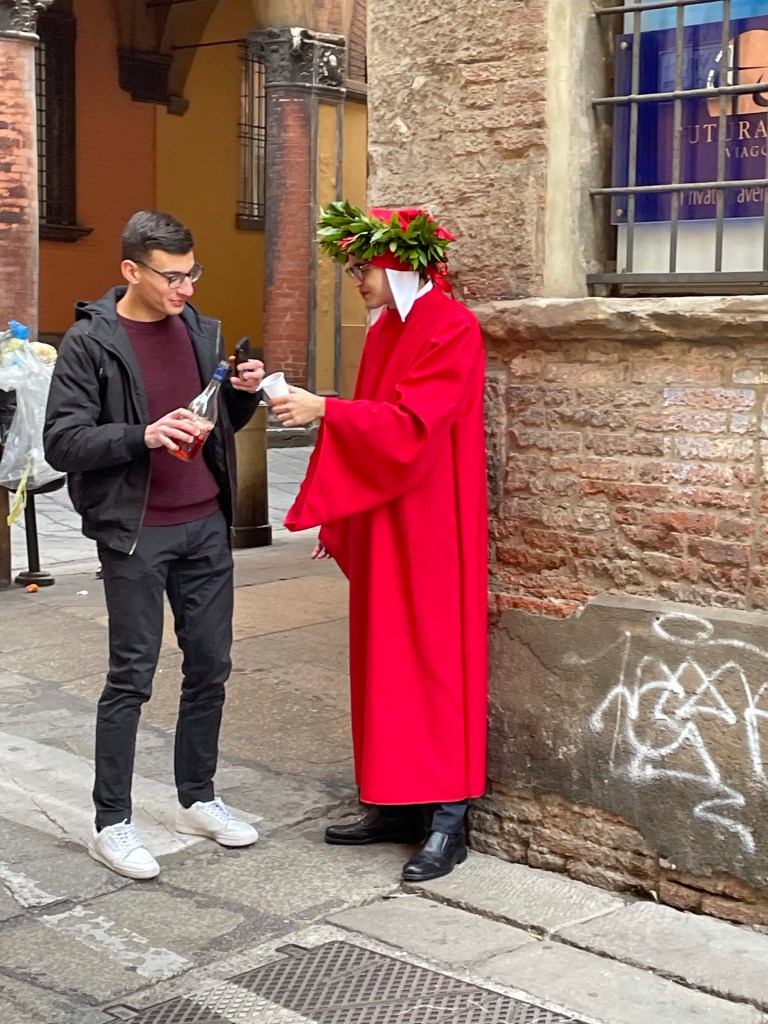
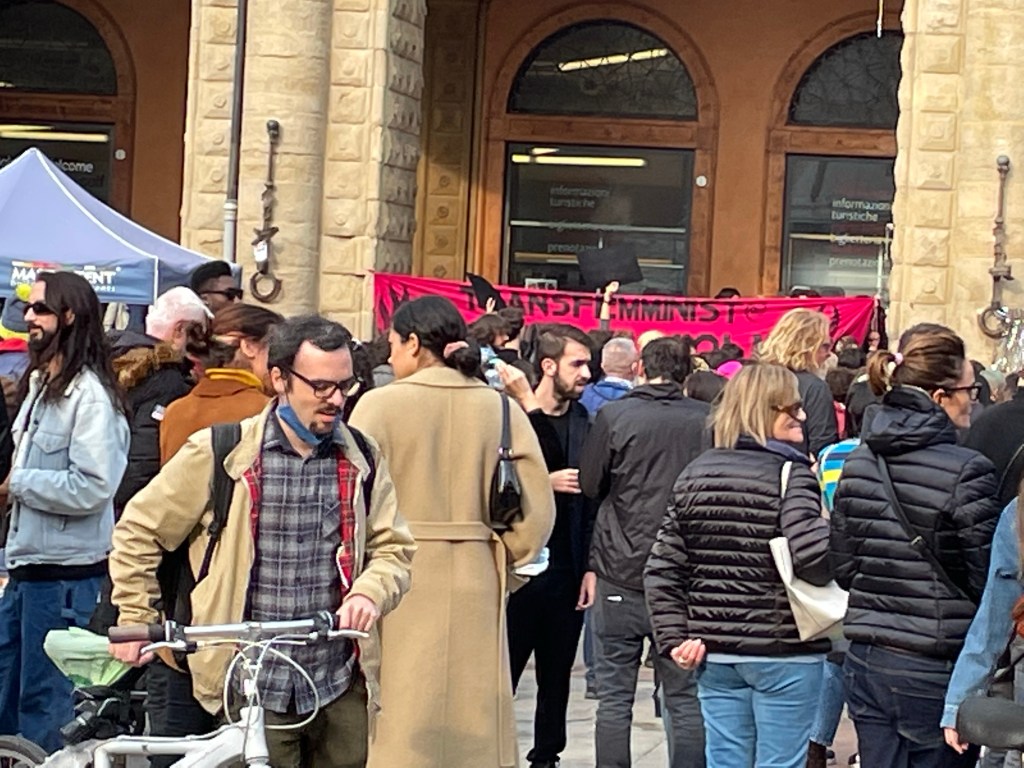
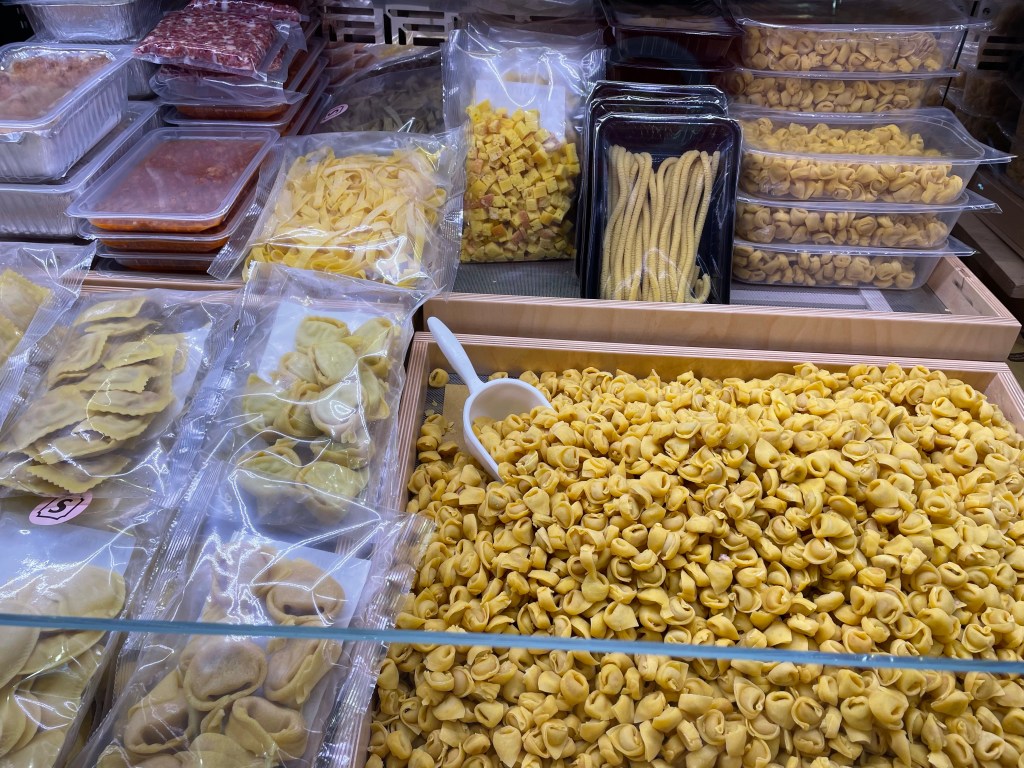
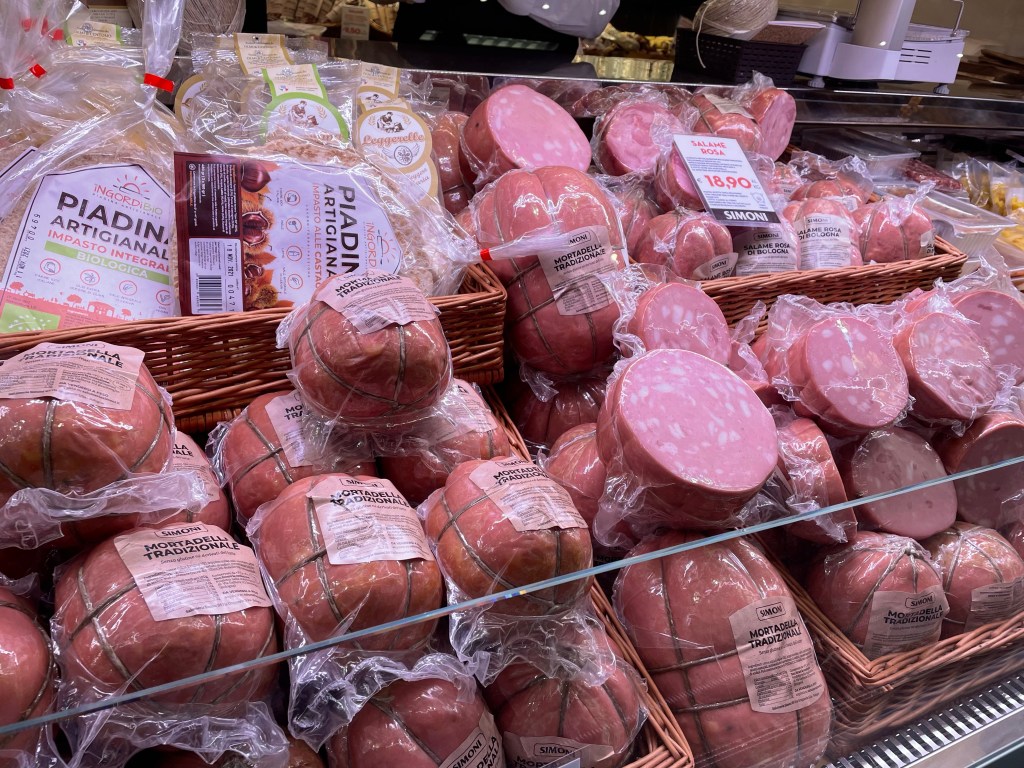
Porticos Red buildings University graduateLGBTQ Graffiti/street artTypical pastas Mortadella galore!
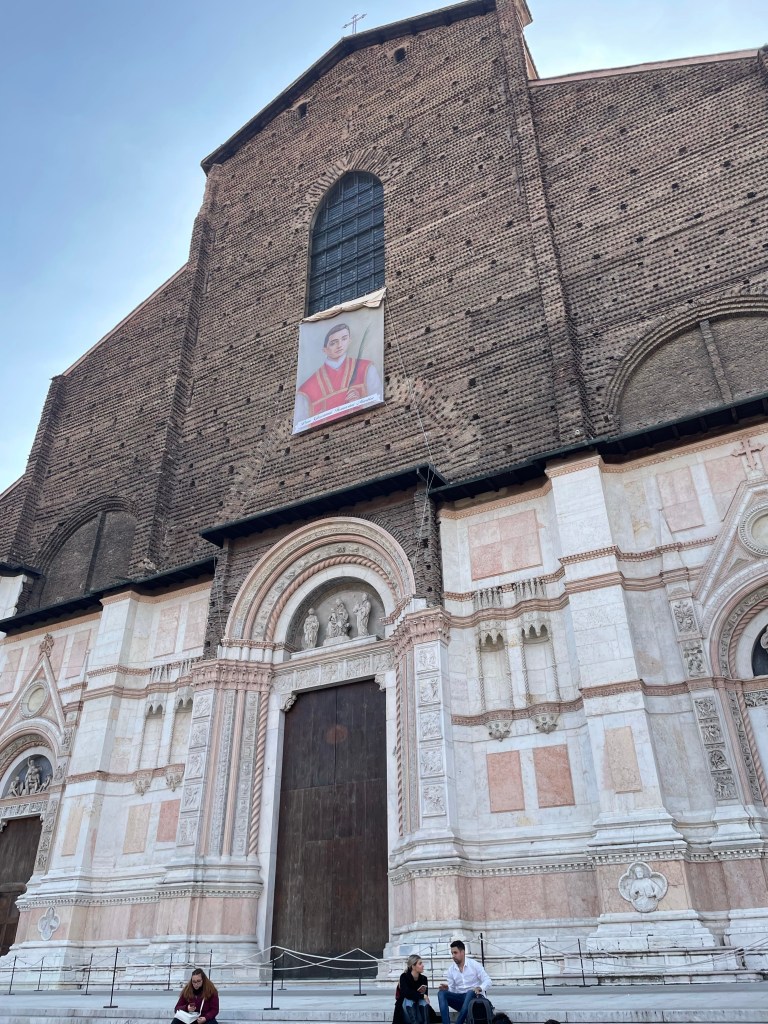
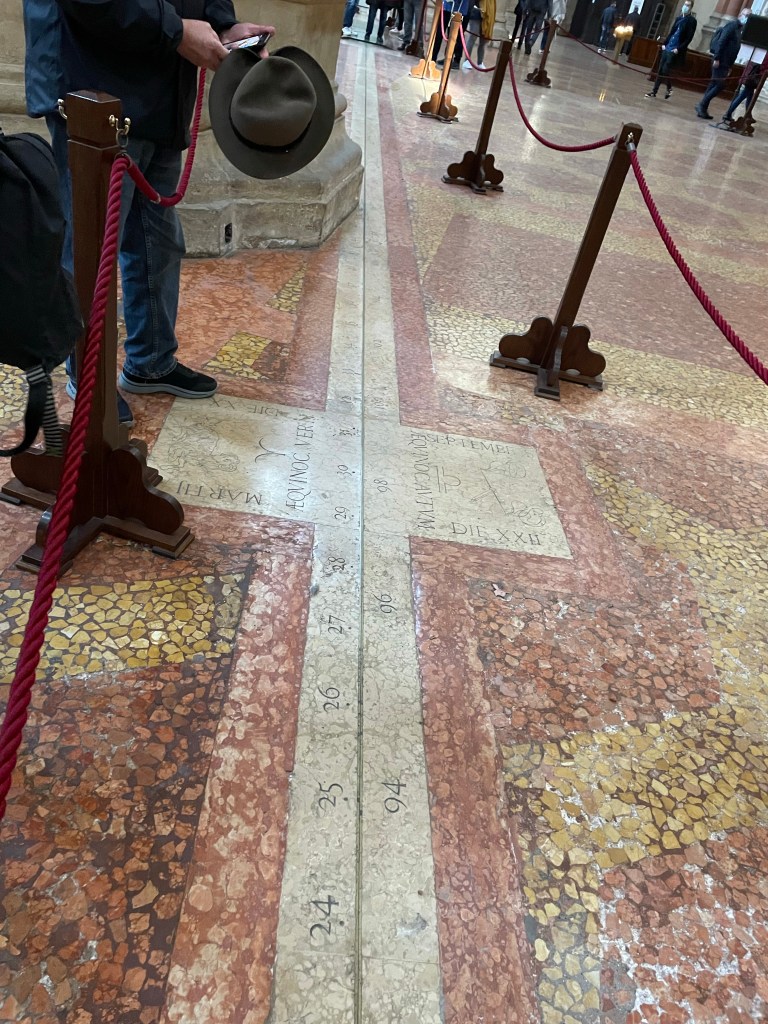
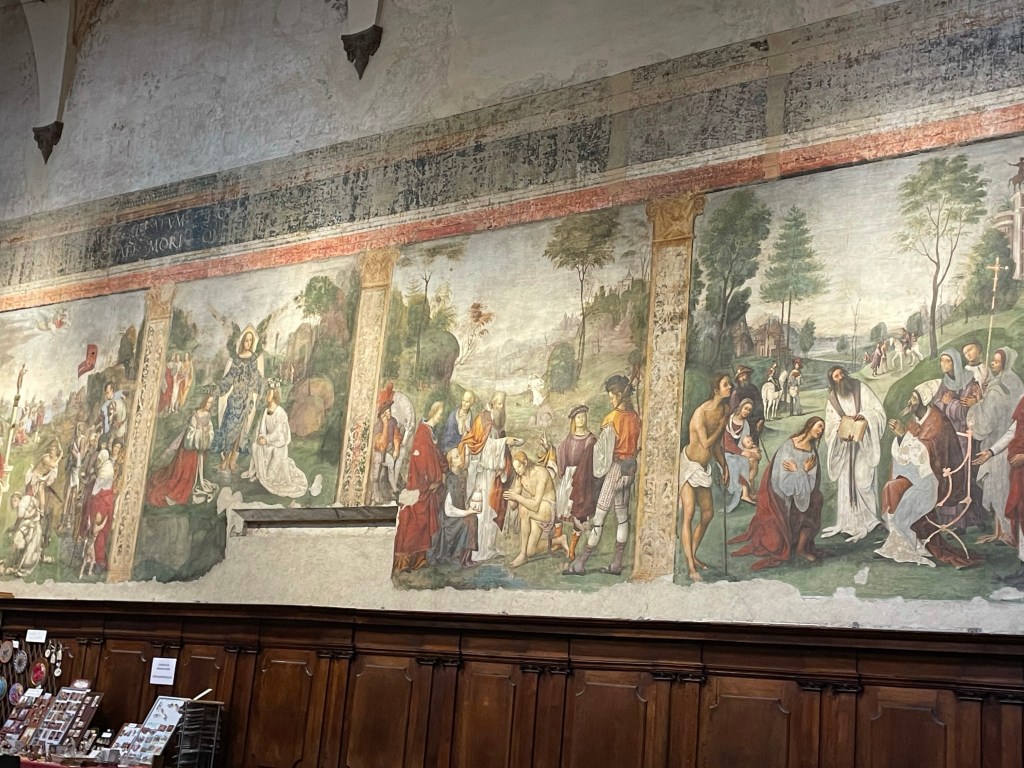
We started our independent portion of the trip today with a private tour arranged by our B&B (Casa Bertagni). Our guide was Valeria Bindi. She was a bundle of energy as she led us through the labyrinth of streets of this city dating from Etruscan times. We visited many churches, the biggest and most impressive being San Petronio. He is one of seven patron saints of the city. The church is about 700 meters long and is the 7th largest in the world. The facade is a mixture of Romanesque and Renaissance and the interior is famous for a sundial on the floor and an amazing fresco depicting a scene from Dante’s Divine Comedy.
We visited several more churches and saw lots of religious art and honestly it was a whirlwind and I can’t remember details.
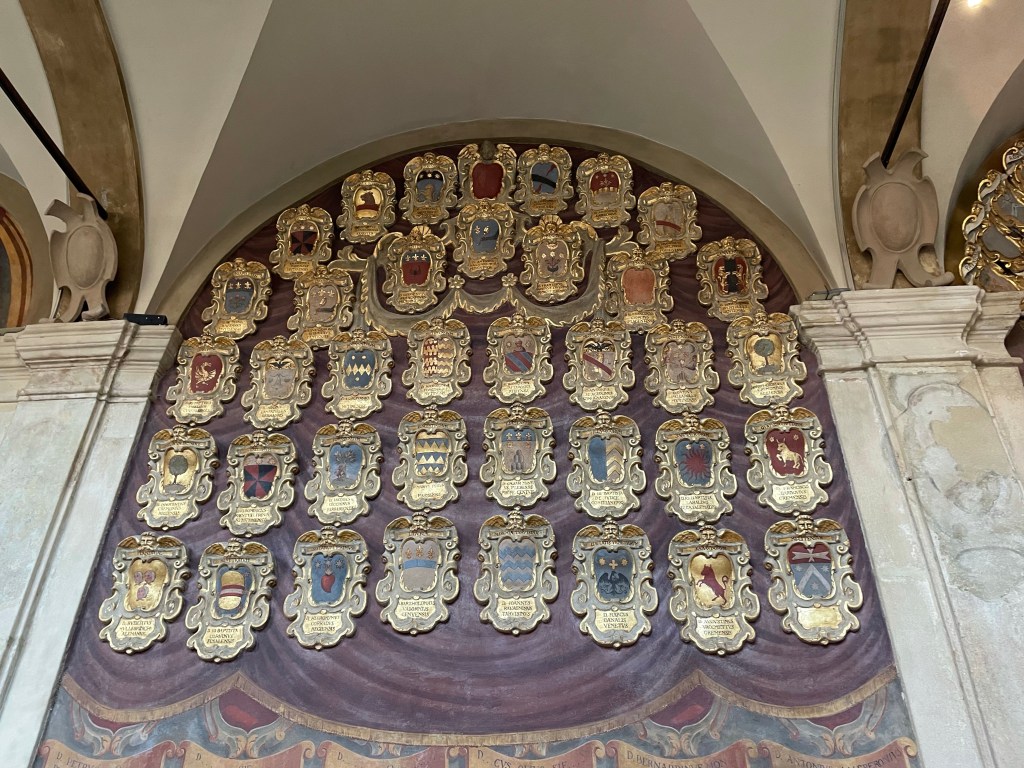
Another interesting site is the Archginasio, home of the medical and law schools in the 16th century. The anatomical theater and rooms and hallways filled with 700 coats of armor are wonderful remnants of this university.
One of the frustrating things for guides and travelers in this post-COVID era is the unpredictable closure and ever changing hours of operation of the many sights in the city. We were lucky though to get into the Oratorio di Santa Cecilia the next day to see the fresco cycle of the life of the saint.
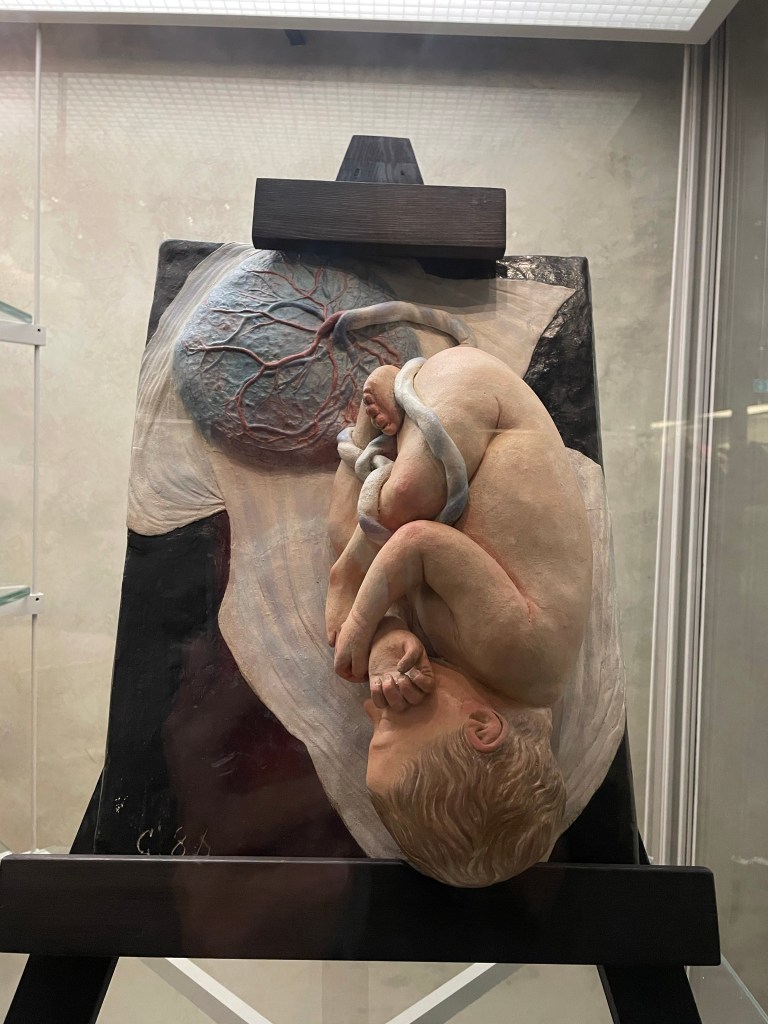
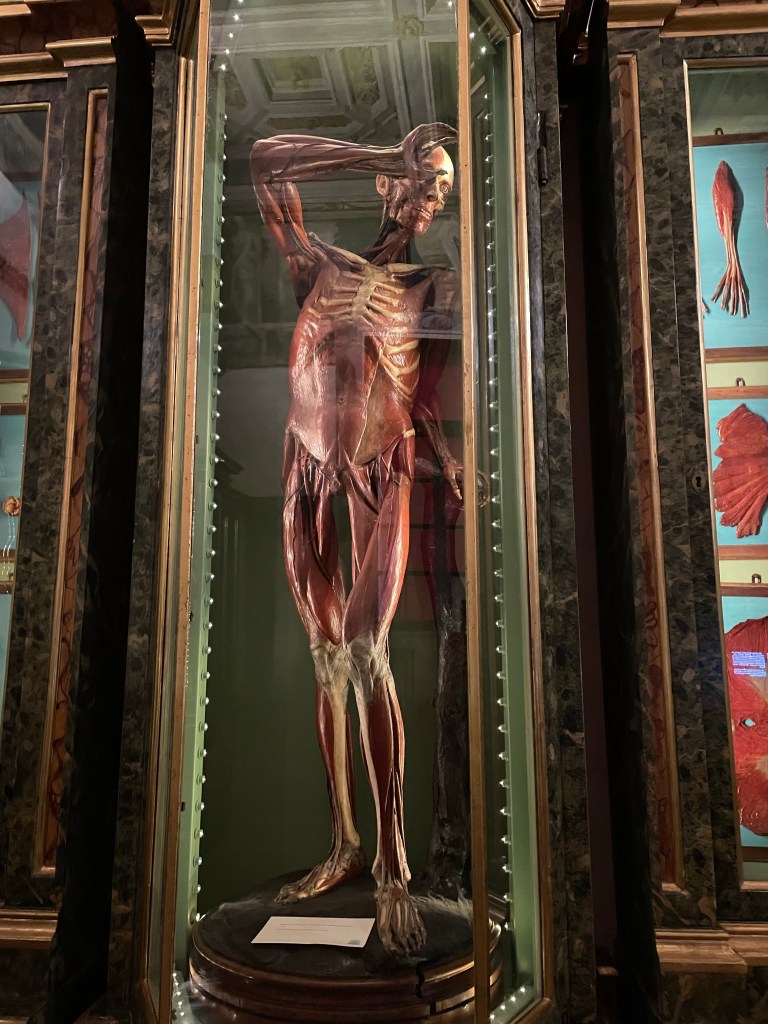
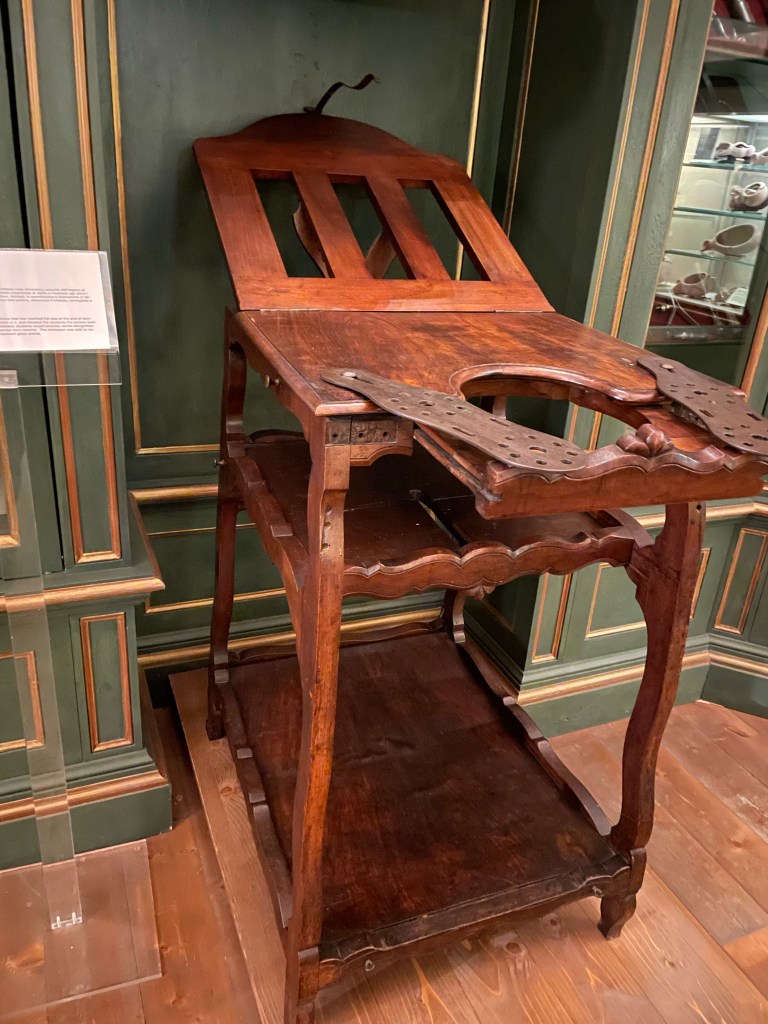
A visit to Palazzo Poggi was surprisingly possible on a Sunday. This science museum established in 1711 in one of the main buildings of the university contains an extensive natural history exhibit and an amazing anatomical exhibit of wax models of the human body and exhibits of the obstetrics school, with terracotta and wax depictions of fetuses and uteruses as well as a birthing chair and surgical instruments.
Birthing chair used in 1700s.
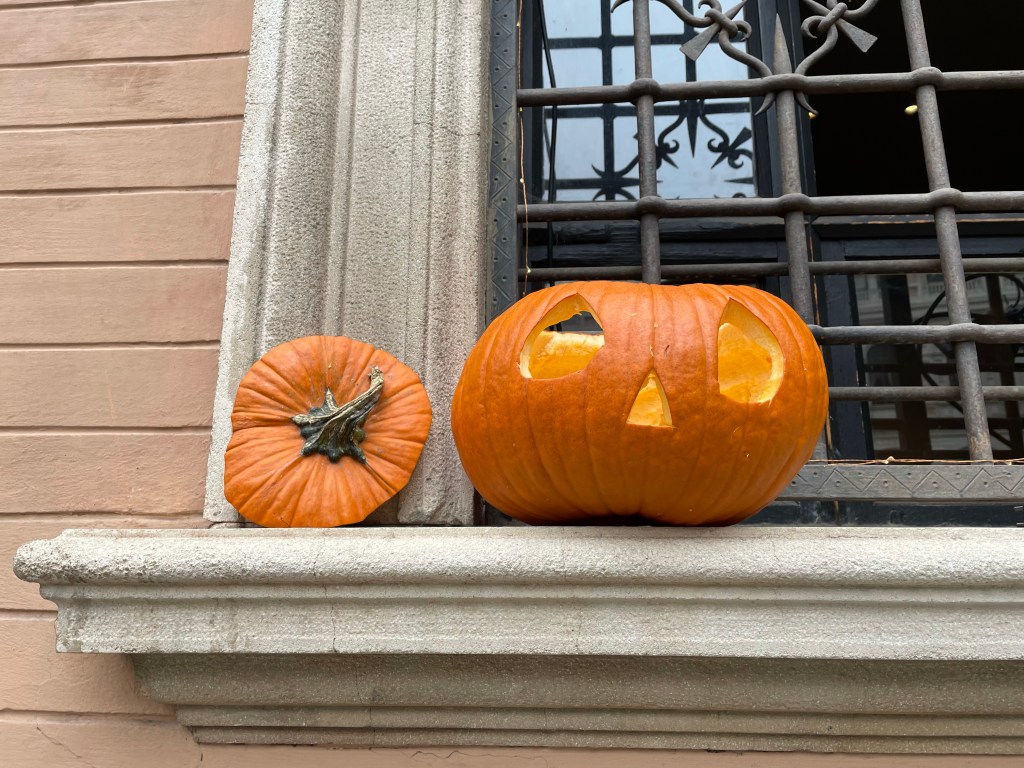
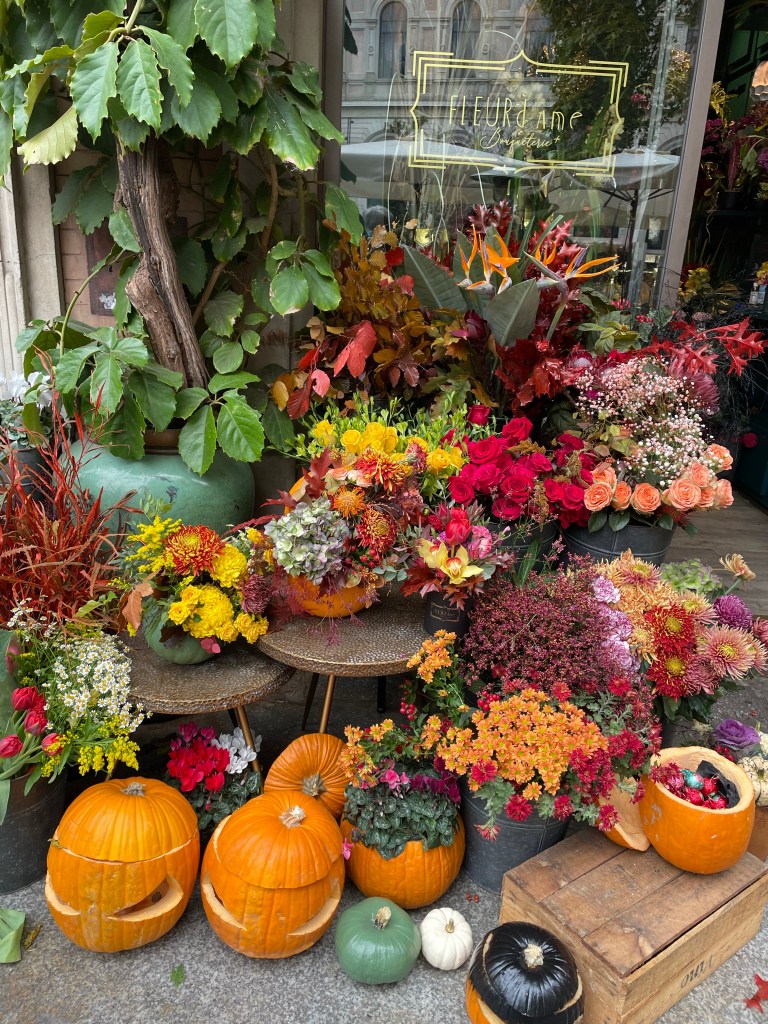
Although Halloween is not an official holiday, carved pumpkins and kids (and adults) in costume can be seen. The pumpkin carving craft is definitely on the primitive side, but the floral displays are stunning. There is no typical trick or treating from house to house but rather from shop to shop where a small treat may be handed out.
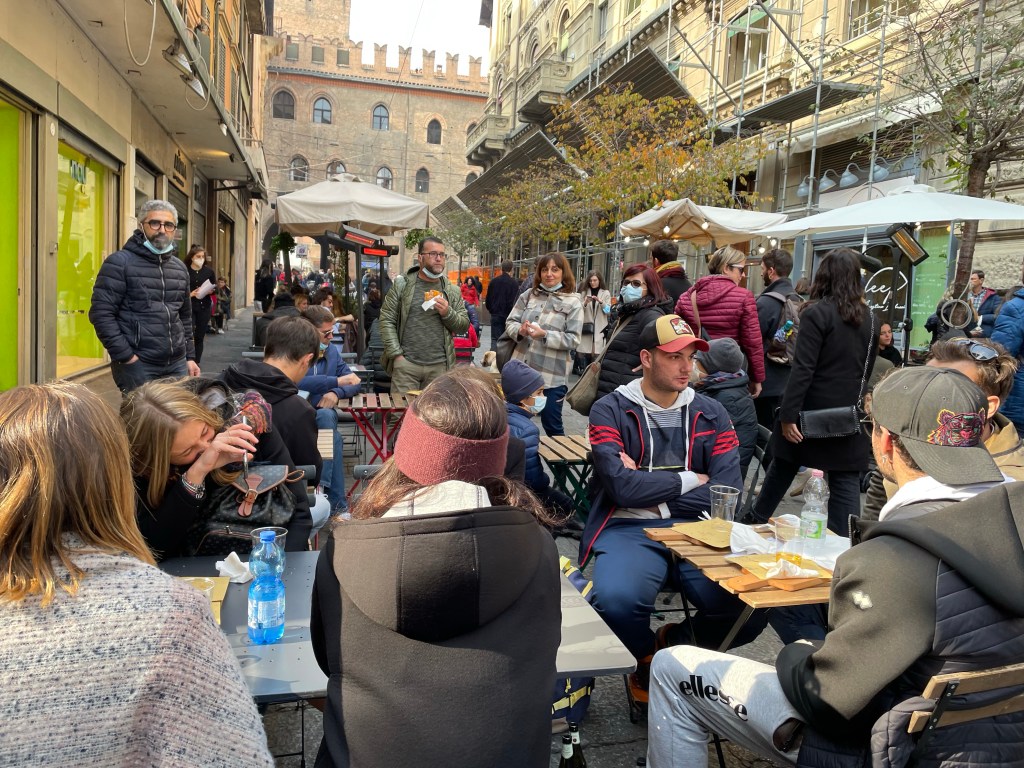
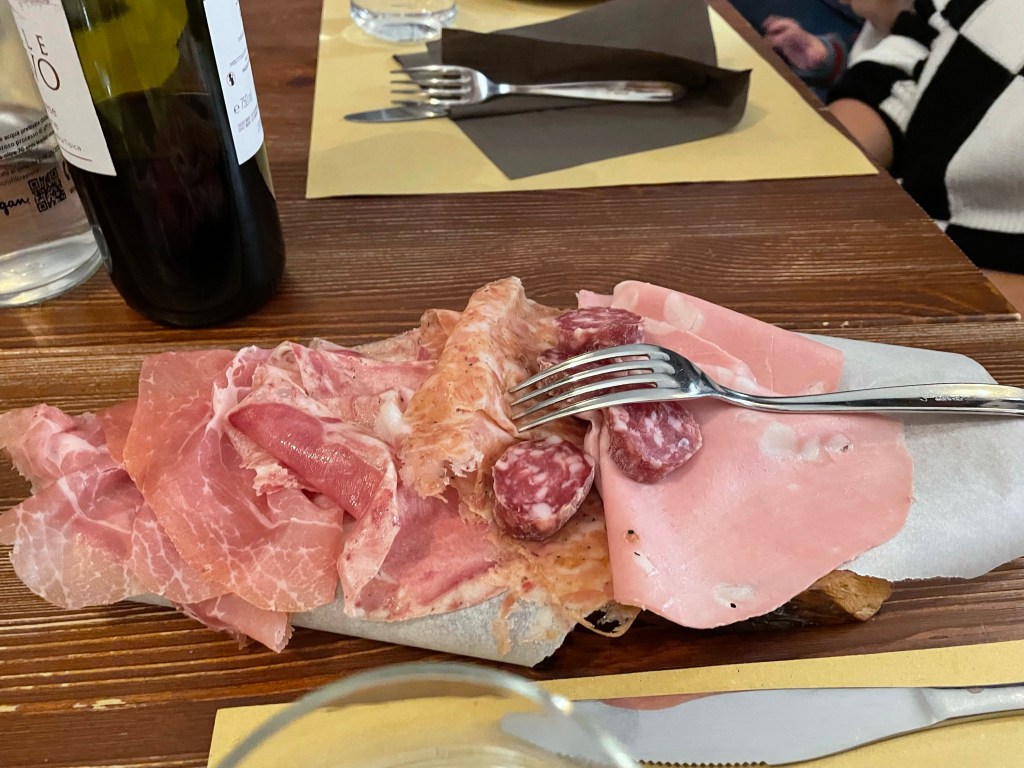
November 1, however, IS a national holiday (All Saints Day), and Italians make a three day weekend of it and travel to nearby cities. Bologna was mobbed with people, mostly Italian tourists, who filled every possible outside table to enjoy Aperol spritzes and tagliere (charcuterie).
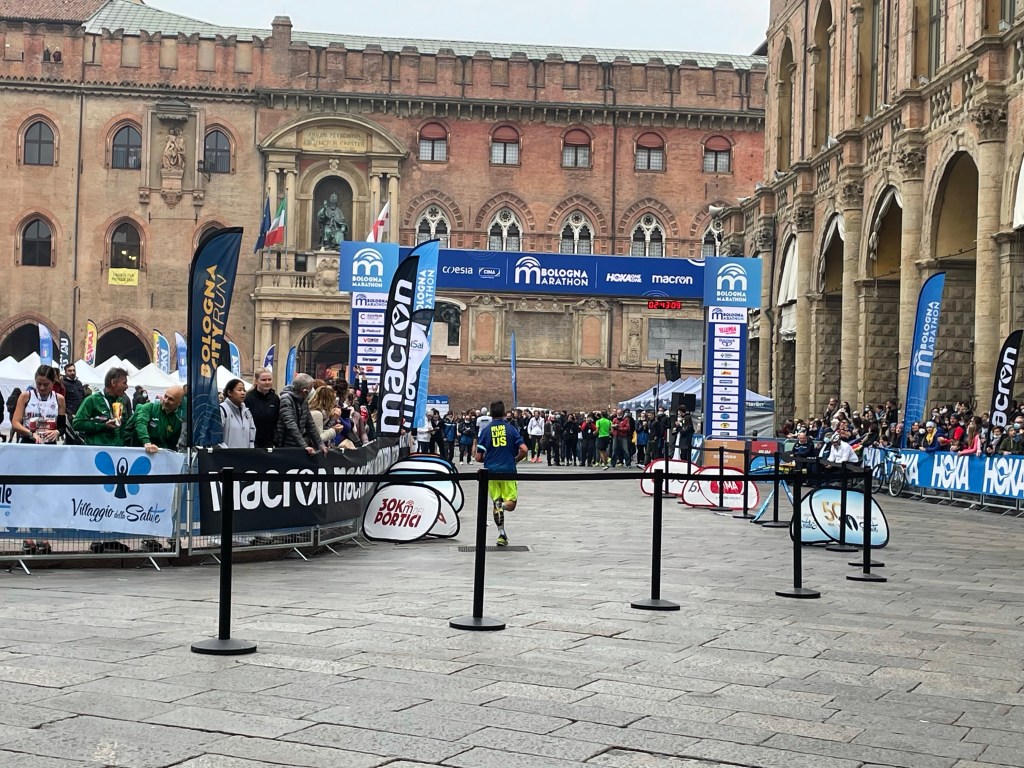
This Halloween was also the date of Bologna’s first marathon. Runners had to contend with pedestrians, bicycles and cars, as well as the physical challenge of the race.
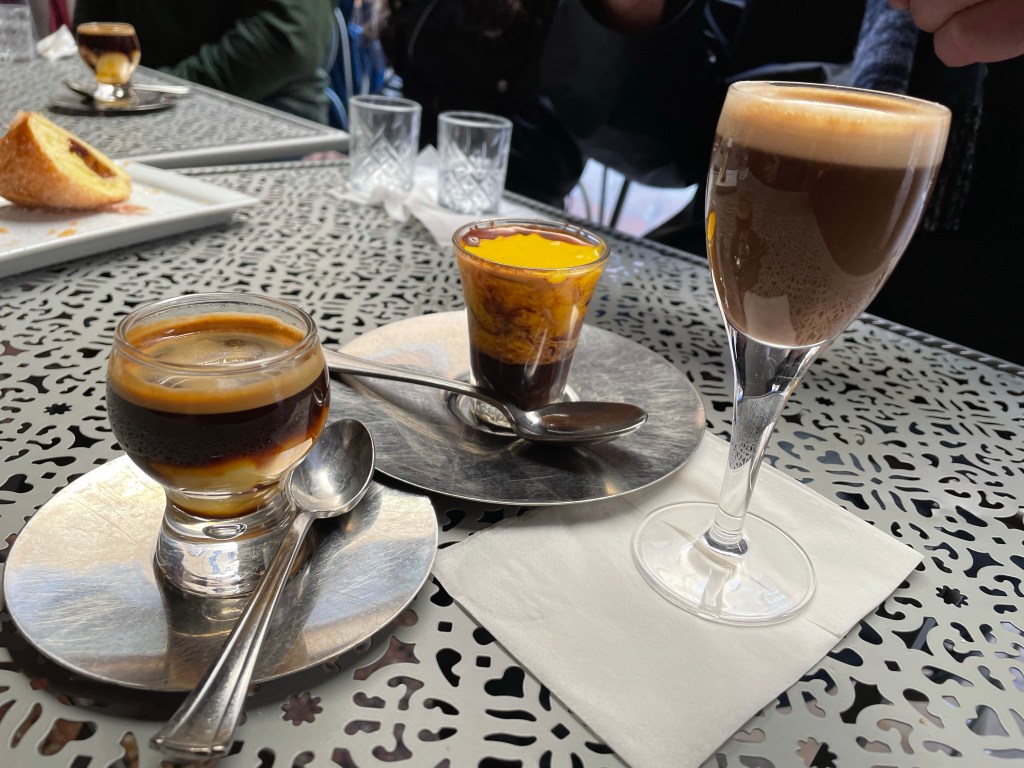
Of course, Bologna is famous for food, and a food tour is generally part of the itinerary. Taste Bologna offers several, and we opted for the Classic tour. We started with a specialty coffee and a sweet roll at an upscale coffee bar. Instead of the usual espresso or cappuccino, the three specialty coffees were: zabaglione; fior di latte; and torinese (with chocolate).
Fior di latte, zabaglione, torinese
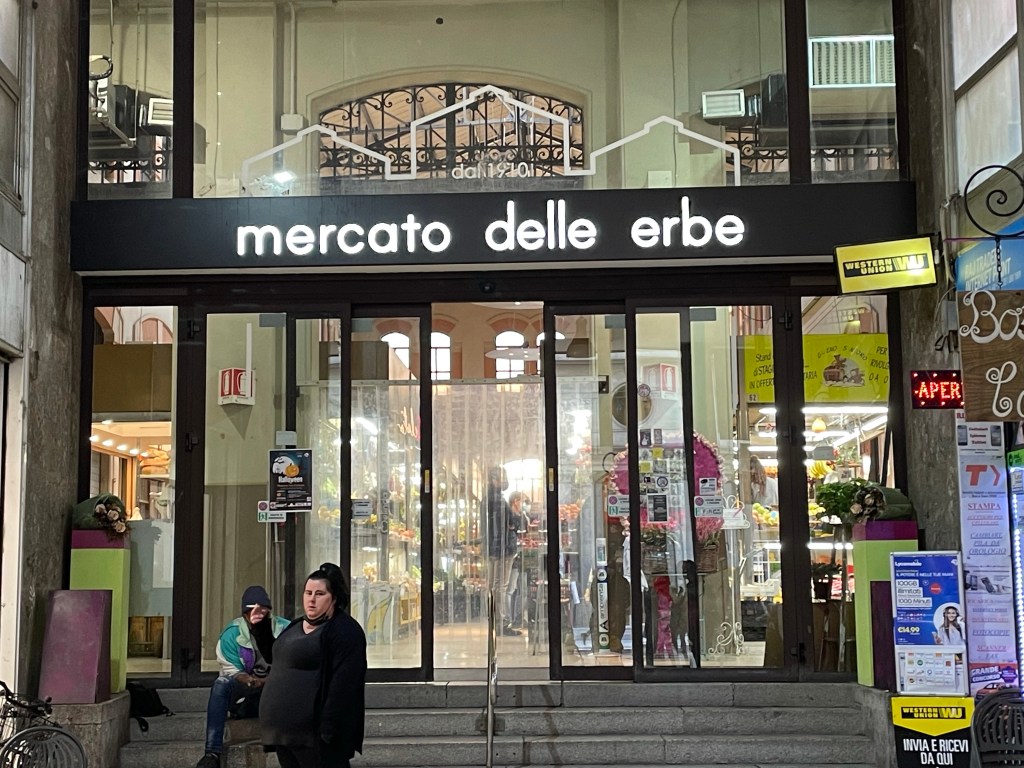
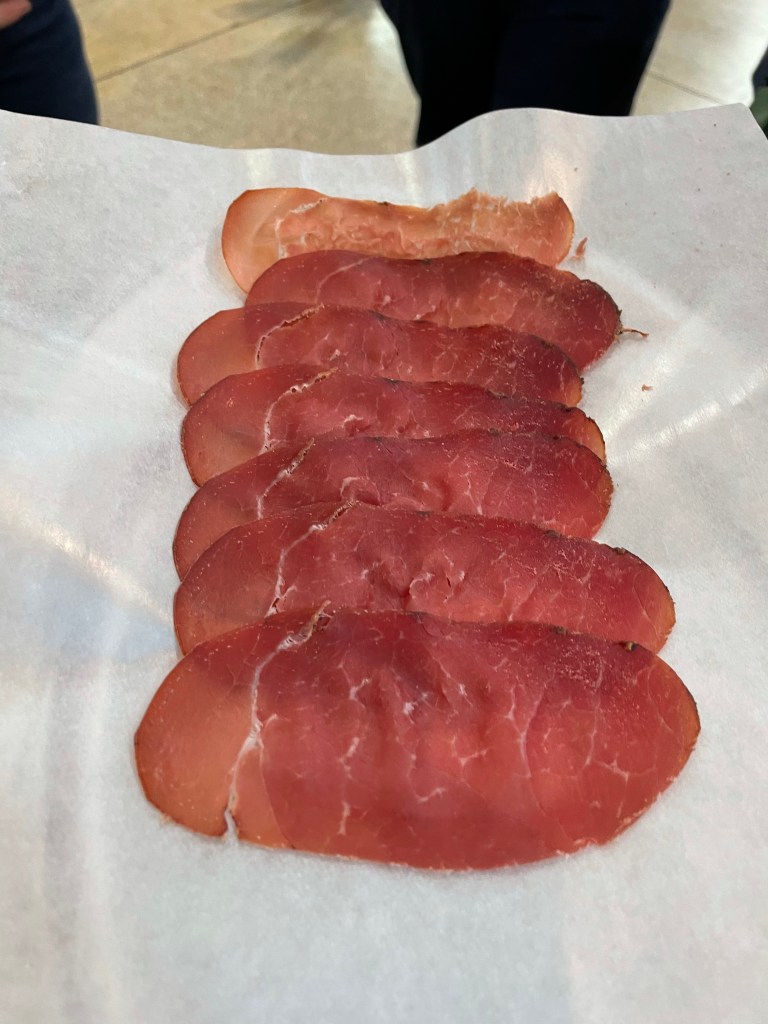
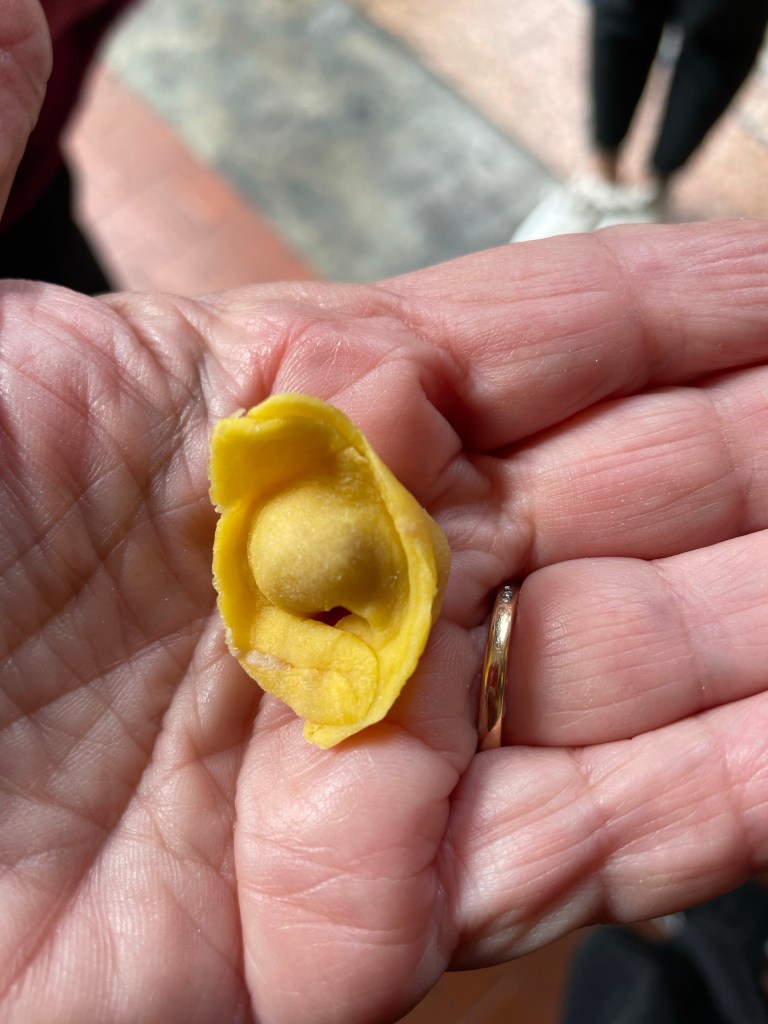
We walked through one of the two public markets and sampled some speck made of horse meat. Then we walked by specialty food shops as the guide explained the different typical foods of the region. Unfortunately as it was a Saturday and a holiday weekend, we couldn’t visit the tortellini factory to see how these mortadella filled pastas were produced. But we did learn how to make one.
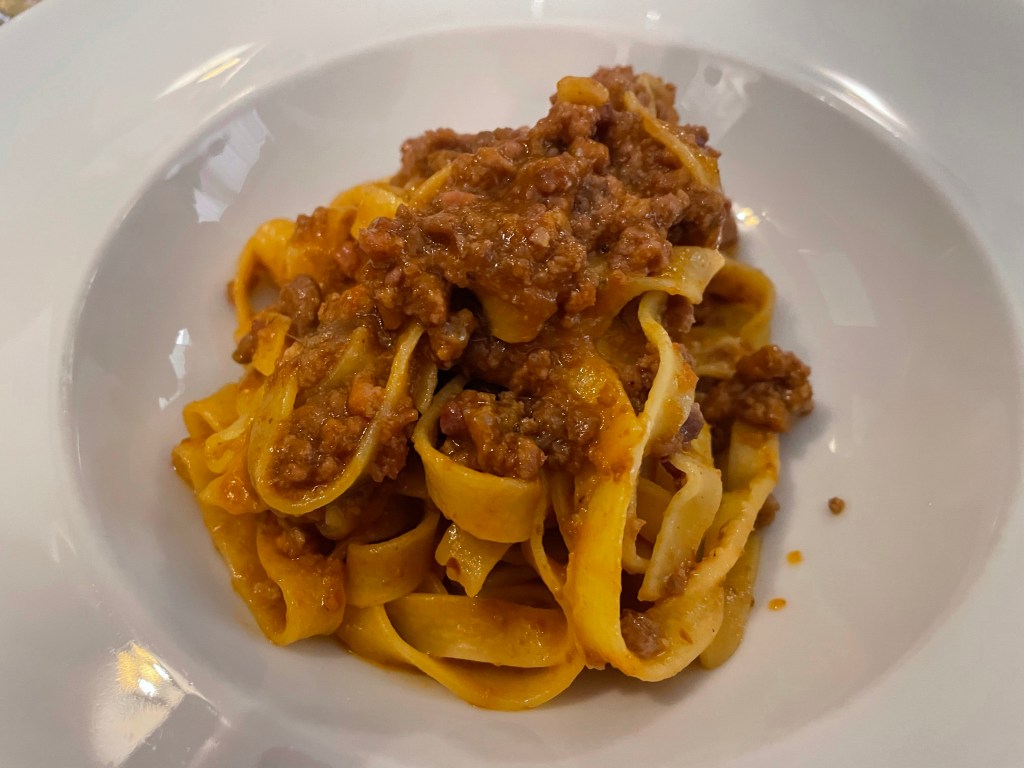
Then we had a typical lunch with tagliatelle bolognese, sliced meats, and local cheese and finished the tour with a gelato.
And speaking of food, we had some excellent meals, varying from traditional home style to more refined at Trattoria Collegio di Spagna, Ristorante Ciocca, Da Cesarina and Osteria Bartolini.
After three days of sunny and cool (but not humid) weather, the typical gloomy, humid Bologna weather is back, making it a good time to relax at our comfy B&B (Casa Bertagni). Tomorrow we are picking up a rental car to head south to Siena in the region of Tuscany.
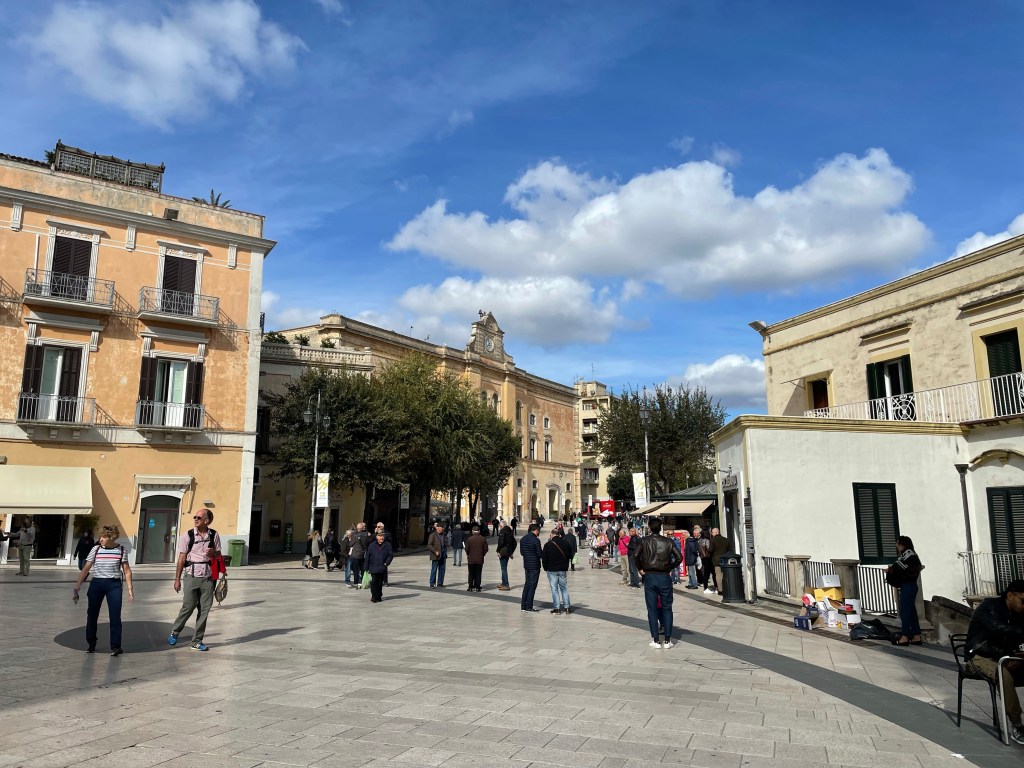
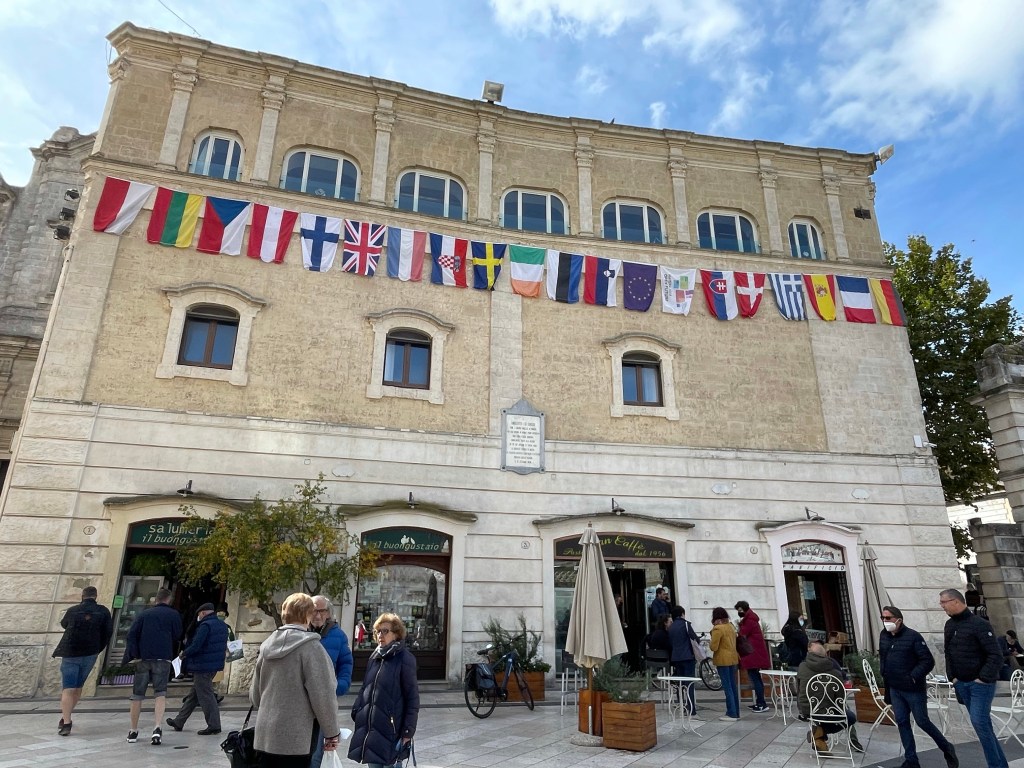
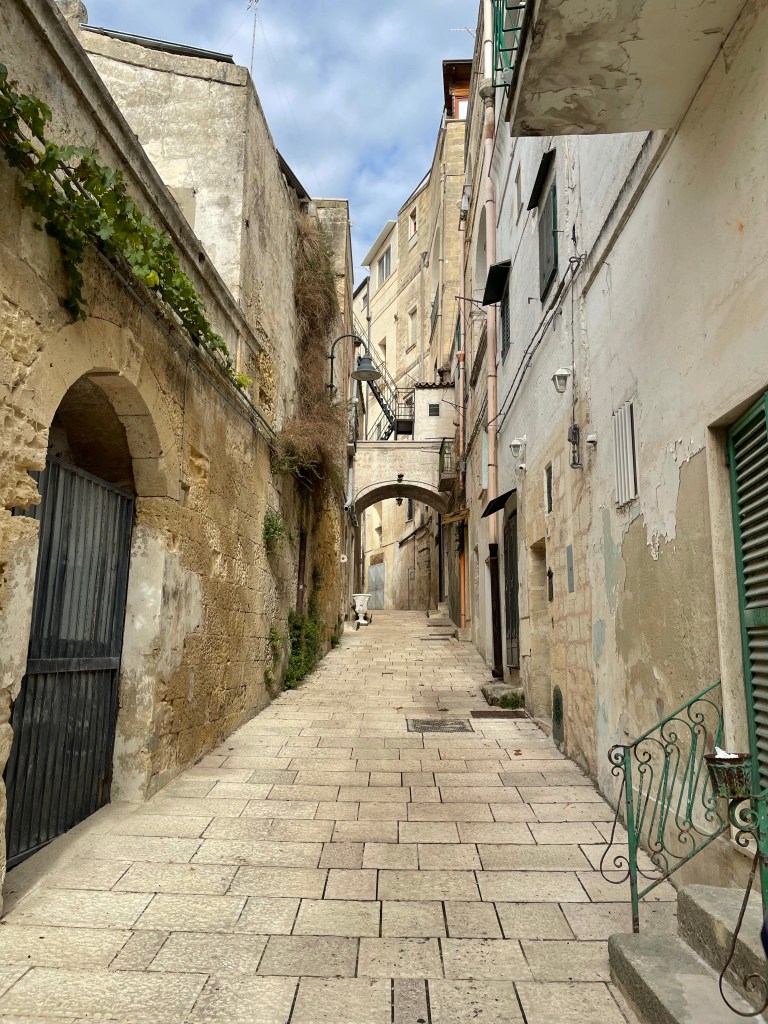
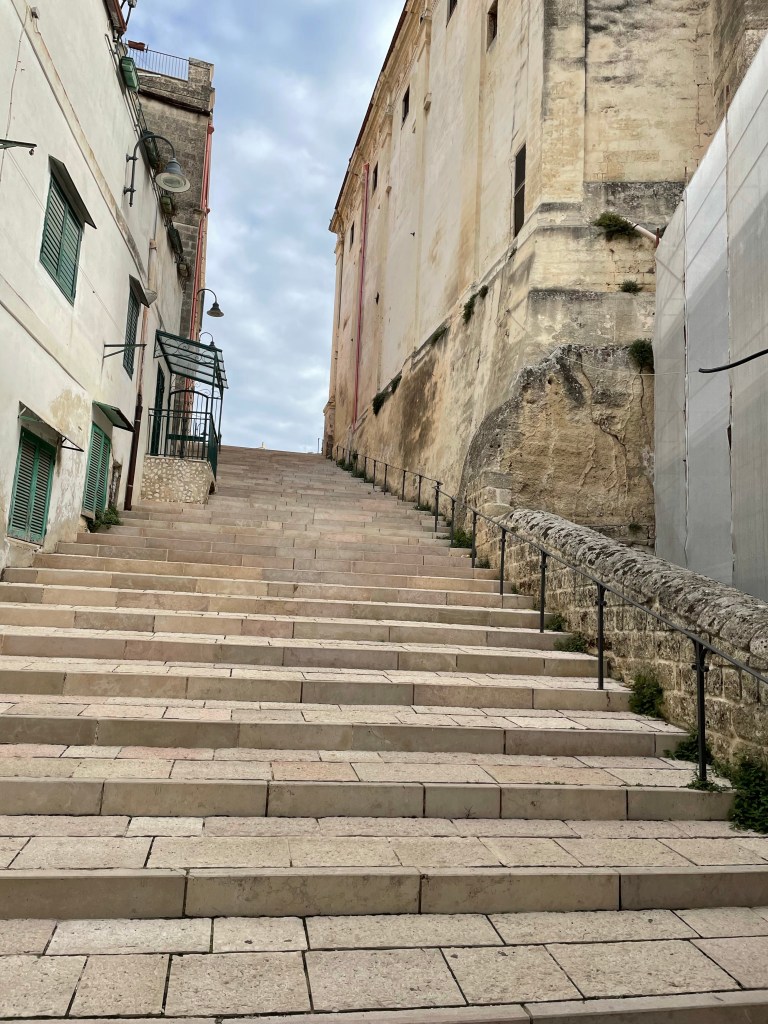
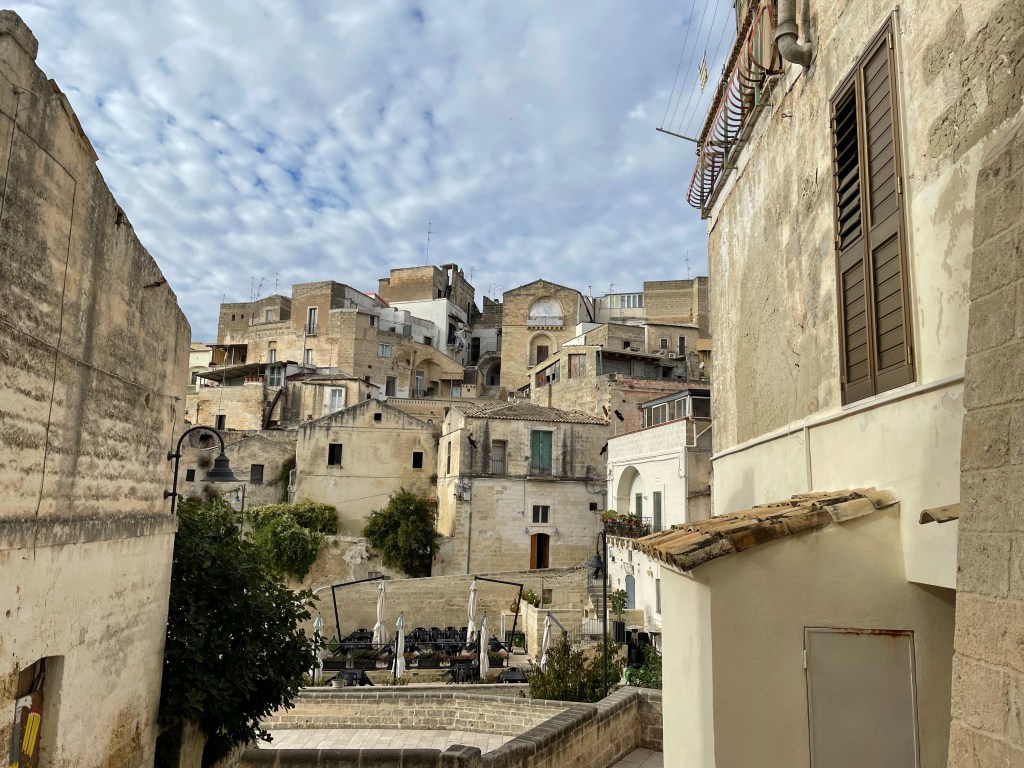
In the past twenty- four hours, we have experienced two cities that couldn’t be anymore different! Matera is in the deep South of the Italian peninsula while Bologna is geographically closer to Switzerland than it is to Matera. We spent our last day in Matera without any specific itinerary; we just wandered a bit and tried to minimize the number of steps we needed to climb. Instead of spending more time in the Sassi neighborhood (with the renovated cave dwellings, where we are staying), we wandered up to where the locals hang out- in the upper part of town. Honestly, there’s not much to see in the Sassi neighborhood, once you get over the initial awe. The end of October marks the end of tourist season and, and as there are few of them, most of the shops and restaurants are either closed or open on a limited schedule. It’s a bit like walking ( of more like climbing) through a ghost town – probably fun if you’re a mountain goat but got mere humans it can be torture! At the top of town, there are several piazzas and broad streets for a passeggiata, a fair number of outdoor cafes and shops that sell more than the typical tourist kitsch.
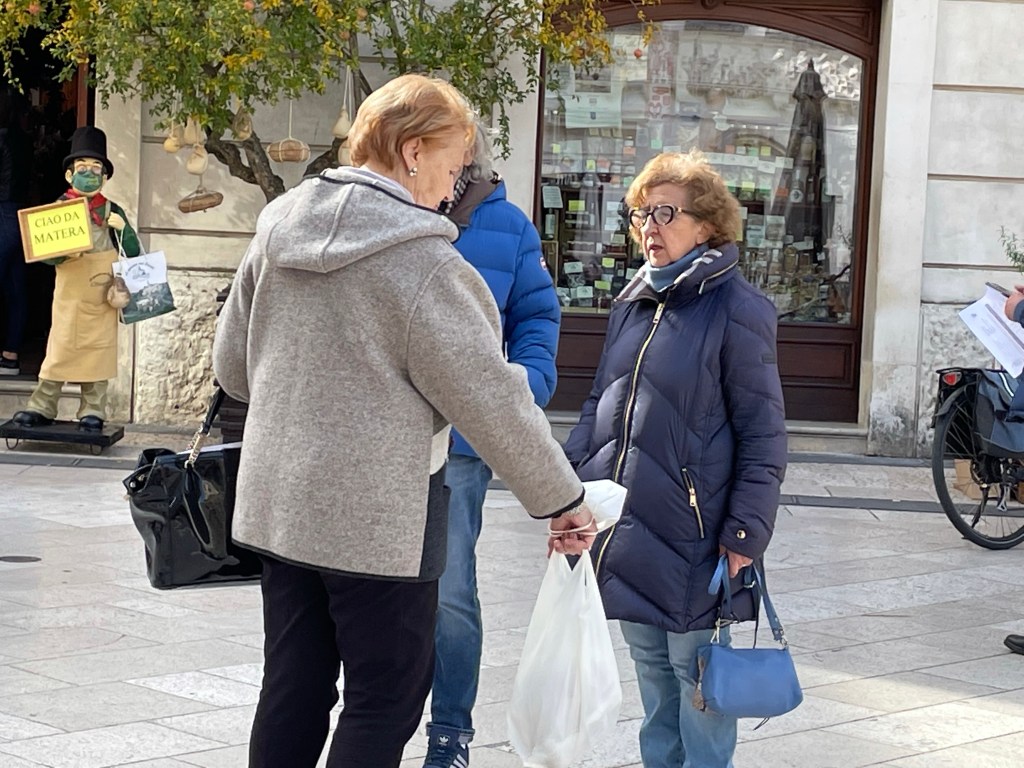
There are real people going about their daily routine.
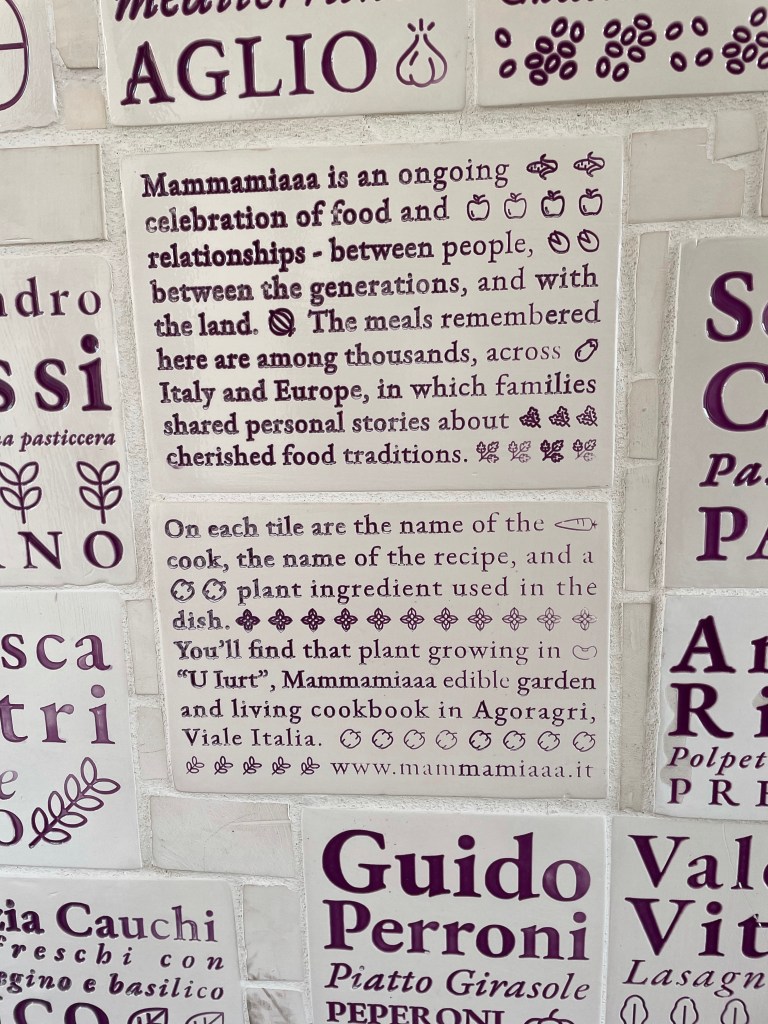
There was an interesting art exhibit about food and several interesting outdoor sculptures.
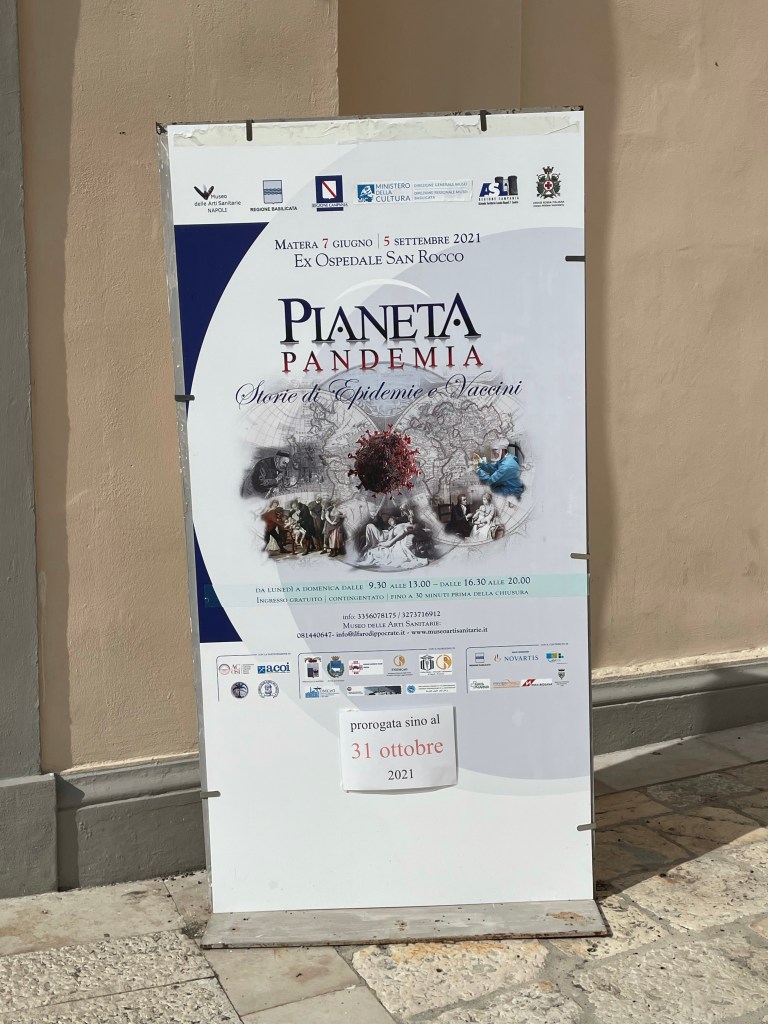
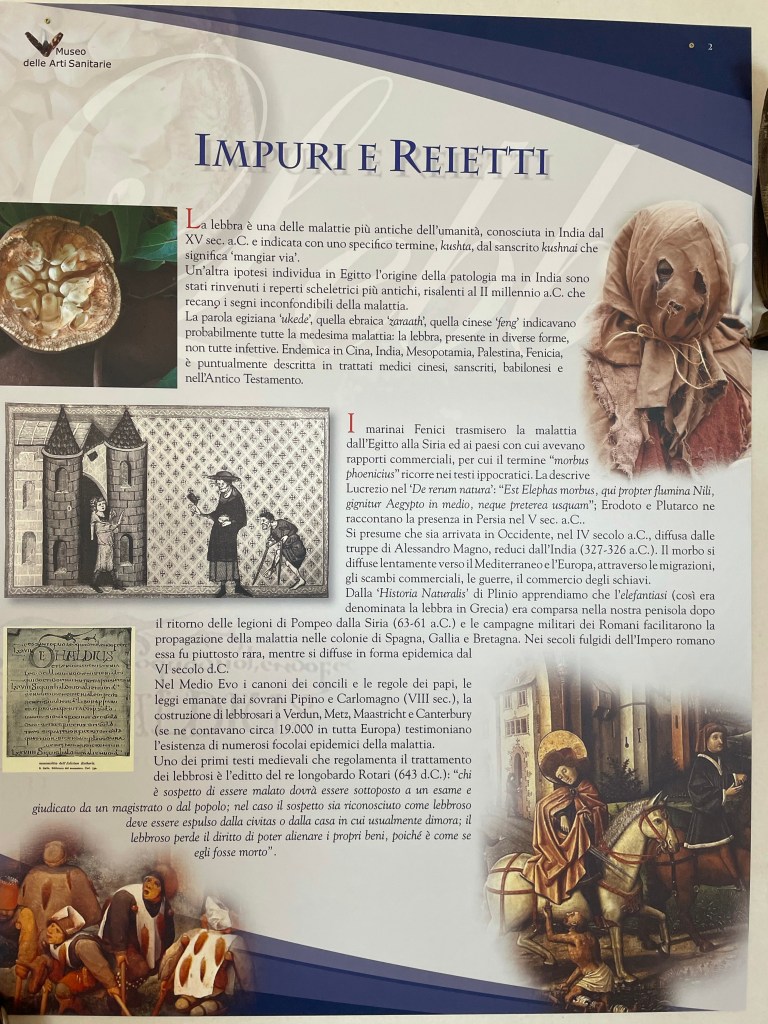
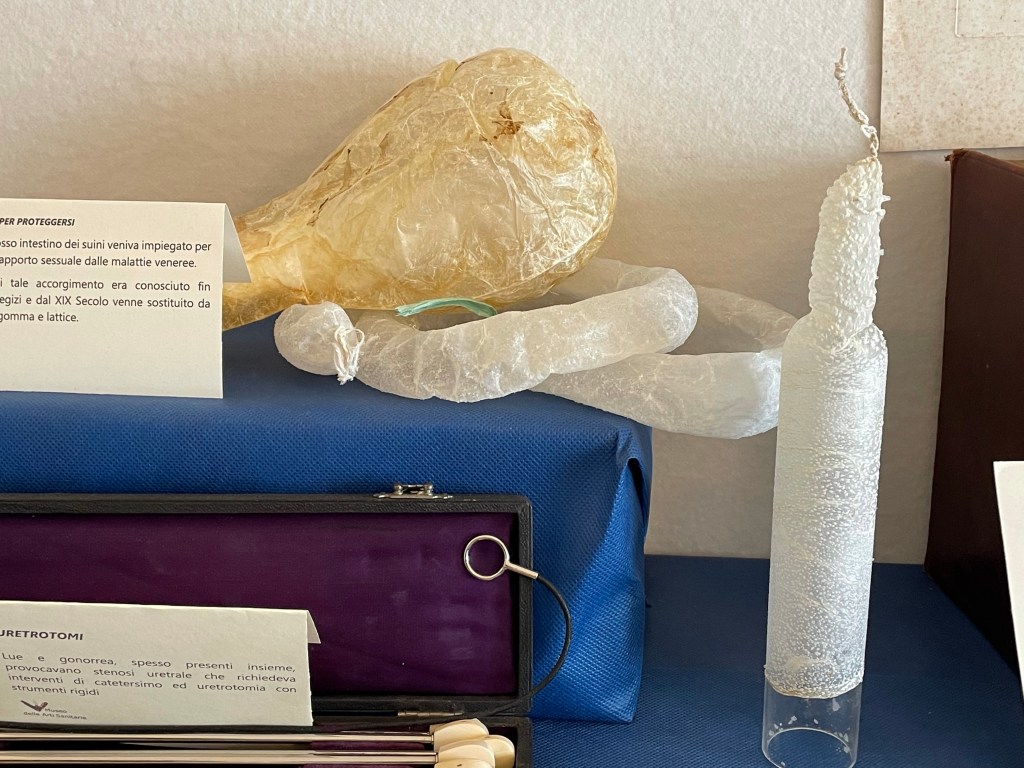
An interesting (and free) exhibit on the history of pandemics was open.
It described the history of all the global pandemics (albeit in Italian only) with some really interesting exhibits.
We spent a couple of hours just walking around. It was nice to not huff and puff and watch every step for a change!
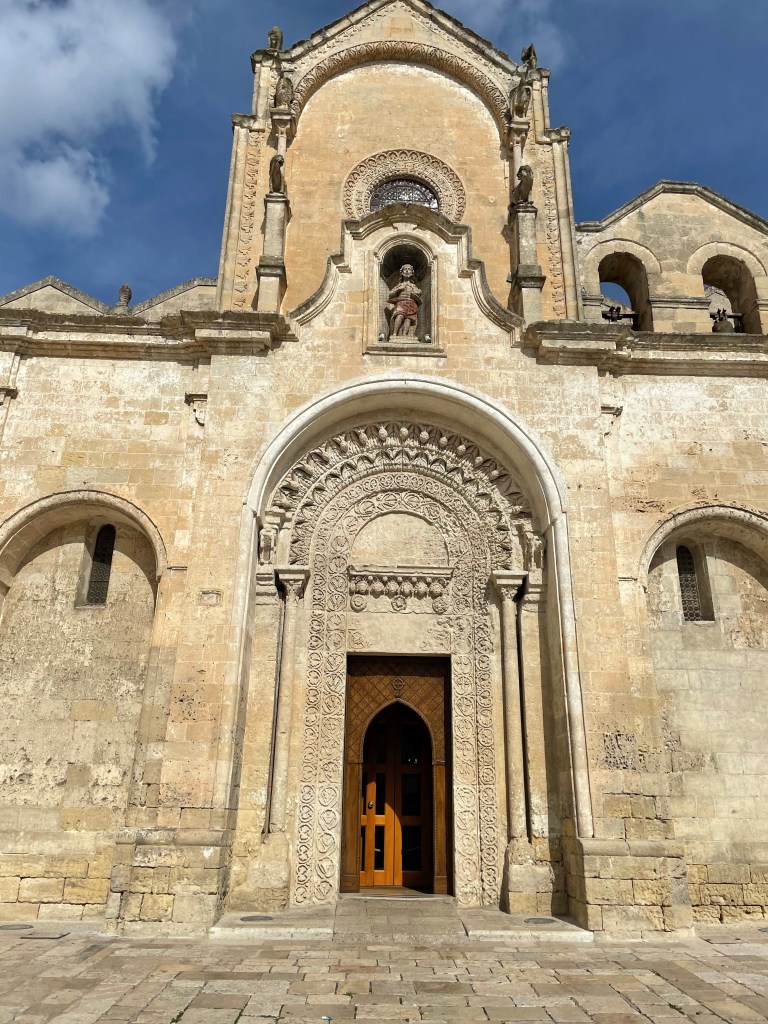
S. Giovanni Battisti 13th century
Afterward, we returned to the warm and humid sauna of the cave to relax before our farewell group dinner, ironically at the same restaurant where we had dined the evening prior. (Baccanti). It was a fixed menu but the food was tasty and well presented though a bit on the pedestrian side.
We left early the next day for Bologna. This entailed lugging suitcases down 108 steep steps at 7:30 am, piling into a taxi with seven others for a one hour ride to Bari where we boarded a high speed train to Bologna. With the intervening 10 stops, it took 5 hours 45 minutes to reach our destination, and it was on time. I was surprised that social distancing was nonexistent on the train to Bologna as two weeks earlier, our train from Rome to Naples had every other seat empty. Everyone did wear masks though!
In contrast to the touristy almost Disney-like ambiance of Matera, Bologna is a bustling city that tourists have avoided. There are tons of people, including a large population of university students, walking around, window shopping, enjoying aperitivo. There are few if any kitschy souvenir shops. Bologna is a prosperous city whereas Matera sits in the poorest region of Italy, relying now on tourism for a significant portion of its income. The disparity between the rich and industrial north vs the poor and rural south is quite evident.
Of course, the history of Matera is fascinating, but in my opinion, it warrants no more than a single day’s time to get a good understanding of the city. Bologna, on the other hand, requires at least three days to get at least a superficial feel for its complexity.
We will be here for three more days. Non vedo l’ora!
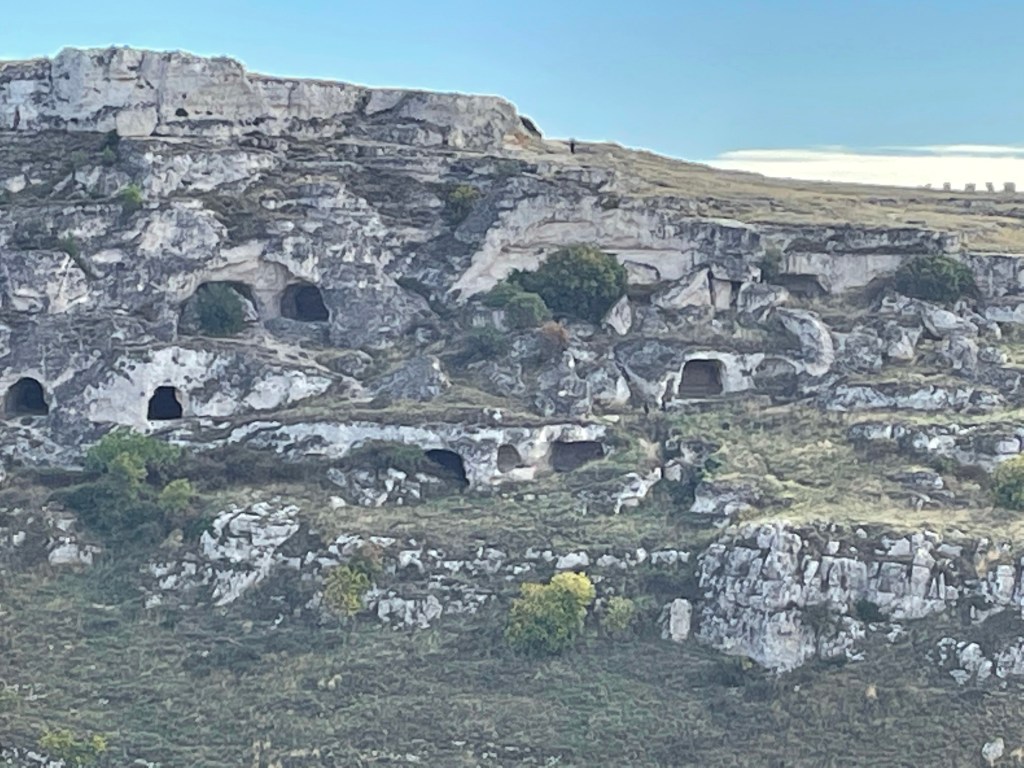
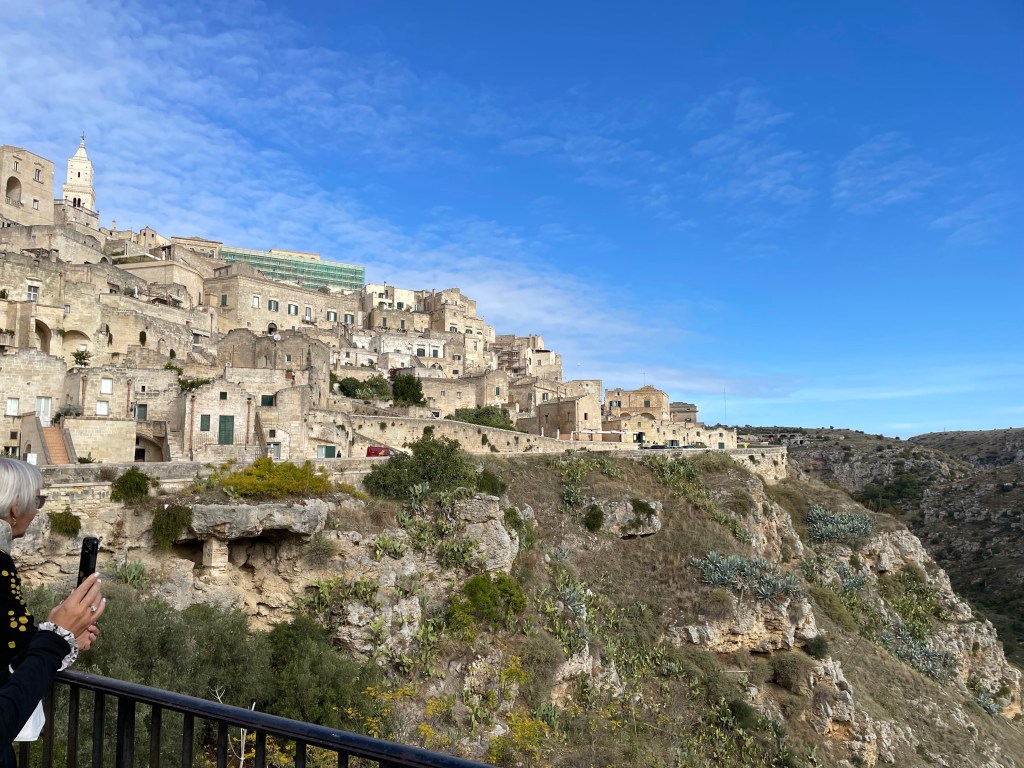
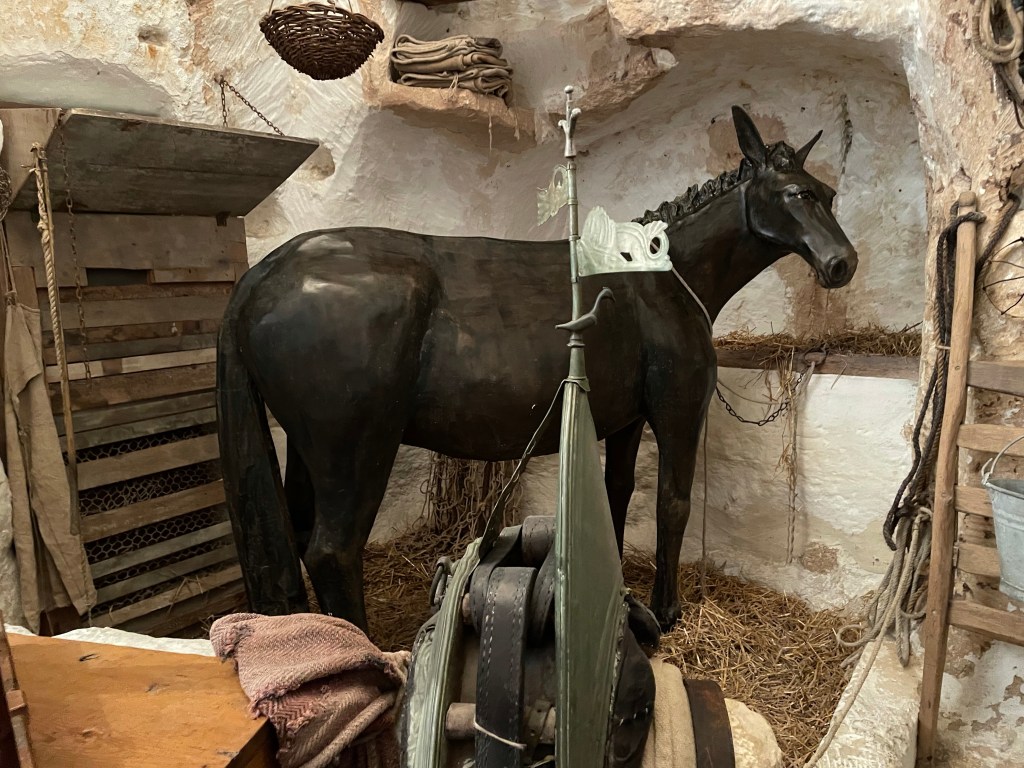
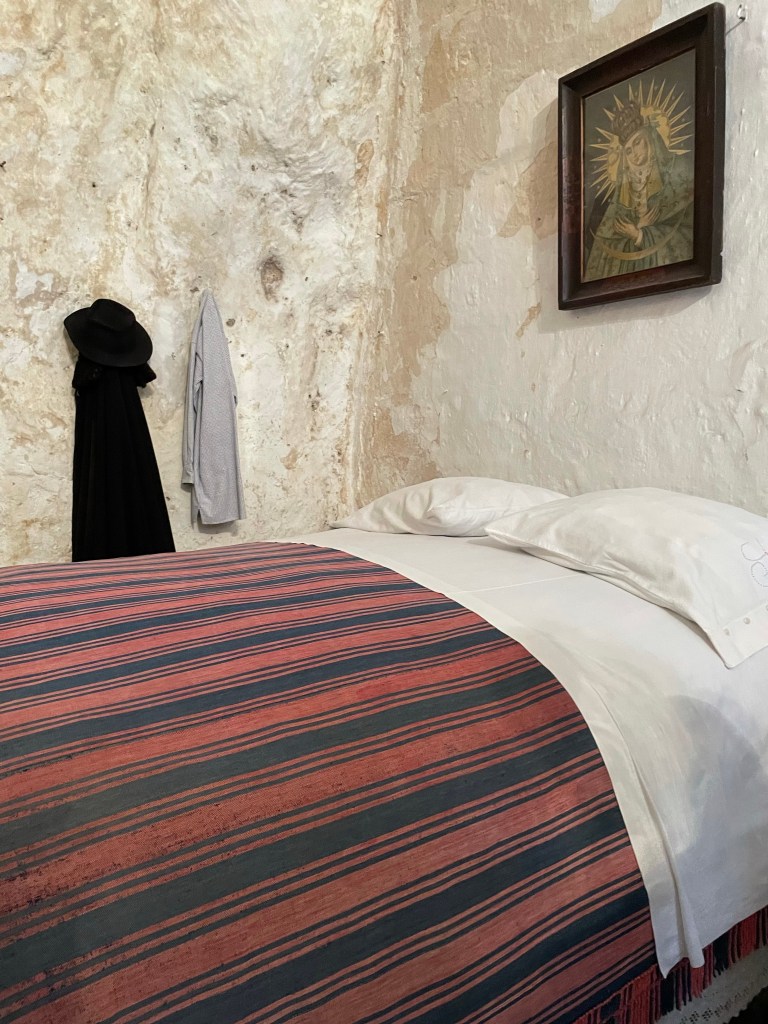
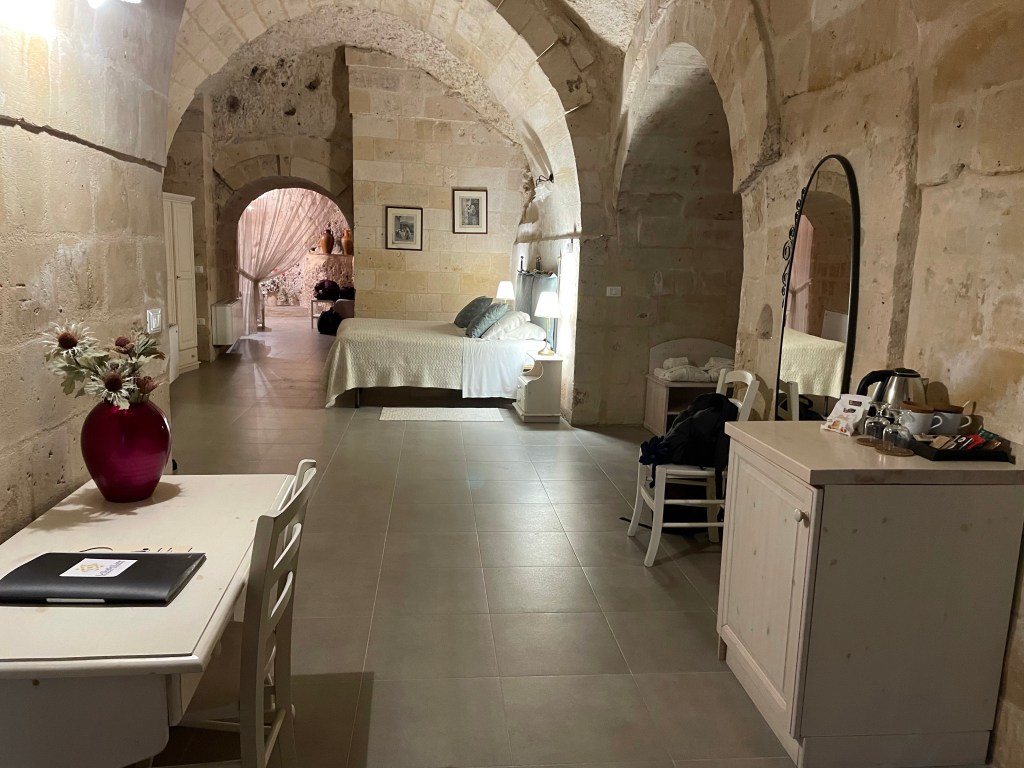
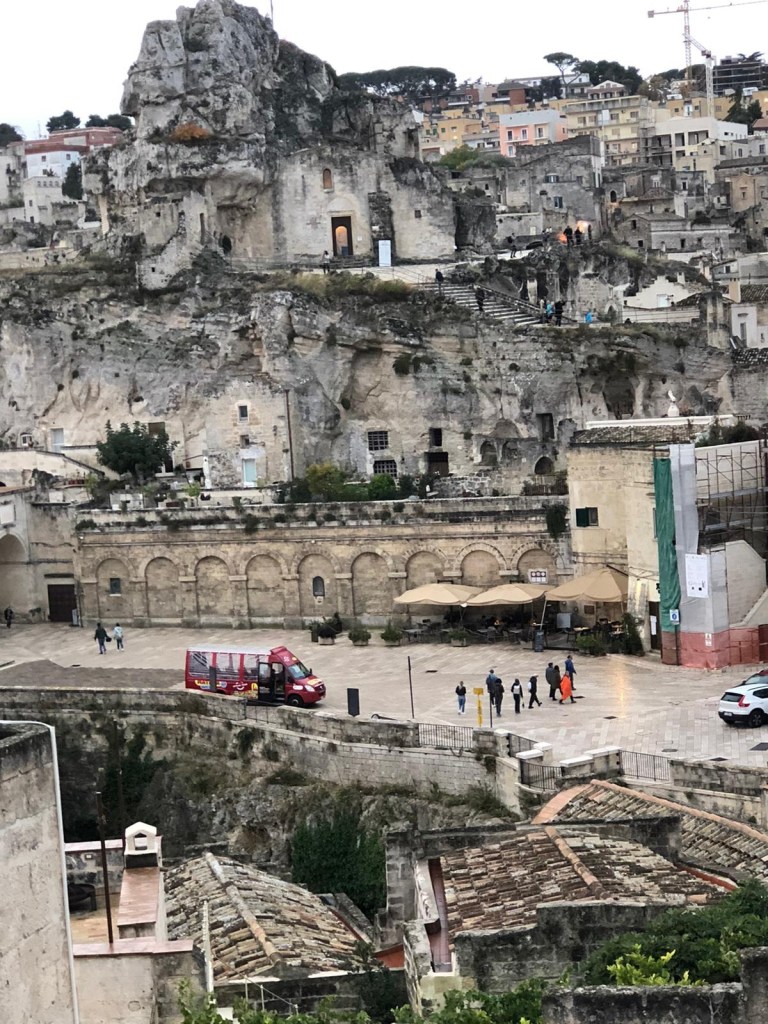
Matera is an ancient city of cave dwellings (as well as modern apartments and homes), the third oldest human settlement in the world (after Aleppo and Jericho), in the region of Basilicata (previously known as Lucania), on a hilltop surrounded by wheat fields, olive groves and a deep ravine. Its other claims to fame are: the 2019 European Center of Culture; movie location of latest James Bond flick, Mel Gibson’s Passion of the Christ, remake of Ben Hur, Wonder Woman, and apparently the sequel to Passion of the Christ; the only city in Italy that was “condemned” in 1952 and its citizenry relocated to a newly constructed Matera due to the poverty and squalor causing shame to be shed on the Italian government; and being the most gawd awful place to maneuver by foot or by vehicle because of its labyrinth-like network of stairs and hills. Forget using a map (paper or GPS/Google varieties) – even if you could get a good phone signal, it is utterly impossible to not get lost at least once or to stumble up/down the uneven steps. The Sassi (rocks in Italian) are man-made caves dug into the sidewalls of the ravine, dating back eight centuries before Christ, but human remains have been found as far back as the Paleolithic period. The lower classes, the peasants, lived in these dank dark and humid hovels, often sharing the living space with horse, chicken or donkey. Infant mortality rate was greater than 50% and average life expectancy was late 30s. The nobles and landowners lived above on the flat top of the cliffs. Since the 1980s, the abandoned caves have been reclaimed and renovated into tourist accommodations, shops and restaurants.
Primitive caves used by shepherds and hermits SassiBefore renovation After – B&B
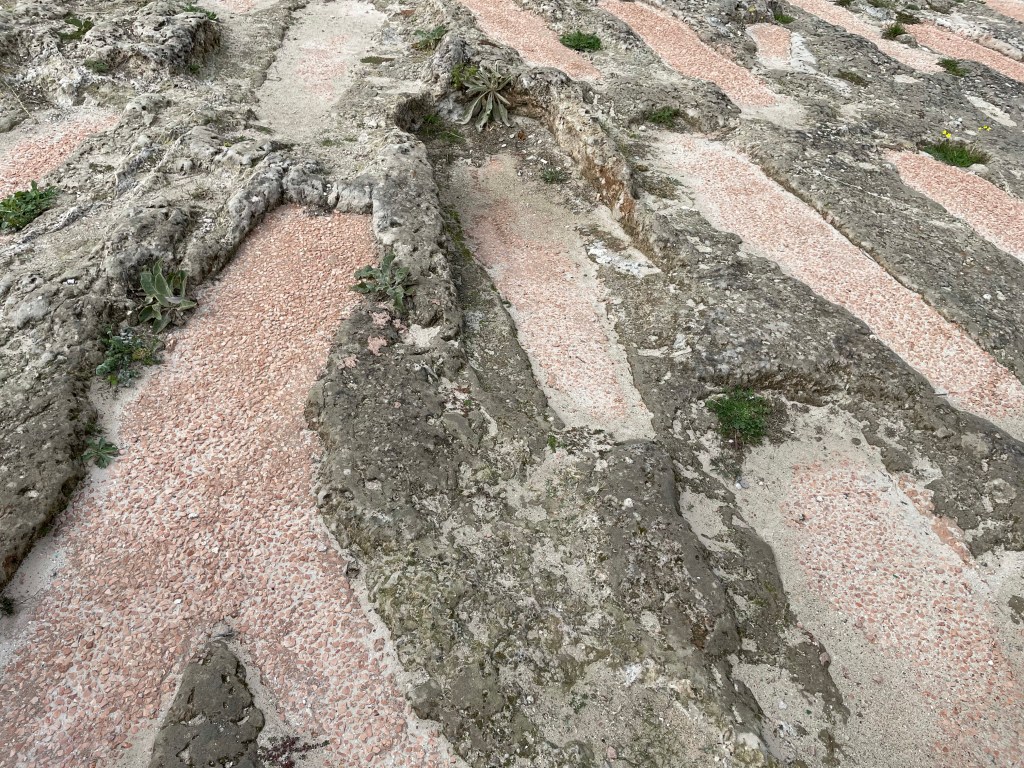
We took a two hour walking tour, saw a reconstructed former cave home, and walked on top of a cave church, stepping on the tombs.
Tombs
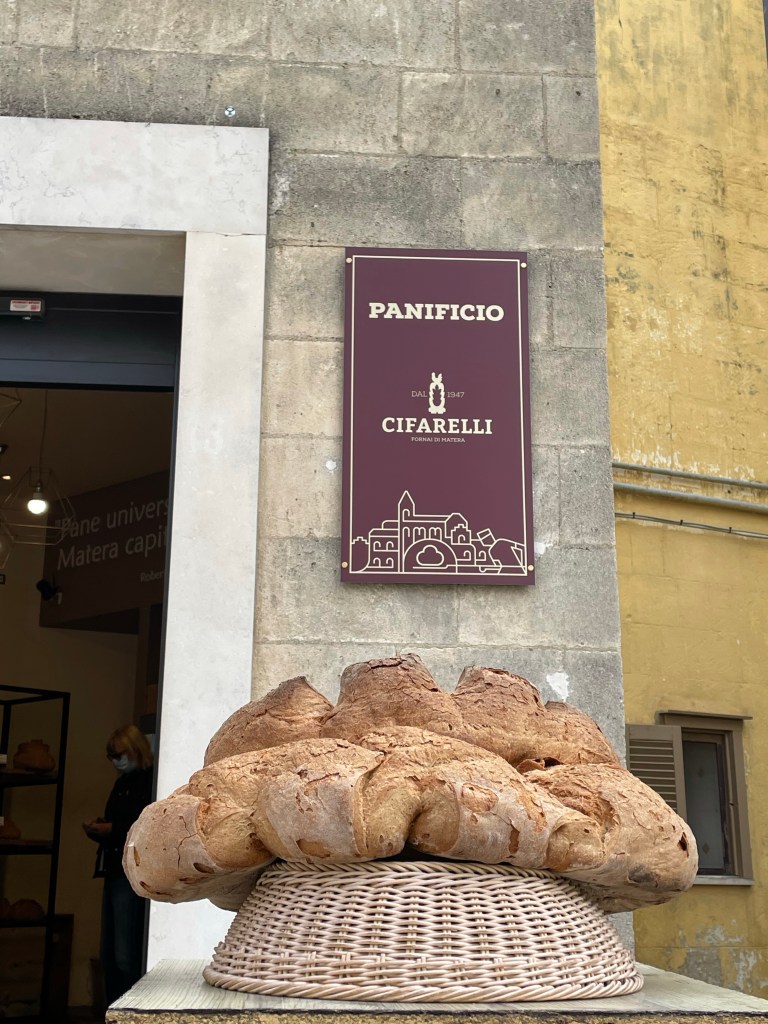
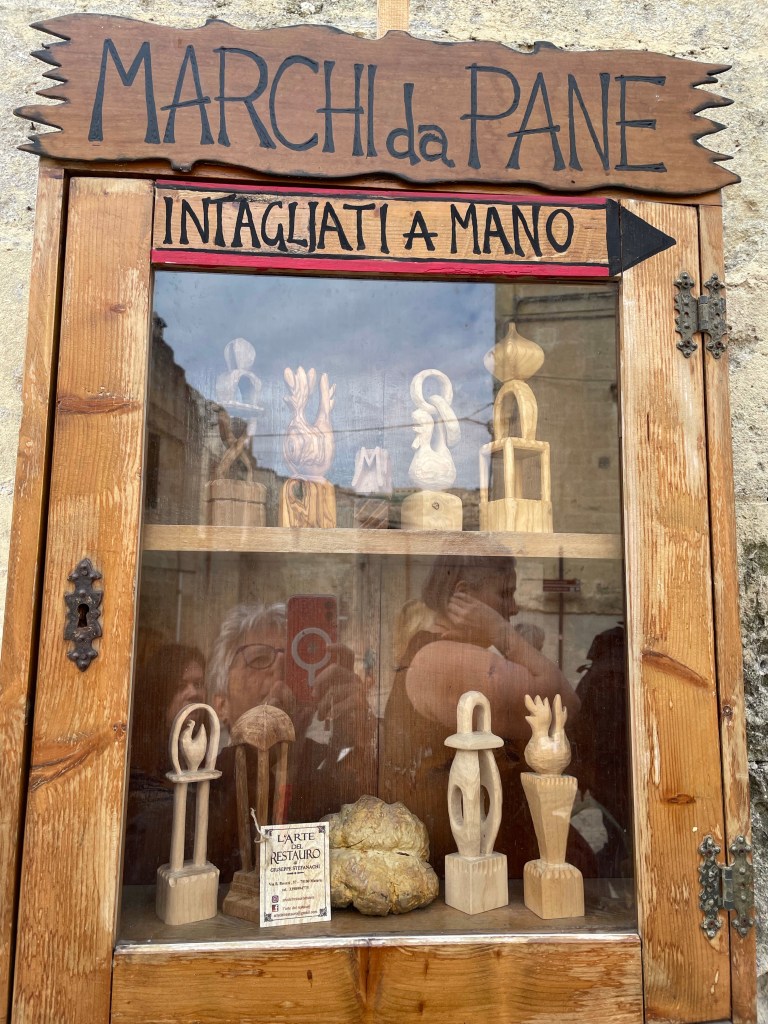
We also learned about the famous Matera bread baked on wood burning ovens and marked with the stamp of the family who brought the loaf to be baked in the communal oven. These wood stamps can still be personalized and make s unique souvenir.
Best place to buy the famous Matera loaf Wood stamps
After a brief 90 minute break, we re-assembled to board taxis to transfer to the big bus (with the first female Italian busdriver I’ve ever seen) that was to take us to Gravina in Puglia, located about 20 miles away but in the adjacent region of Puglia.
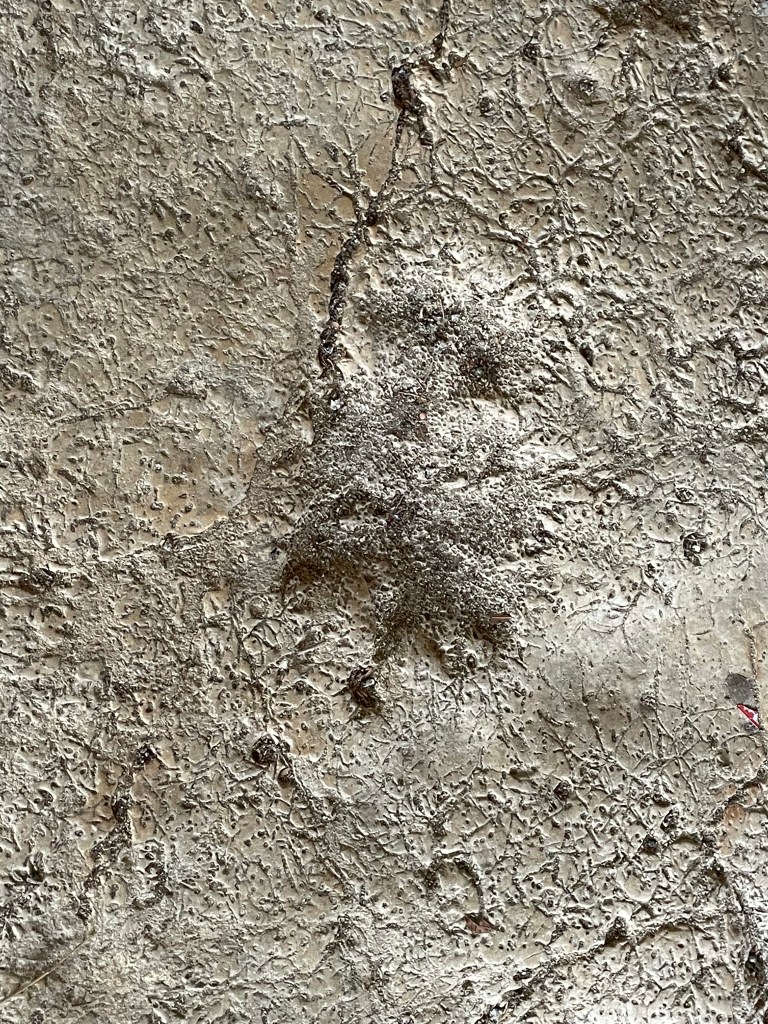
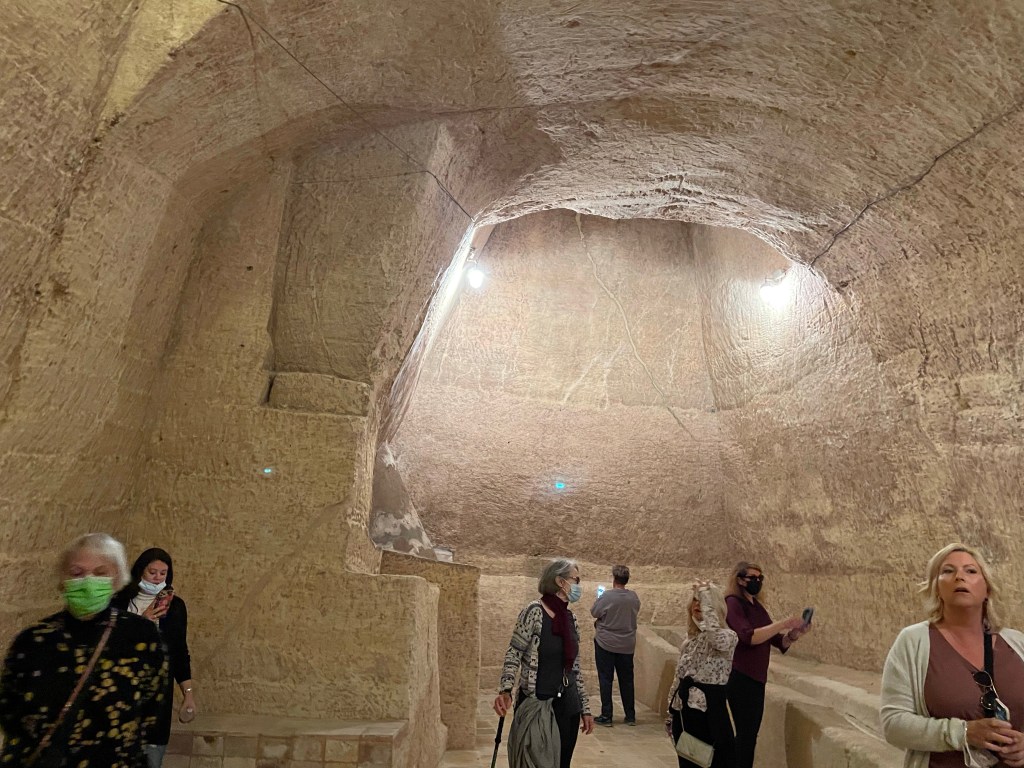
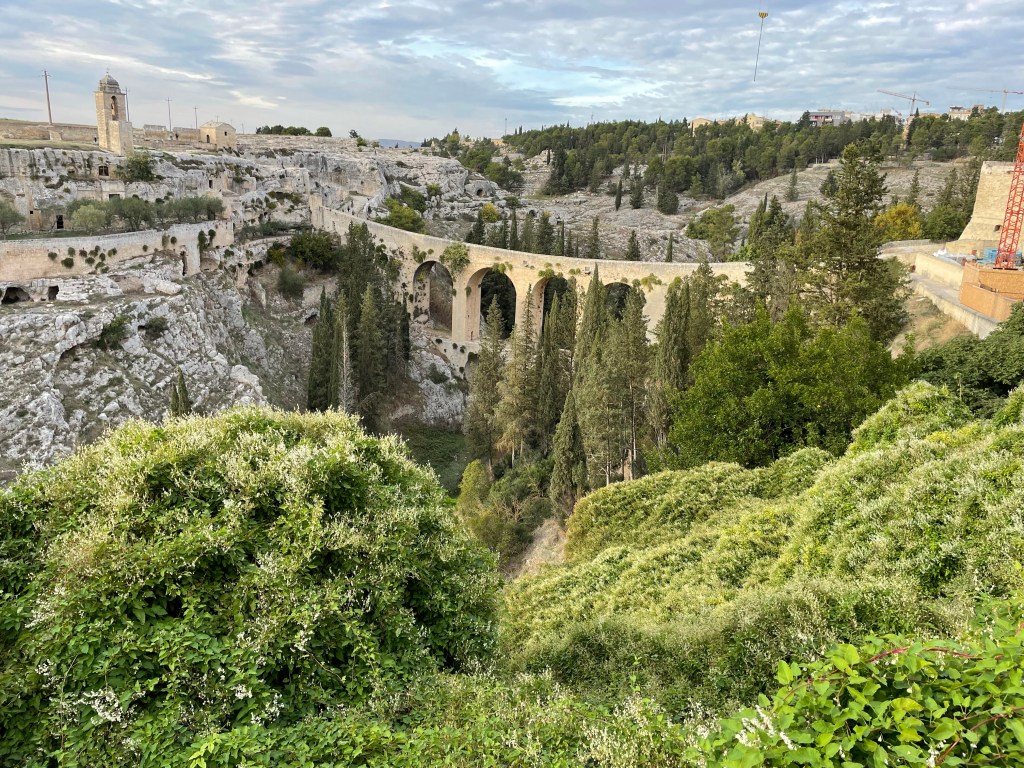
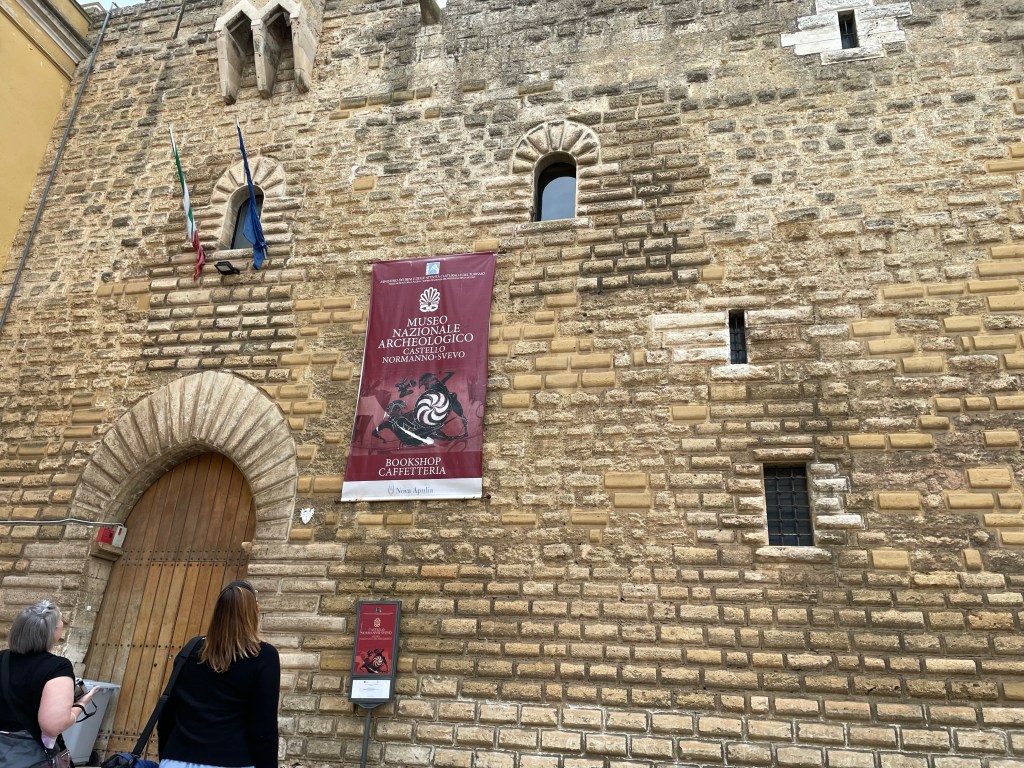
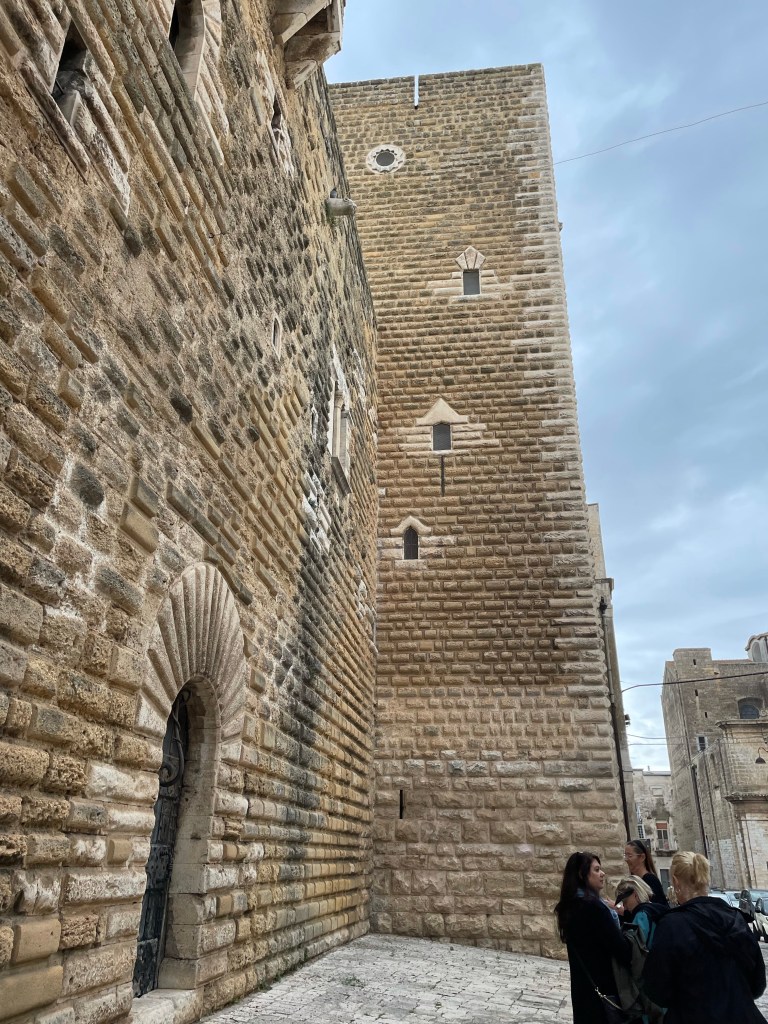
Gravina is a small version of Matera. Birthplace of Pope Benedict XIII, of the noble Orsini family, this town dates from the 9th century BC. Built at different levels, it is like a lasagna, with the oldest remnants of homes and churches on the lowest levels. Unlike the sandstone of Matera, this town’s buildings are made of a very soft limestone. Cave dwellings are also found, with the last inhabitants moving out in the 11th century. Dinosaur tracks can even be seen in the rock floors.
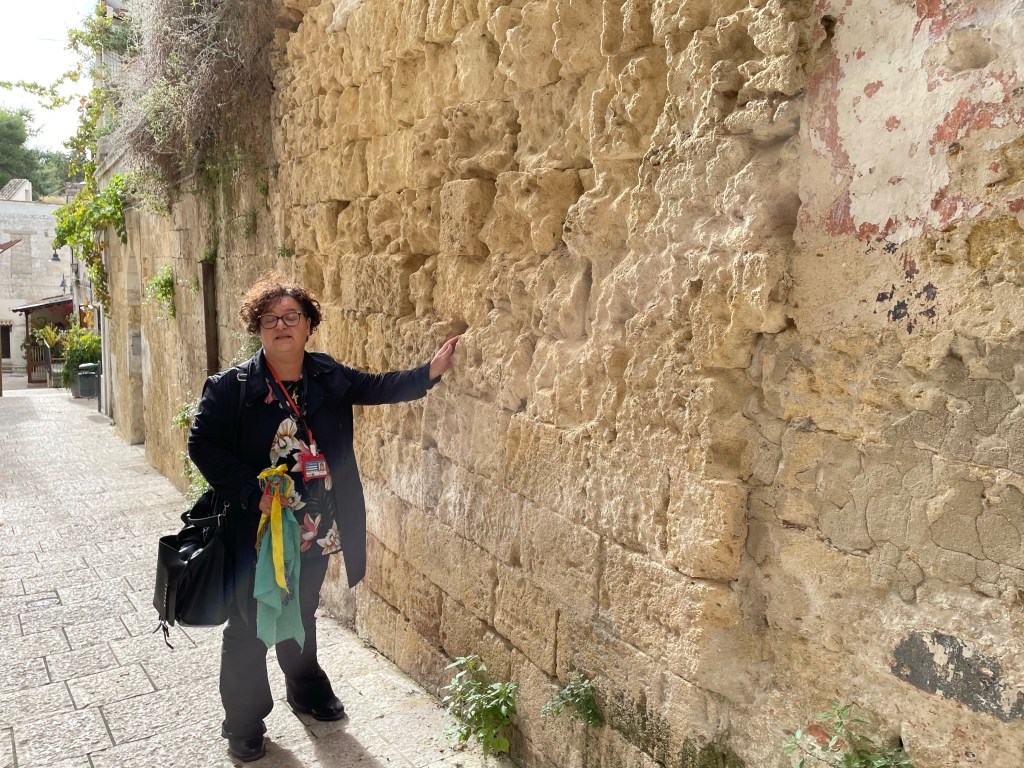
Stefania, our local guide, was demonstrating the crumbling walls
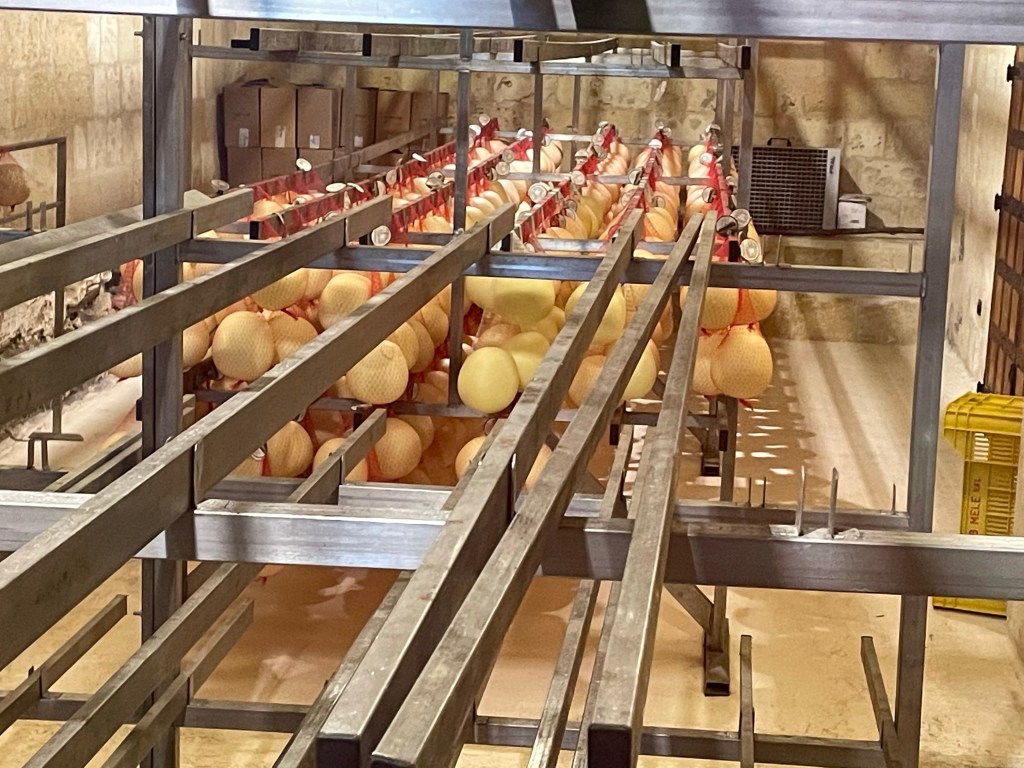
And just like Matera, we climbed up and down stairs, some of which are featured in the latest Bond movie. The different levels were nicely demonstrated when we invited ourselves in a man’s wine cellar and cheese aging room!
Dinosaur printWine cellar Cheese!
Besides the cathedral, the other famous site is the Roman aqueduct (now covered by a bridge built by the Orsini family).
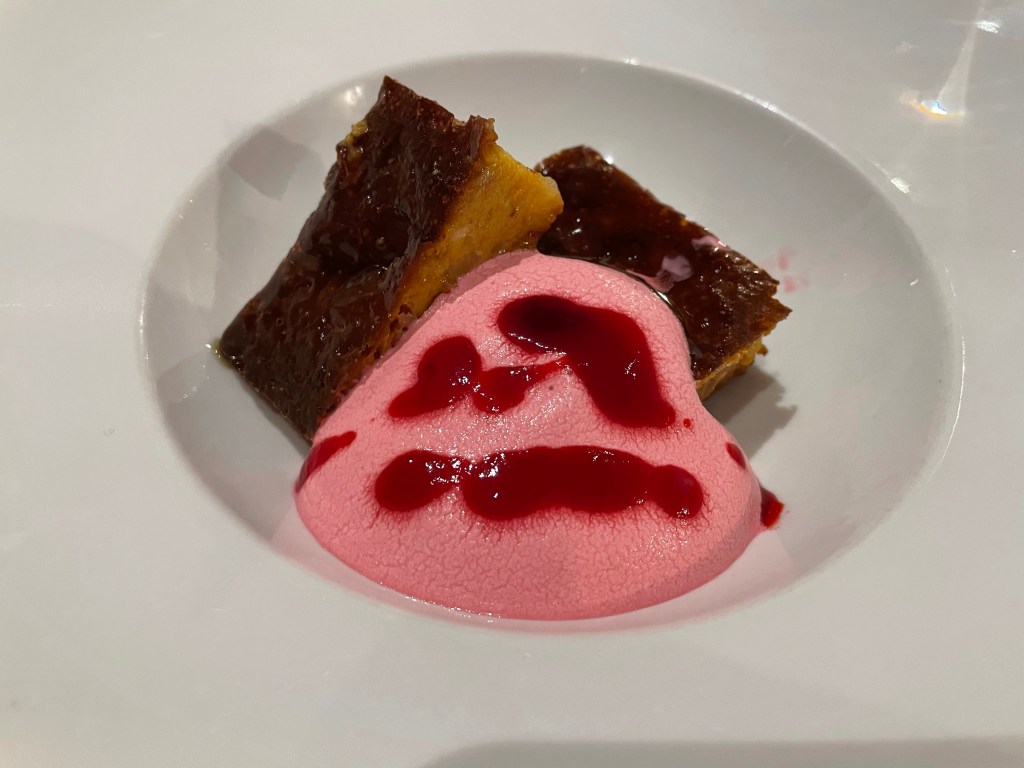
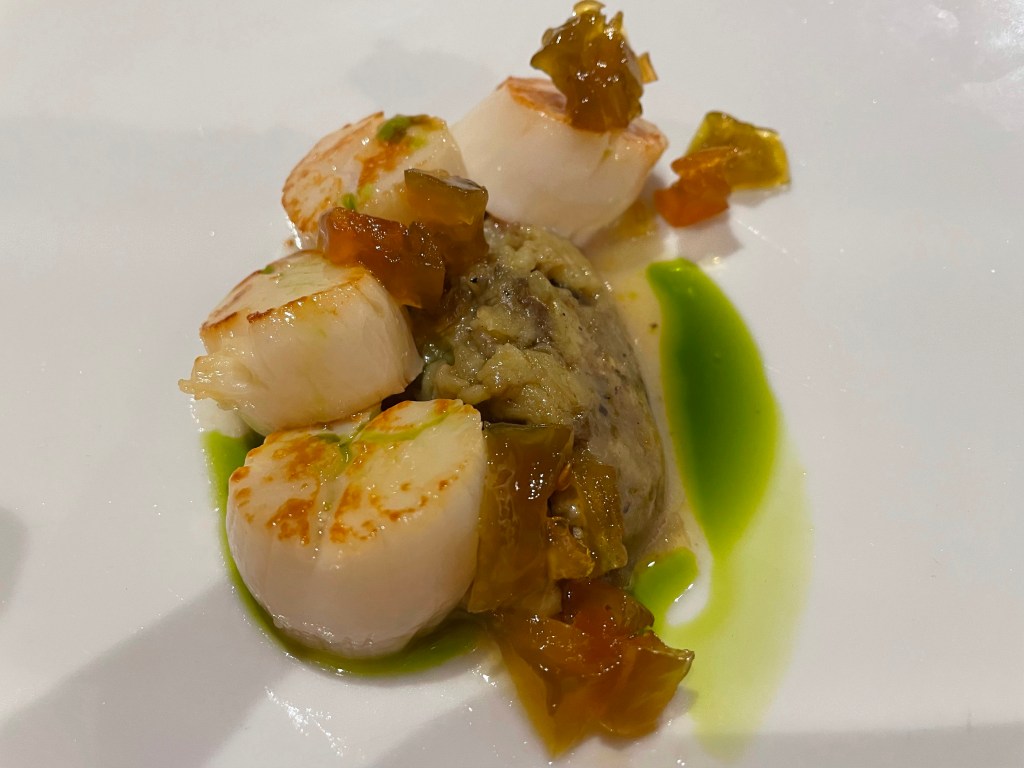
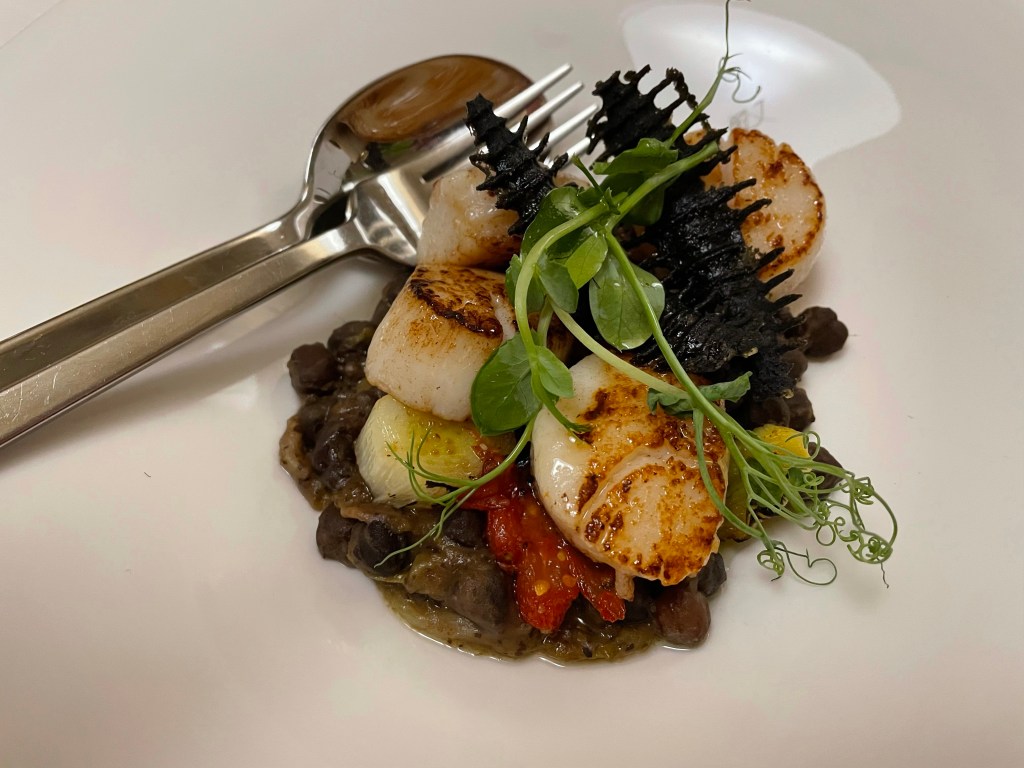
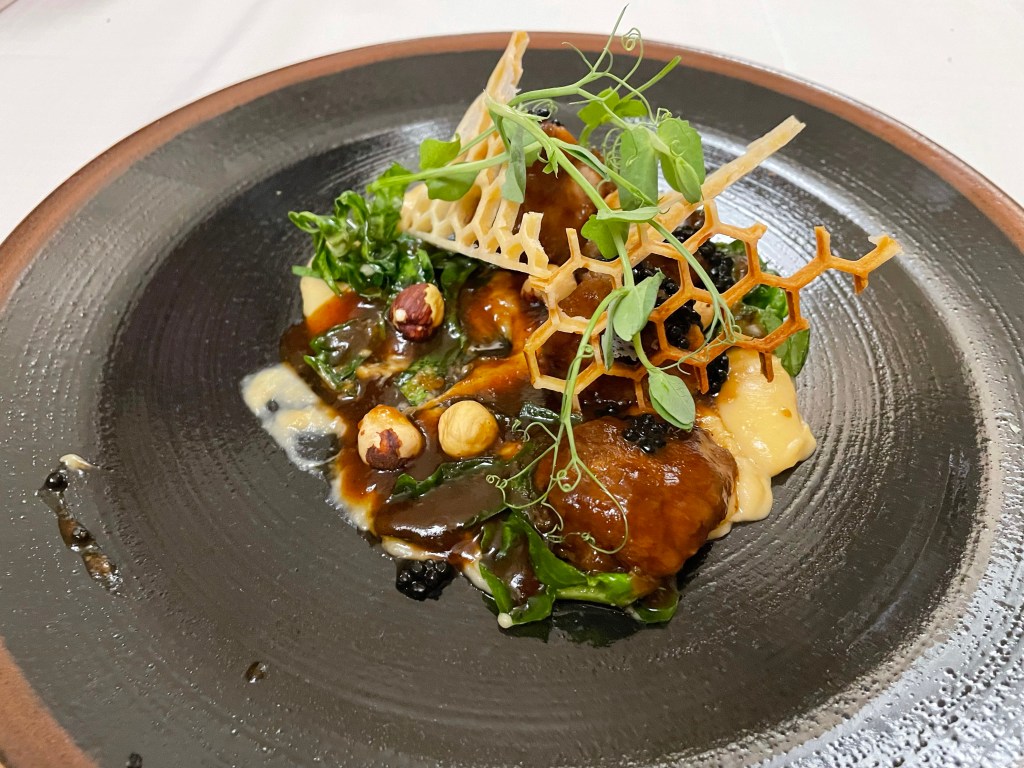
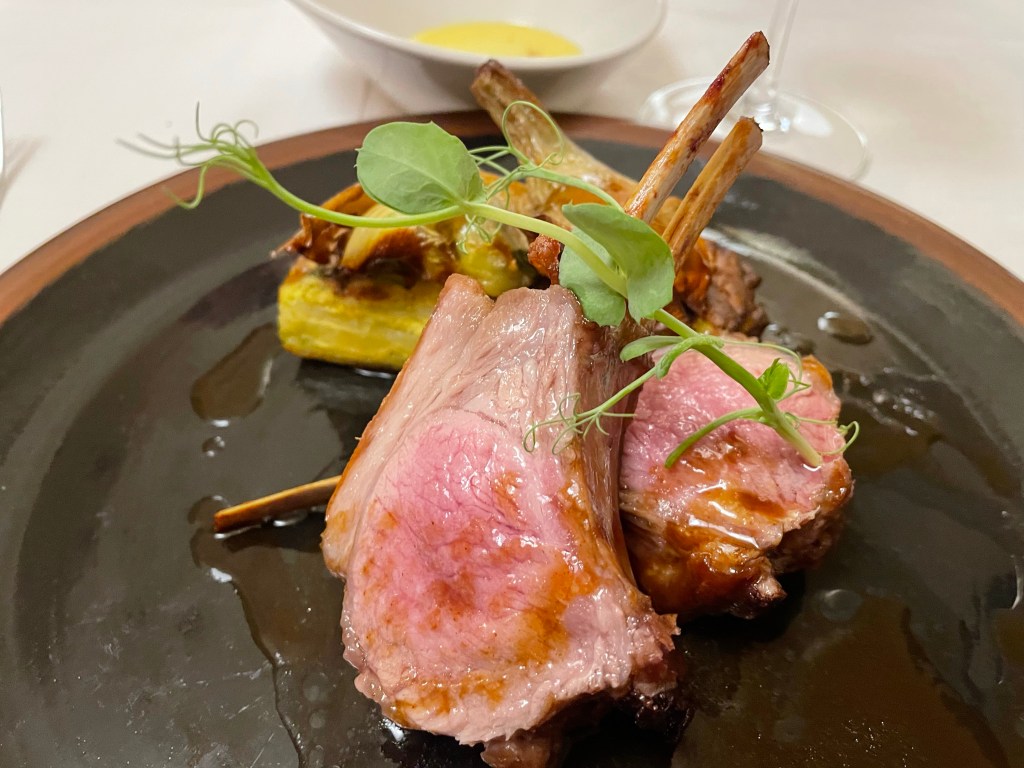
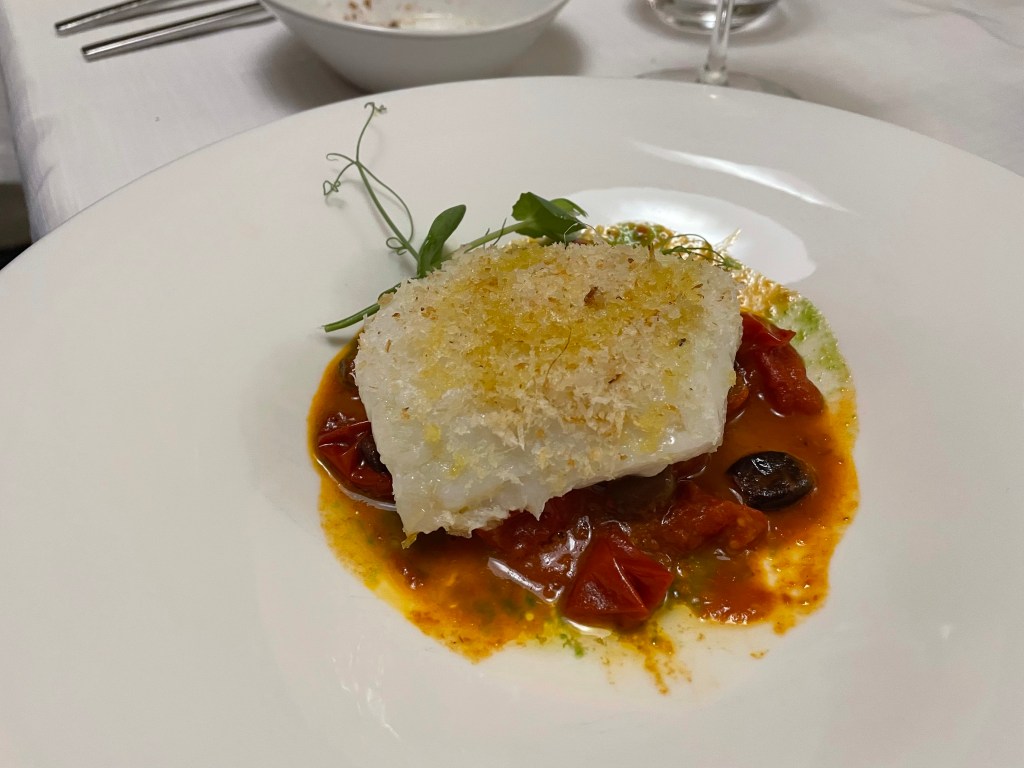
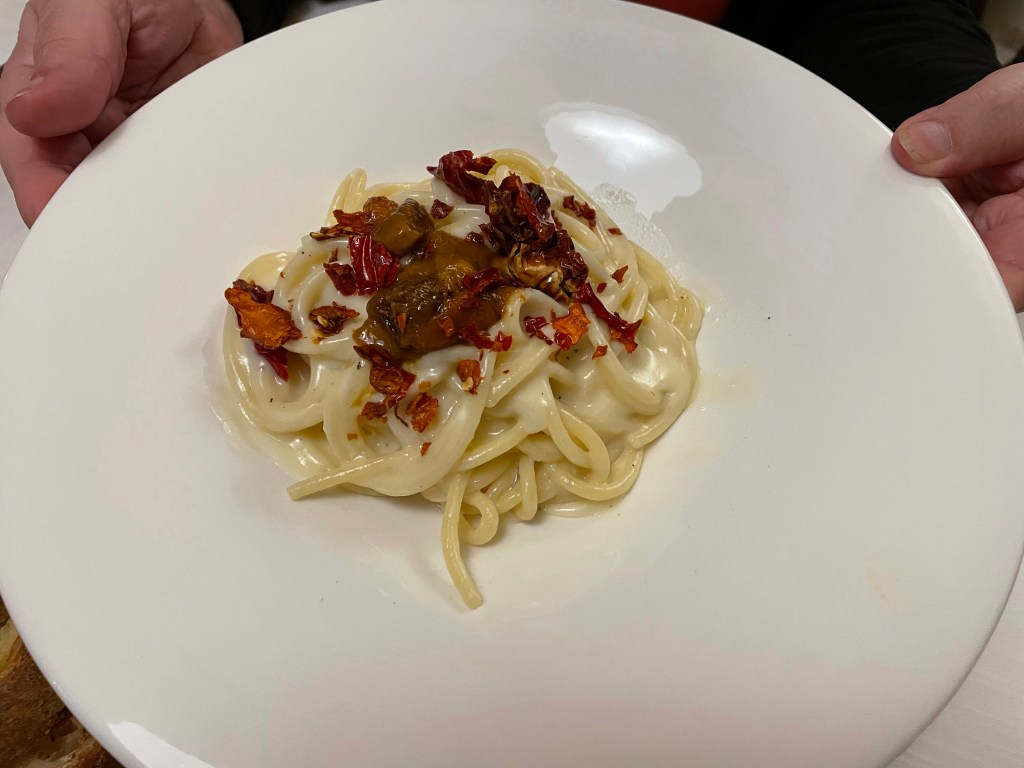
After crossing the bridge, we met our bus and picked up some pugliese focaccia in Altamura and headed back to Matera. We were pretty exhausted from the walking and the uneven steps. We were determined to have dinner at the closest available restaurant, which happened to be down only 103 steps. It was quite an upscale restaurant and we tried sweetbreads, scallops with carbonized vegetable (looked like a burnt centipede!), grilled lamb chop, spaghetti with sea urchin and a baccalà entree.
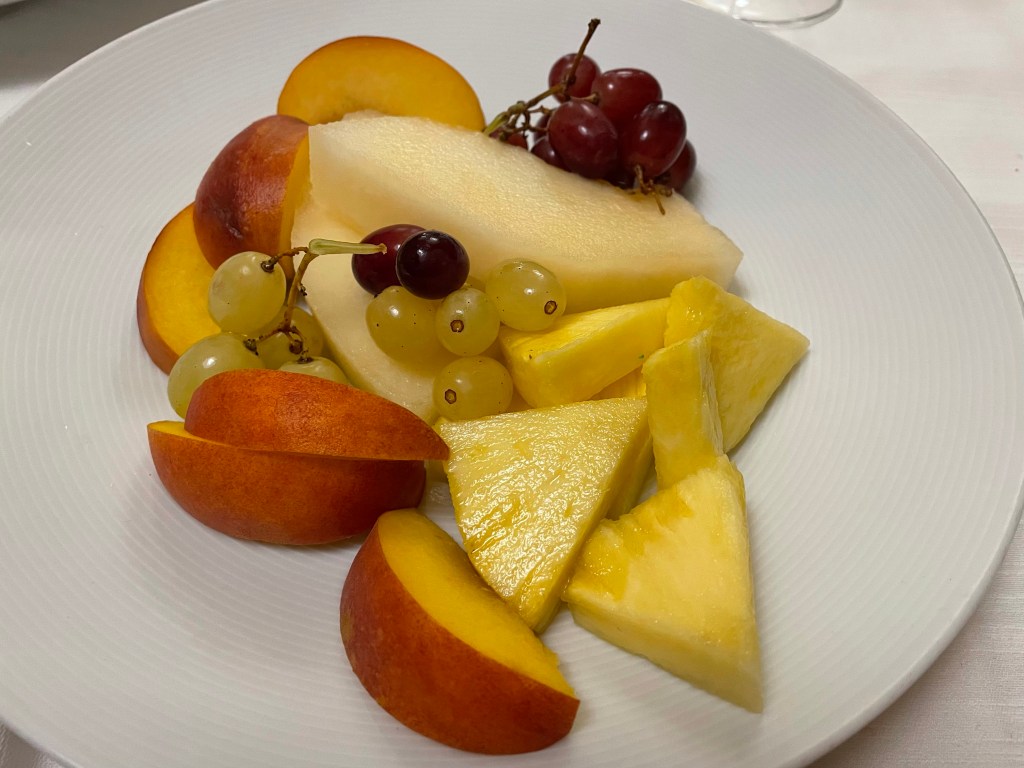
ScallopsSweetbreads Baccalà Spaghetti with sea urchins Fresh fruit for dessert
We finished dinner with the local amaro (Lucano)- really potent stuff!
The morning was quite dreary but the rain held off as we left Alberobello. We are now leaving the region of Puglia heading westward to the region of Basilicata located in the instep of Italy’s boot. This is Italy’s poorest region- predominantly farmland and mountains and most certainly not on the radar for the majority of Italy’s visitors. It is the region with the highest percentage of emigration and probably the lowest per capita income. During the Fascist era, political dissidents were exiled here, the most famous Carlo Levi who wrote “Christ Stopped at Eboli”, documenting his year-long exile in a small Basilicata village. Our final destination for the last three days of the “organized tour” portion of our Italian journey is Matera, the most famous city in the region.
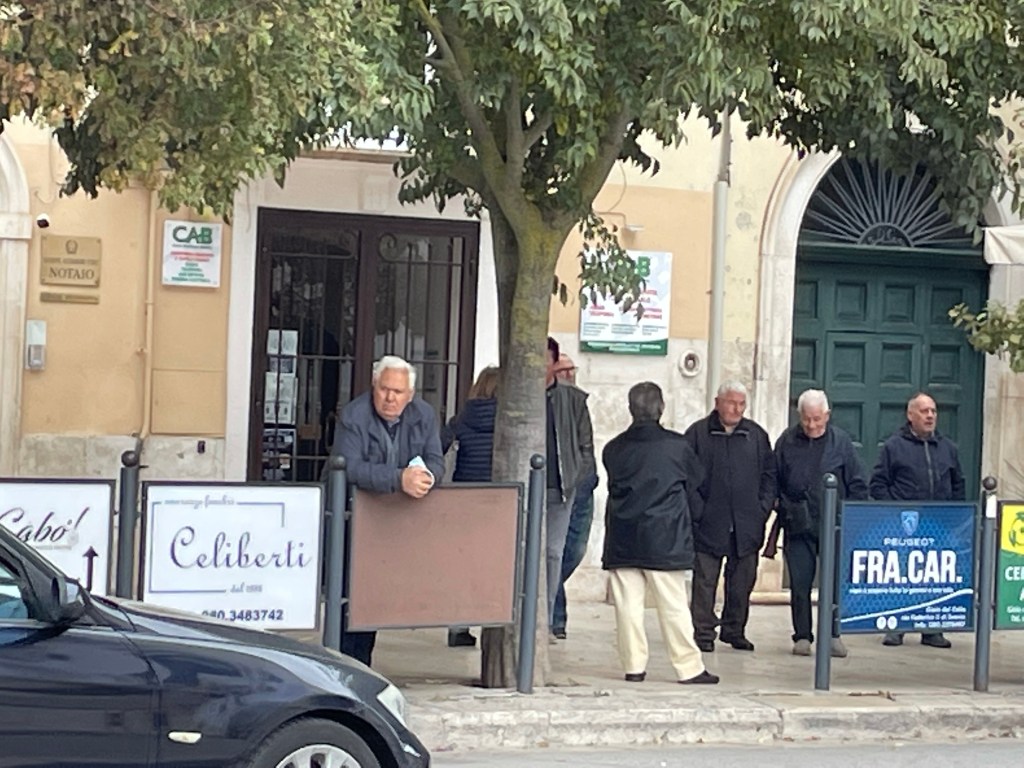
We walked a short way to our bus pickup point (big buses can’t get close to the trulli district), but apparently the bus driver got signals crossed on the time so we stood there for a while, hoping the rain would hold off. The bus finally showed up and our bags were loaded up. Our first stop was the small town of Gioia del Colle, with its 12th century hunting lodge/castle of Frederico II. There is a legend he had a wife who was pregnant by another man and had her locked up there. In protest, she threw all her jewelry out the window, thereby giving the town its name (Gioia – derived from gioielleria-jewelry in Italian). Our driver (the third one we’ve had), forthwith to be referred to as Mr. Congeniality, was a curmudgeon the entire day, refused to drive into the town center. We were definitely the only tourists and the only Americans in this typical southern Italian town, drawing quizzical looks from the citizens.
Castle – not open for visitors today!
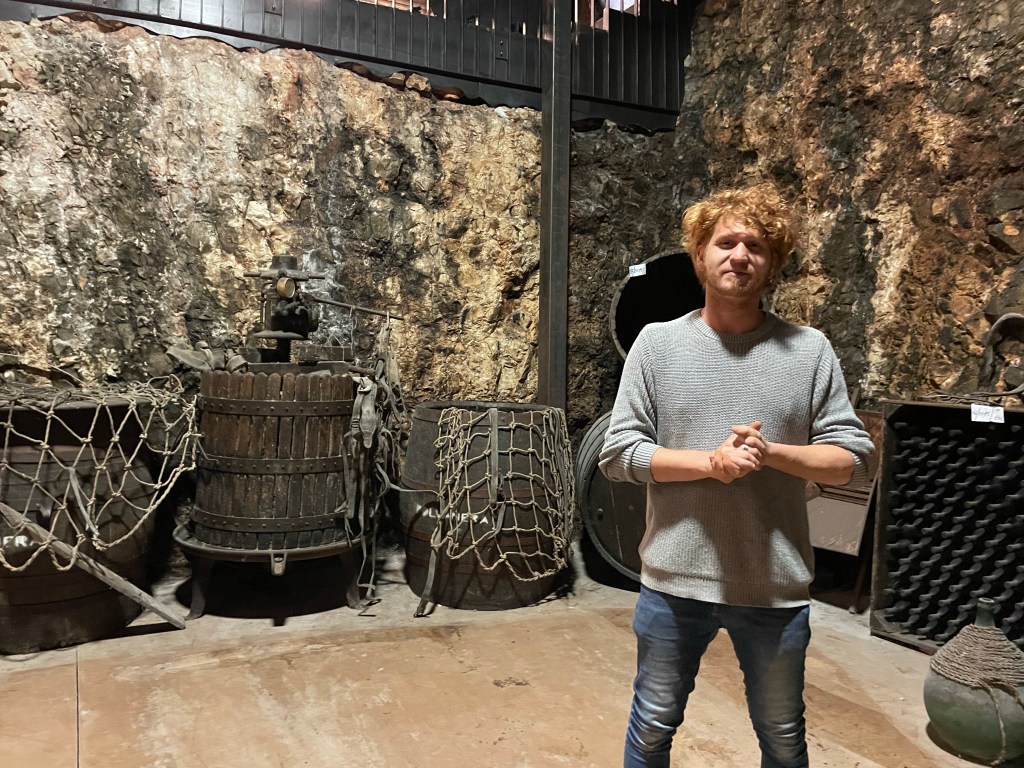
The next stop was nearby, albeit located down a narrow one lane road- the Polvanera Winery where we enjoyed a tour of the wine cellar and a tasting of 7 of their wines, accompanied by some munchies. Our guide, a curly haired redhead (rare to see in southern Italy) looked like the actor in the Harry Potter movies.
Friselli with toppings I couldn’t discern
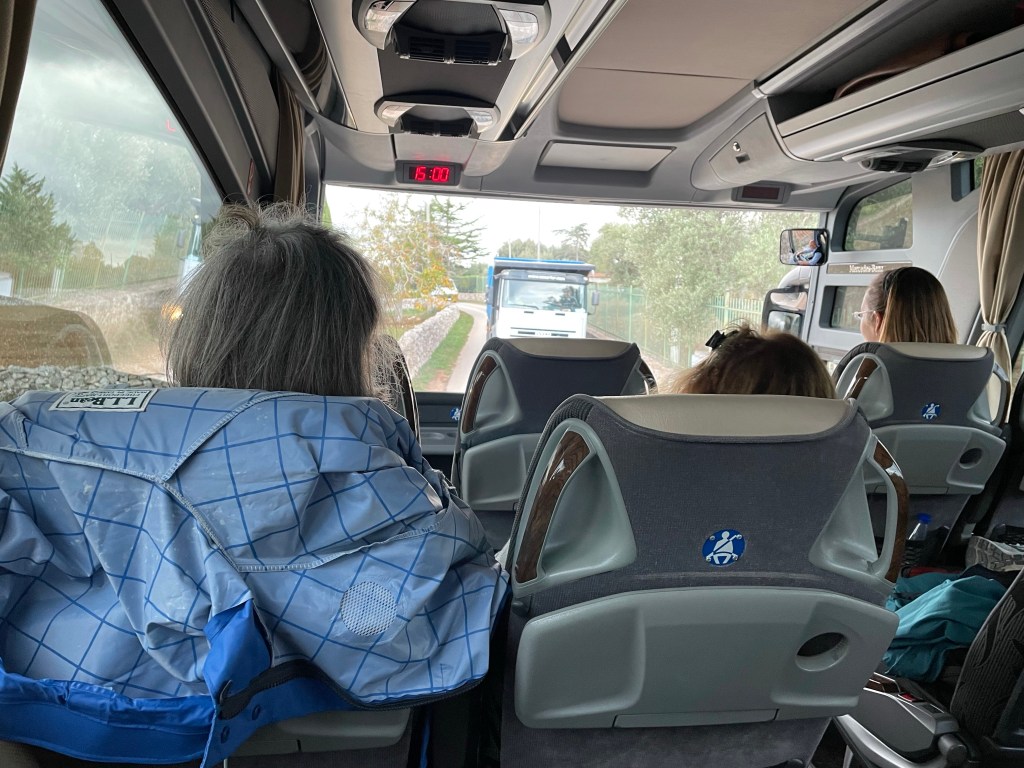
Mr. Congeniality (bus driver) was especially unhappy as he had to retrace the ride back out along the narrow road. If didn’t help to encounter truck!
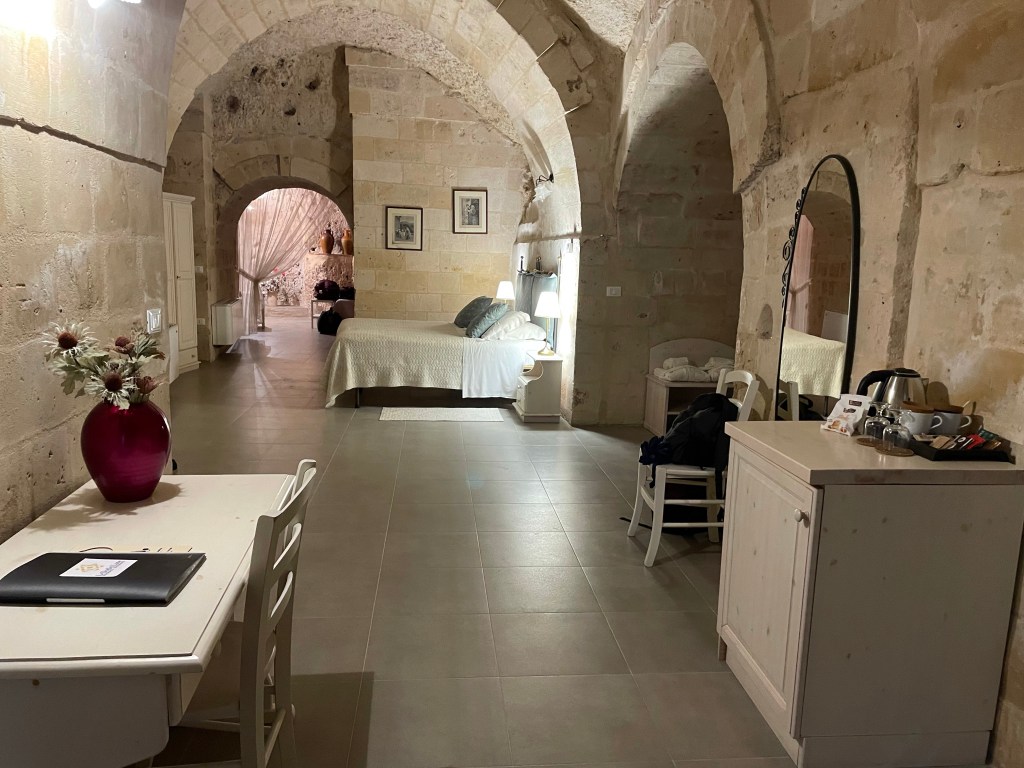
The road to Matera was a two lane winding one as we climbed up to this hilltop town. It started to rain when we finally reached our drop off point in the new part of the city. We had to wait for some taxis to transport us and our bags to our sassi (caves), our homes during our stay. Traveling the labyrinth of cobblestone streets we reached Le Dodici Lune Homestay , a series of 10 renovated caves that previously had been homes for the poorest of the poor in this town. They are now quite luxurious, with romantic lighting and even a jacuzzi!
This albergo diffuso is spread out over different levels up of down series of cobblestone steps. The views are amazing, even with the miserable weather.
We relaxed a bit before dinner, which took place in their restaurant.
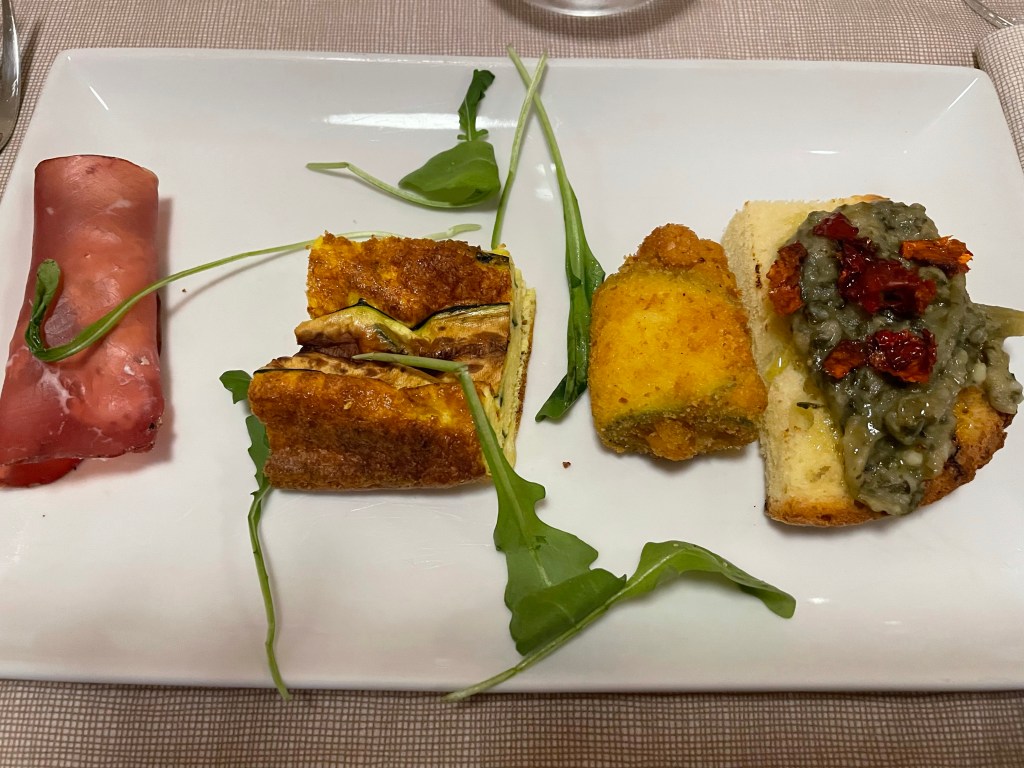
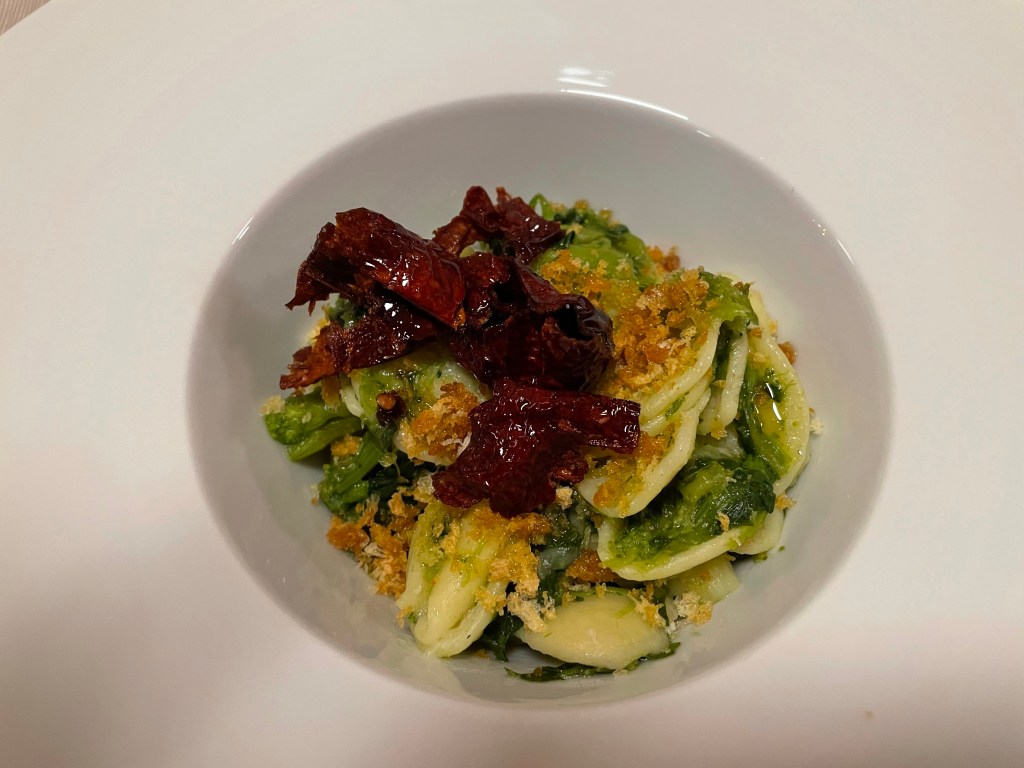
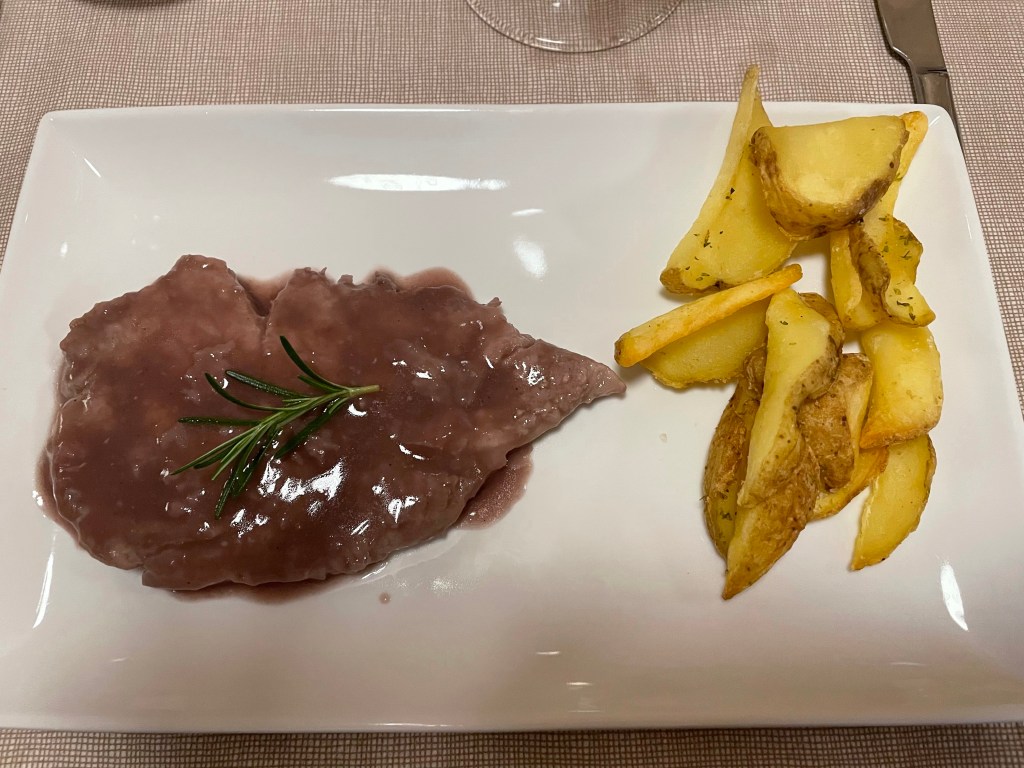
The dinner was a selection of antipasti, orecchiette with cima di rape and peperoni cruschi di senise (dried and then crisp fried sweet red peppers-a specialty), and veal.
Tomorrow we will have a walking tour, so stay tuned for more interesting tidbits!
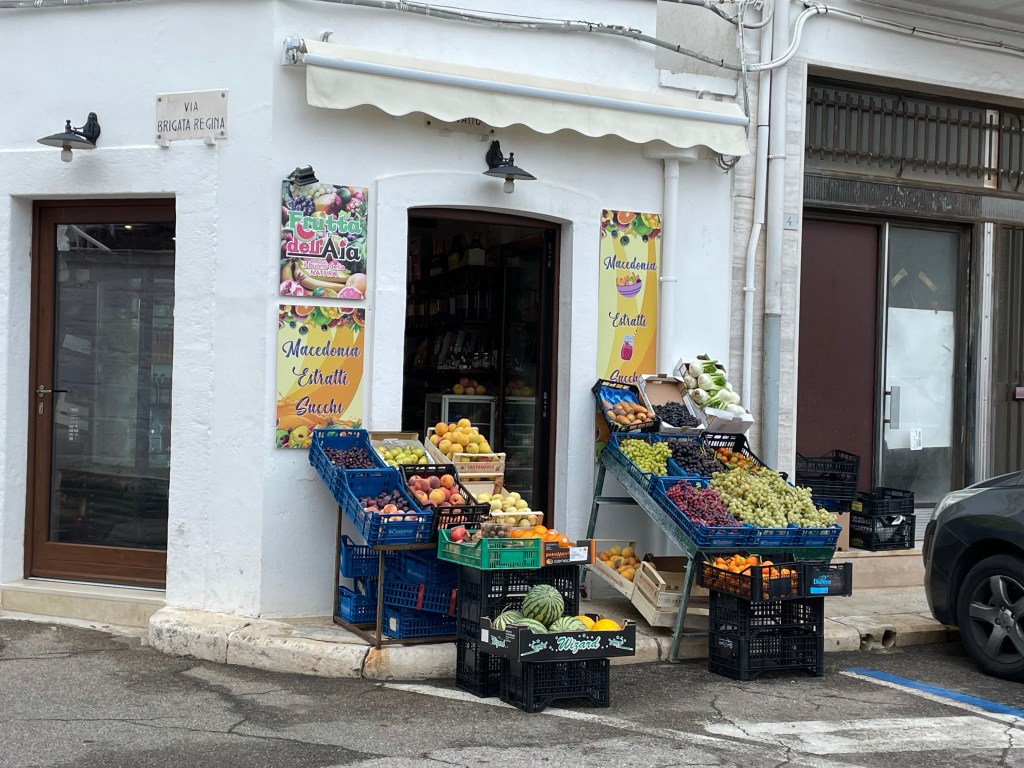
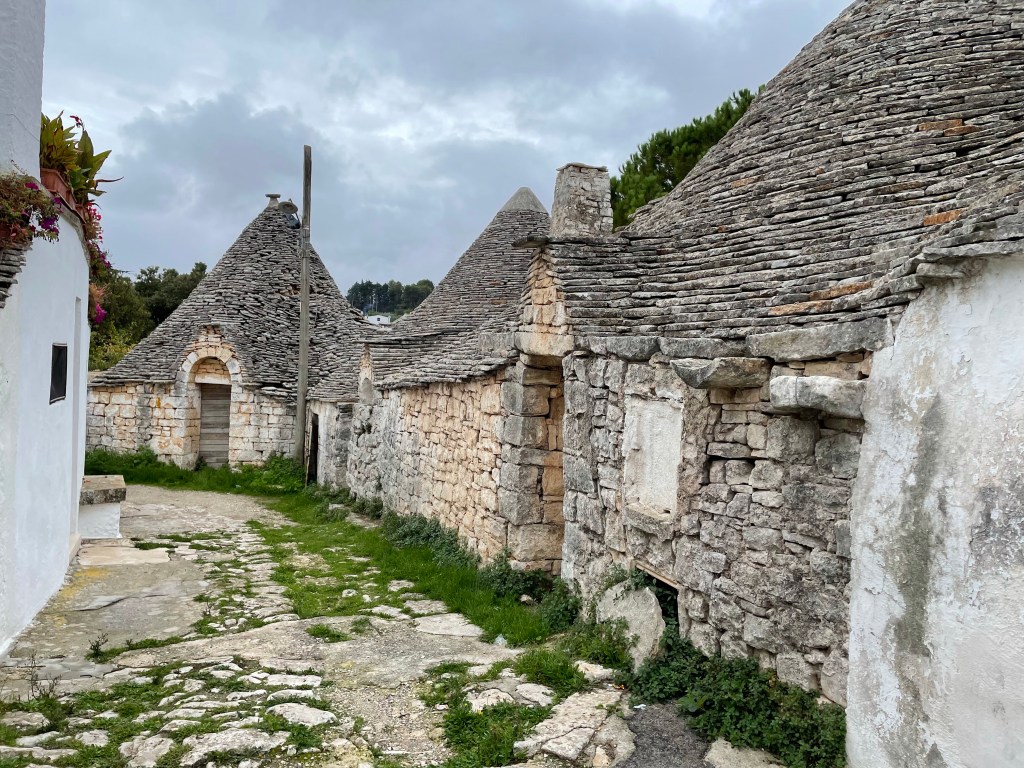
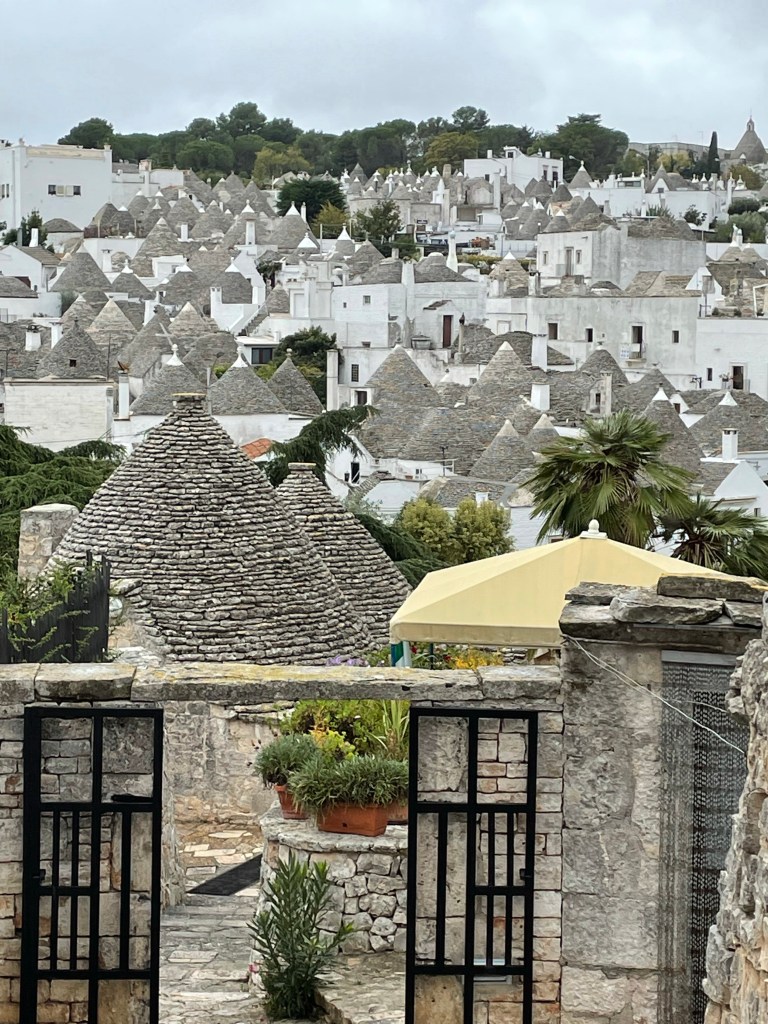
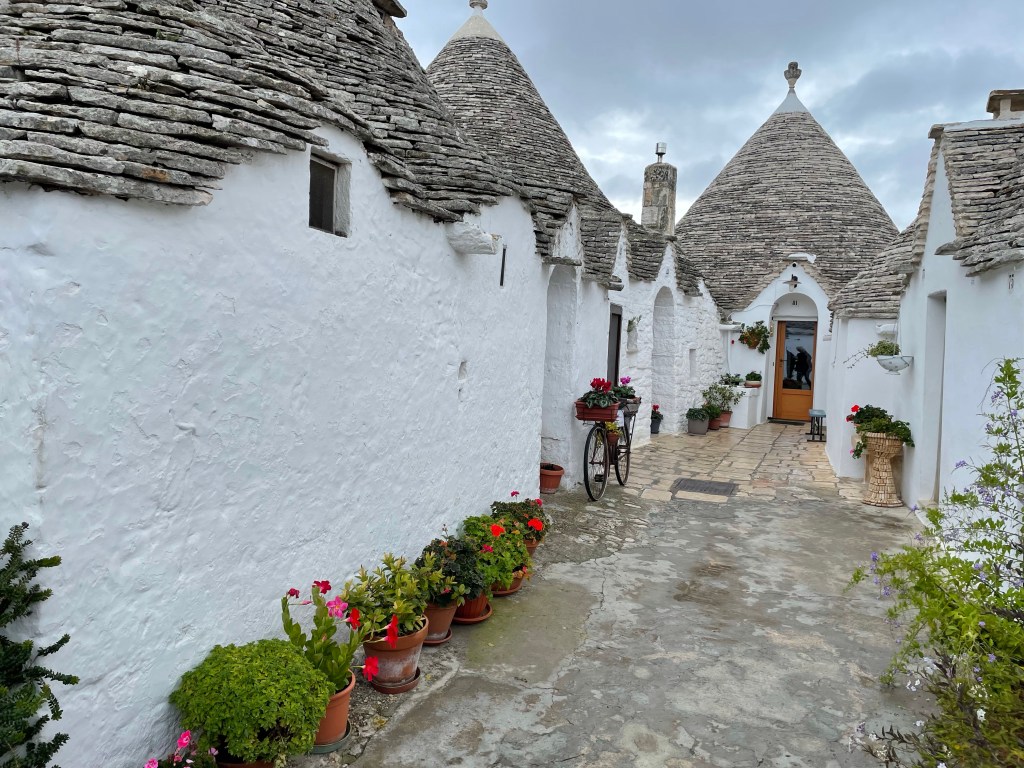
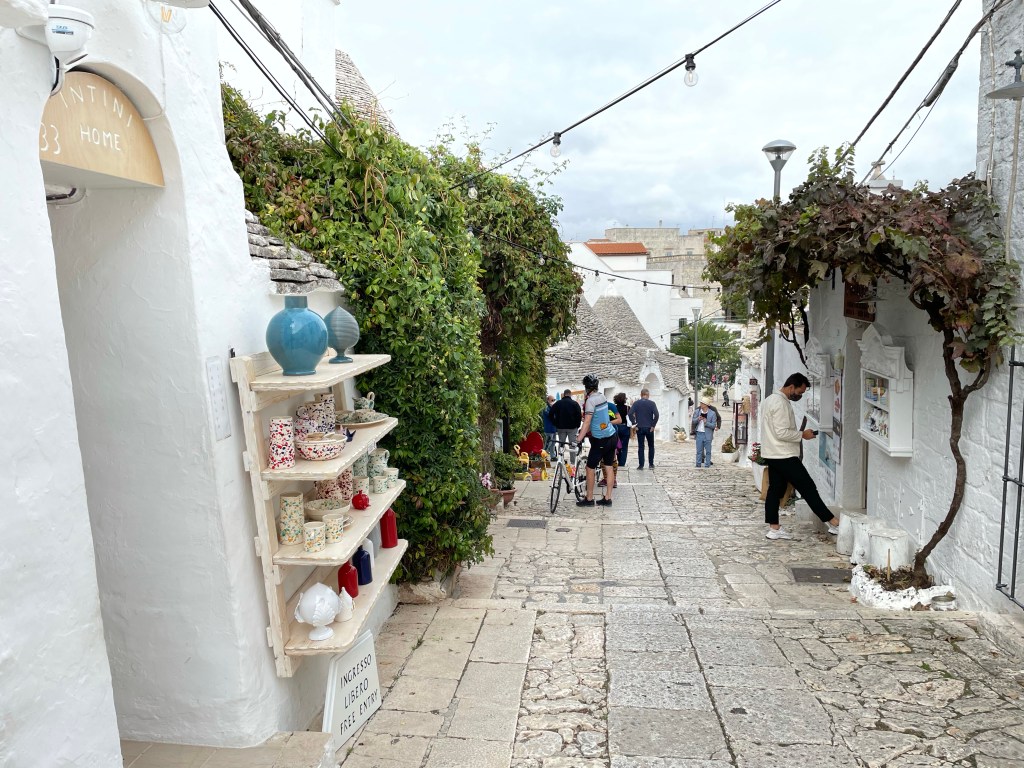
A town filled with whitewashed gnome-like buildings with stone conical roofs is a fairy tale fantasy……or is it? This town of 11,000 inhabitants is perched on a hilltop in the Valle d’Itria in Puglia. Although most of them no longer live in the trulli (singular- trullo), they dominate the landscape in this region. There are two rione (neighborhoods), one that is replete with the souvenir and tschotke-laden trulli shops, the other a “residential” neighborhood now dominated by air B&Bs. This area was originally a wooded area that was given to a nobleman named Acquaviva in the 17th century. He dispersed parcels of land to his subjects and he had the trees cut down and encouraged the building of these unique structures of stacked stone (without mortar) that could be quickly dismantled when the king’s taxman appeared, as roofless structures could not be taxed.
Original trulli
Although initially not painted, the trulli characteristically are whitewashed, as the milk lime used in the process is a deterrent to mold and bacteria (especially the plague!).
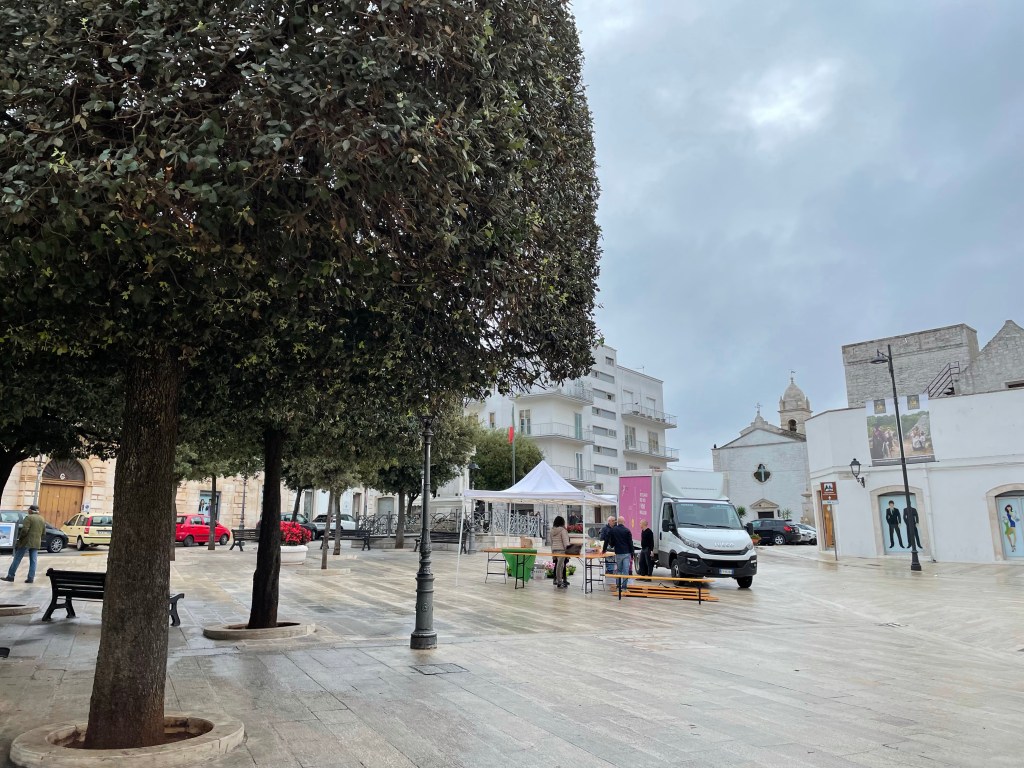
Piazza del Popolo – between the new and old sections of town
The trulli have only a door and possibly a small window, but are environmentally friendly as there is an inner and an outer wall, more than a meter thick, that make them cool in summer and relatively warm in winter. Although mortar is used in their renovation, the original version is constructed only of stacked stone.
Some trulli can be lovely
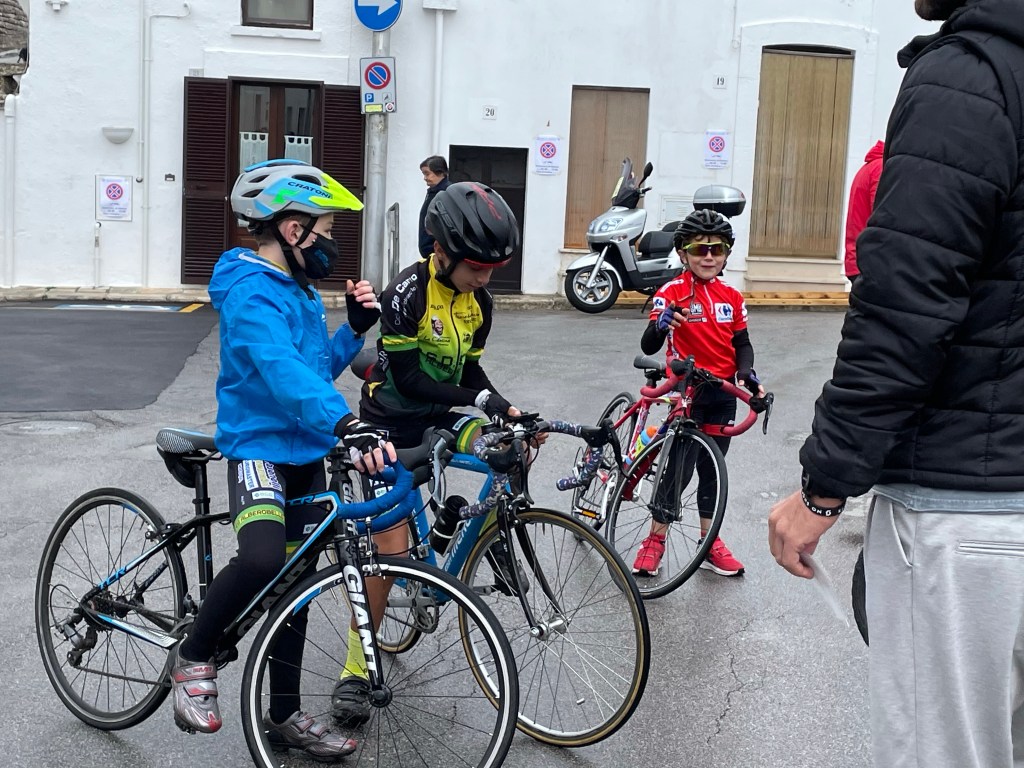
We started the morning with a walking tour with a local guide. A bike race for kids was taking place so there were 8-10 year olds riding really expensive racing bikes around our meeting place. The streets were packed on this cool and overcast Sunday. The crowd was by and large Italian but a few American voices could be heard.
Bike race today
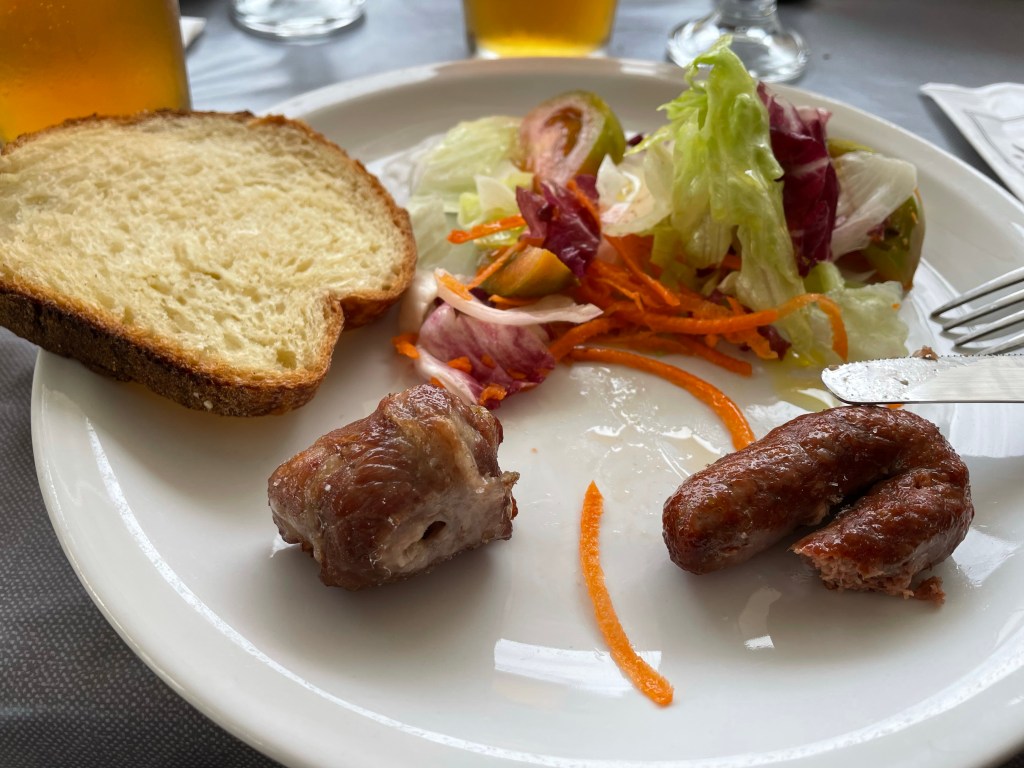
As lunch time approached, the Largo at the base of the hill of touristy trulli filled with hungry tourists. We enjoyed a local meat specialty of grilled sausages and bombette ( stuffed pork kebab-like morsels), along with salad and a beer.
The rest of the afternoon has no planned itinerary so we are going to indulge in a much-needed siesta. Tonight we are returning to the same trattoria as last night for dinner.














 Camino Musings